Celestia: What It Is and Why It Matters in Decentralized Blockchains
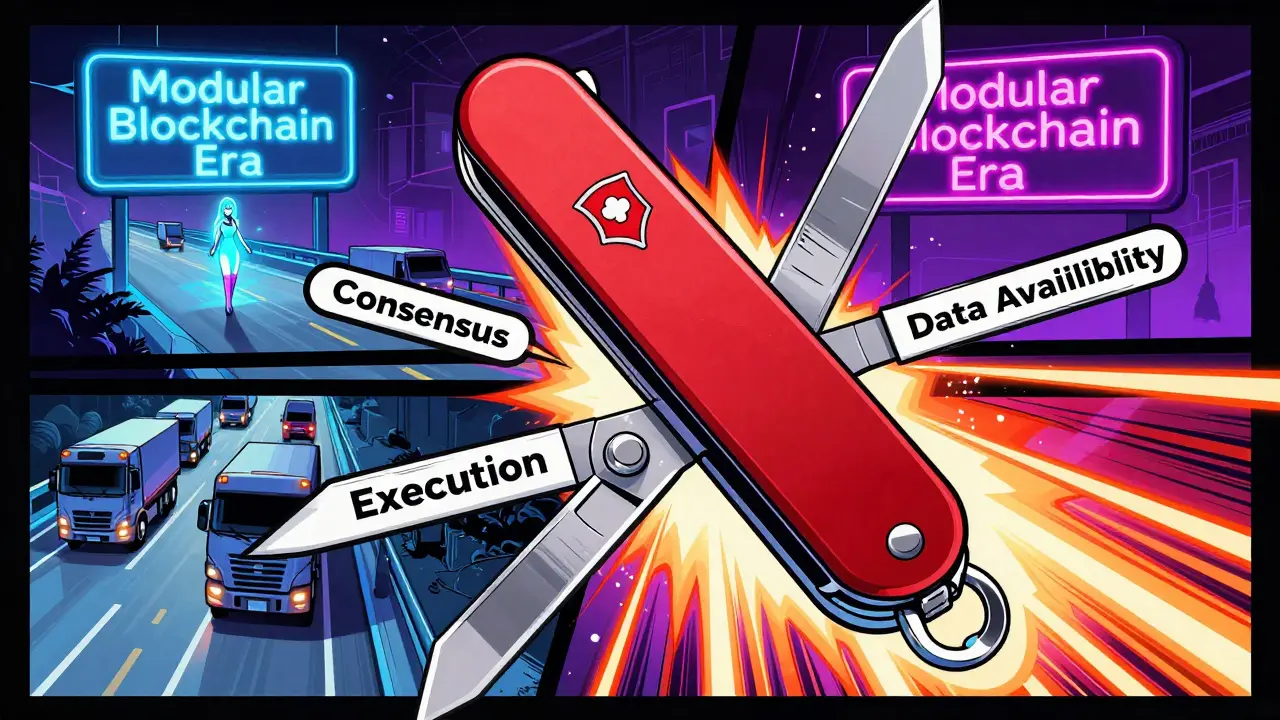
When you think of blockchains, you probably imagine networks like Ethereum or Bitcoin that do everything at once: process transactions, store data, and reach agreement. But Celestia, a modular blockchain designed to handle only data availability and consensus, letting other chains focus on execution. Also known as the first data availability layer, it’s not trying to be a smart contract platform—it’s building the highway so other blockchains can drive faster and cheaper. Most blockchains today are monolithic. They handle everything in one piece, which slows them down and makes them expensive. Celestia breaks that model. Instead of forcing every chain to verify every transaction, it lets chains outsource data verification to it. Think of it like a delivery service for blockchain data—Celestia confirms that data exists and is available, and then other chains use that proof to run their own apps without carrying the full weight.
This separation is a game-changer for scalability. Projects like Polygon CDK, Arbitrum Orbit, and others are now building on top of Celestia because it gives them instant access to secure, decentralized data without having to launch their own full node network. That means new blockchains can launch faster, cheaper, and still stay as secure as Ethereum. It also opens the door for custom blockchains tailored to specific use cases—gaming, social media, DeFi—without reinventing the wheel. Celestia’s native token, TIA, isn’t just for staking. It’s the economic engine that secures the network. Validators stake TIA to commit to storing and proving data availability. If they lie or fail, they lose their stake. It’s simple, transparent, and aligned with the network’s only job: making sure no one hides data.
What’s interesting is how Celestia fits into the bigger picture of blockchain evolution. It’s not competing with Ethereum—it’s helping it scale. It’s not replacing Layer 2s—it’s giving them a better foundation. And it’s making data availability, once an afterthought, a core part of blockchain security. You’ll see posts here about how Celestia enables new types of rollups, how it reduces costs for decentralized apps, and why projects are moving away from monolithic chains. You’ll also find comparisons with other data availability layers and deep dives into how Celestia’s consensus works under the hood. Whether you’re building on it, investing in it, or just trying to understand the next wave of blockchain tech, this collection gives you the real facts—not the hype.