Quadratic Voting: How It Works and Why It Matters in Crypto Governance
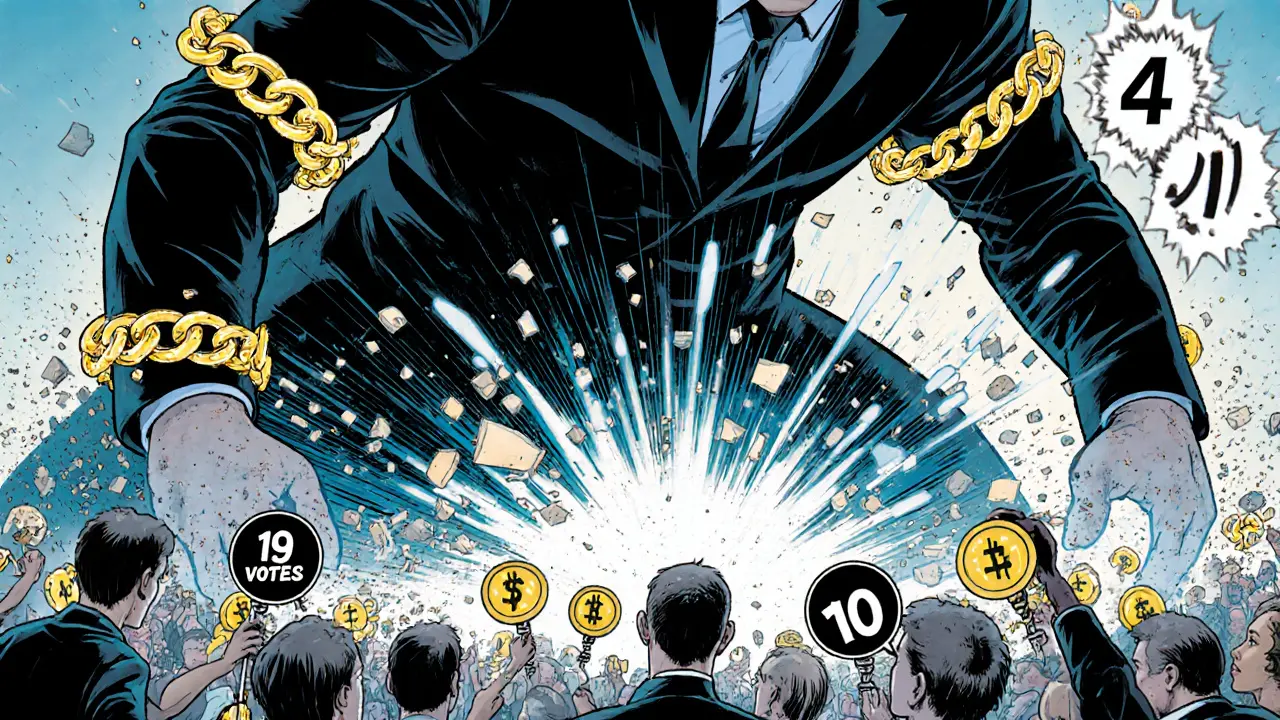
When a community votes on something important—like which project to fund or what fee to charge—quadratic voting, a system that gives voters more weight for each additional vote they cast, but at an increasing cost. It’s designed to stop wealthy or well-connected users from overpowering the rest of the community. Unlike simple one-person-one-vote systems, quadratic voting lets people express how strongly they feel about an issue without letting a few big players control the outcome. This matters a lot in DAOs, decentralized autonomous organizations that run on blockchain and rely on member votes for decisions, where token holdings often give disproportionate power. Quadratic voting flips that script by making it expensive to cast many votes, so even small holders can have real influence.
How does it actually work? Imagine you want to vote for a proposal. One vote costs you 1 unit. Two votes cost 4 units. Three votes cost 9 units. It’s not linear—it’s squared. So if you really care, you can spend more, but you pay a steep price for each extra vote. This forces people to think: Is this worth 25 units? Or should I just stick with 5? The system naturally balances passion with fairness. It’s been tested in real blockchain governance, the process by which crypto communities upgrade protocols, allocate funds, or change rules projects like Gitcoin Grants, where it helped distribute millions in funding more evenly across small developers. In contrast, traditional token-weighted voting often leads to whale-dominated outcomes, where a single wallet with 10% of tokens can push through any proposal—even if 90% of users disagree.
That’s why more decentralized decision-making, the practice of letting users, not CEOs or boards, decide the future of a project systems are testing quadratic voting. It’s not perfect—some argue it’s too complex for beginners, and others worry about sybil attacks—but it’s one of the few methods that actually reduces inequality in voting power. You’ll find posts here that break down real examples: how a DAO used it to fund open-source tools, how a token launch changed its voting rules after backlash, and why some projects ditched it after testing. These aren’t theory pieces—they’re real-world stories from crypto teams that tried quadratic voting and lived to tell the tale. Whether you’re a small holder tired of being ignored or just curious how blockchain communities make fair calls, what follows gives you the tools to understand what’s really going on behind the scenes.