RVLVR token: What It Is, Why It Matters, and What You Should Know
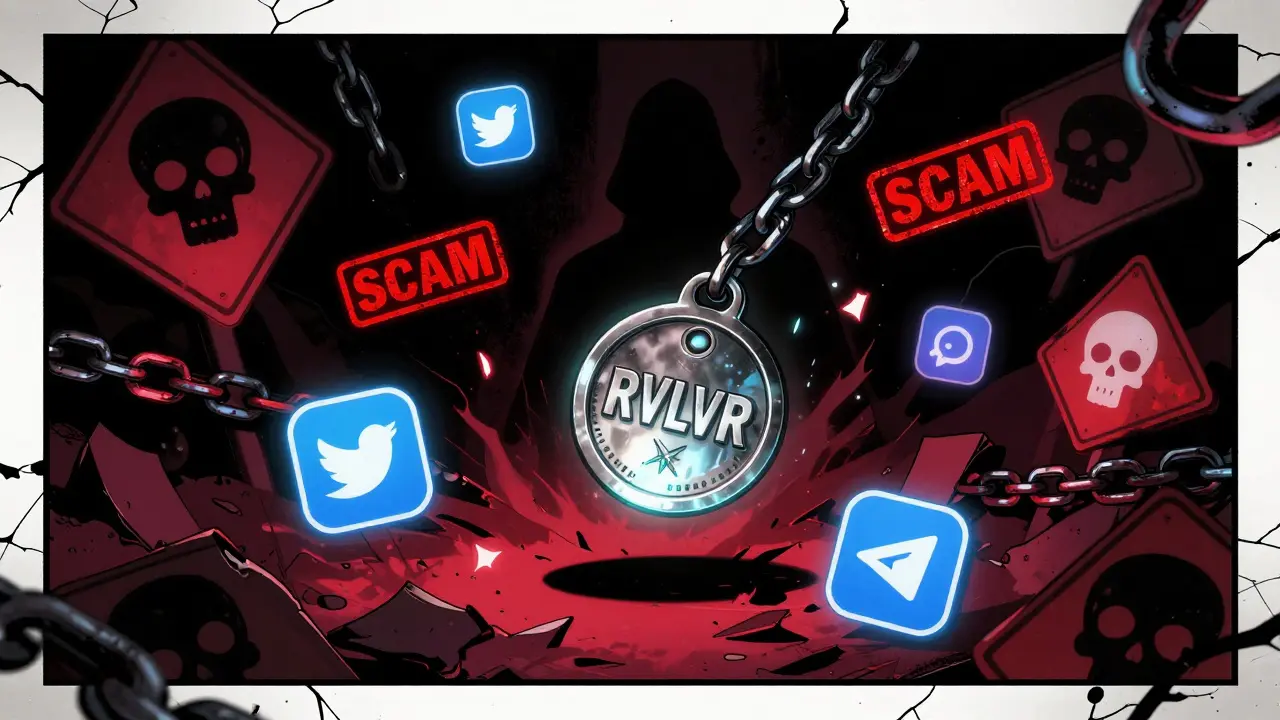
When you hear about the RVLVR token, a blockchain-based asset designed for governance and access within a specific decentralized ecosystem. Also known as RVLVR, it’s one of hundreds of tokens that claim to give users a voice—but most never deliver. Unlike Bitcoin or Ethereum, RVLVR isn’t a network. It’s a utility token, likely built on Ethereum or BSC, meant to unlock features like voting, staking, or early access to new tools. But here’s the catch: if you can’t find a live product, a real team, or trading volume above $10K, it’s probably just a name on a list.
Token projects like RVLVR often show up alongside other low-liquidity assets like BIB, a nearly dead crypto with zero trading activity and no community, or RUGAME (RUG), a token with no code, no users, and no purpose. These aren’t investments—they’re digital ghosts. The same risks apply to RVLVR if it lacks transparency. A token needs more than a whitepaper. It needs users, real use cases, and open development. Without those, it’s just a speculative bet wrapped in blockchain jargon.
Many tokens like RVLVR are tied to decentralized exchanges, platforms where users trade directly without intermediaries, often using their own tokens for fees or governance. But not all DEXes are equal. Some, like PulseX or Balancer, have real volume and active users. Others exist only on paper, with tokens that can’t be traded, staked, or used. If RVLVR is supposed to power a DEX or a DAO, ask: where’s the interface? Who’s running it? Are people actually using it, or is it just listed on a few obscure sites?
There’s a pattern here. Tokens with no clear function, no team, and no trading activity don’t last. They get abandoned, forgotten, or worse—used in pump-and-dump schemes. The RVLVR token could be legitimate. But without proof, it’s just another name in a long list of failed crypto experiments. If you’re considering it, check the contract, look at the wallet activity, and see if anyone’s talking about it outside of Telegram spam groups.
Below, you’ll find real-world examples of tokens that looked promising but vanished—and others that actually delivered. You’ll see how fake airdrops, empty wallets, and silent teams turn tokens into liabilities. This isn’t about hype. It’s about spotting what’s real before you lose money on something that doesn’t exist.