
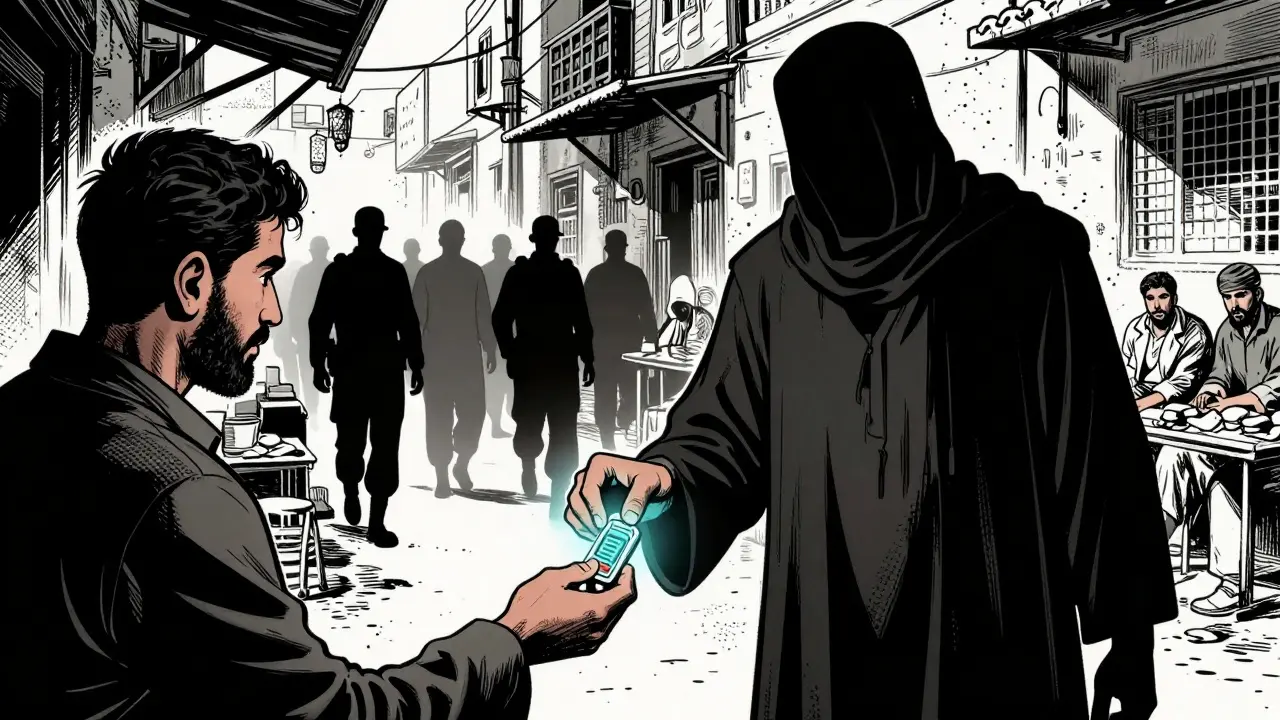
Taliban Crypto Ban: Why Bitcoin Is Banned in Afghanistan Under Sharia Law
Imagine trying to send money home to your family, only to find every bank account frozen and every exchange shut down. That is the reality for millions of Afghans living under the Taliban’s strict prohibition on cryptocurrency. Since August 2022, the regime has declared all digital assets Bitcoin is a decentralized digital currency that operates without a central authority, Ethereum, and stablecoins like USDT as haram-forbidden under their specific interpretation of Islamic law. This isn’t just a regulatory hurdle; it is an absolute ban backed by arrests, confiscations, and internet blackouts.
If you are looking to understand why this happened, how it affects ordinary people, or whether there is any wiggle room in these rules, you need to look beyond the surface-level headlines. The situation in Afghanistan is a complex mix of religious doctrine, economic desperation, and geopolitical isolation. Let’s break down exactly what the ban entails, the theological arguments behind it, and the underground economy that persists despite the risks.
The Official Stance: Why Crypto Is Haram
To understand the ban, you first have to understand the reasoning provided by the Taliban leadership. On August 15, 2022, Sayed Shah Sa'adat, head of Herat Police's counter-crime unit, announced the closure of 16 crypto exchanges in Herat province alone. This wasn't an isolated incident but part of a nationwide crackdown. The central justification rests on two main pillars of Islamic jurisprudence: the lack of intrinsic value and the element of gambling.
The Taliban argues that cryptocurrencies lack "real-life values." In traditional Islamic finance, money should be backed by tangible assets like gold or silver. Because Bitcoin exists purely as code on a blockchain, the regime views it as speculative fiction rather than legitimate currency. Furthermore, they classify trading crypto as maysir, which translates to gambling or games of chance. The volatility of prices means gains are seen as luck-based rather than earned through productive labor, violating core ethical principles.
| Country | Regulatory Status | Key Justification/Reasoning |
|---|---|---|
| Afghanistan (Taliban) | Absolute Ban | Haram due to lack of intrinsic value and speculation (maysir) |
| Saudi Arabia | Restricted/Banned Trading | Central bank prohibits use as payment, but mining is tolerated |
| UAE | Highly Regulated | Virtual Assets Regulatory Authority (VARA) oversees licensed entities |
| Egypt | Banned with Exceptions | Generally prohibited, but some licensed exchanges operate |
| Iran | Mixed | Trading banned, but mining permitted under strict licensing |
This stance makes Afghanistan one of the most restrictive jurisdictions globally. While countries like Egypt and Algeria also maintain bans, Afghanistan’s enforcement is unique because it relies solely on religious edicts without any parallel legal framework for compliance. There is no license you can apply for. There is no gray area. As Mullah Noorullah Noori, Governor of Da Afghanistan Bank, stated in January 2023, "cryptocurrency contradicts Islamic principles and threatens monetary sovereignty."
The Economic Paradox: Ban vs. Reality
Here is where things get complicated. You might assume that a total ban would wipe out crypto usage. The data says otherwise. In fact, the ban has driven adoption deeper underground. Before the Taliban returned to power in August 2021, Afghanistan processed approximately $740 million in cryptocurrency transactions between July 2020 and June 2021. After the takeover, international sanctions froze $9.5 billion in foreign reserves, causing a banking crisis.
With traditional banks inaccessible or unreliable, citizens turned to digital assets out of necessity. According to UNDP surveys from 2024, 38% of Afghans used cryptocurrency for remittances, up from just 2% before 2021. Chainalysis reported that on-chain activity actually grew by 37% annually between 2022 and 2024. People aren't using Bitcoin to speculate on price pumps; they are using it to survive.
Stablecoins, particularly Tether (USDT), have become the backbone of this shadow economy. Unlike volatile assets, USDT pegs its value to the US dollar, providing a safe haven against the collapsing Afghan afghani. Despite the ban, P2P (peer-to-peer) trading volumes reached $4.2 million monthly in Q1 2025, with USDT comprising 68% of those transactions. The irony is stark: the regime bans crypto to protect monetary sovereignty, yet citizens rely on it because the state-controlled currency has failed them.

Enforcement Mechanisms and Risks
How does the Taliban enforce a ban on something that lives on the internet? They don’t try to block the blockchain itself-they block the access points. The Financial Transactions and Reports Analysis Center of Afghanistan (FinTRACA) oversees enforcement using existing Anti-Money Laundering (AML) laws. But the real teeth come from physical crackdowns.
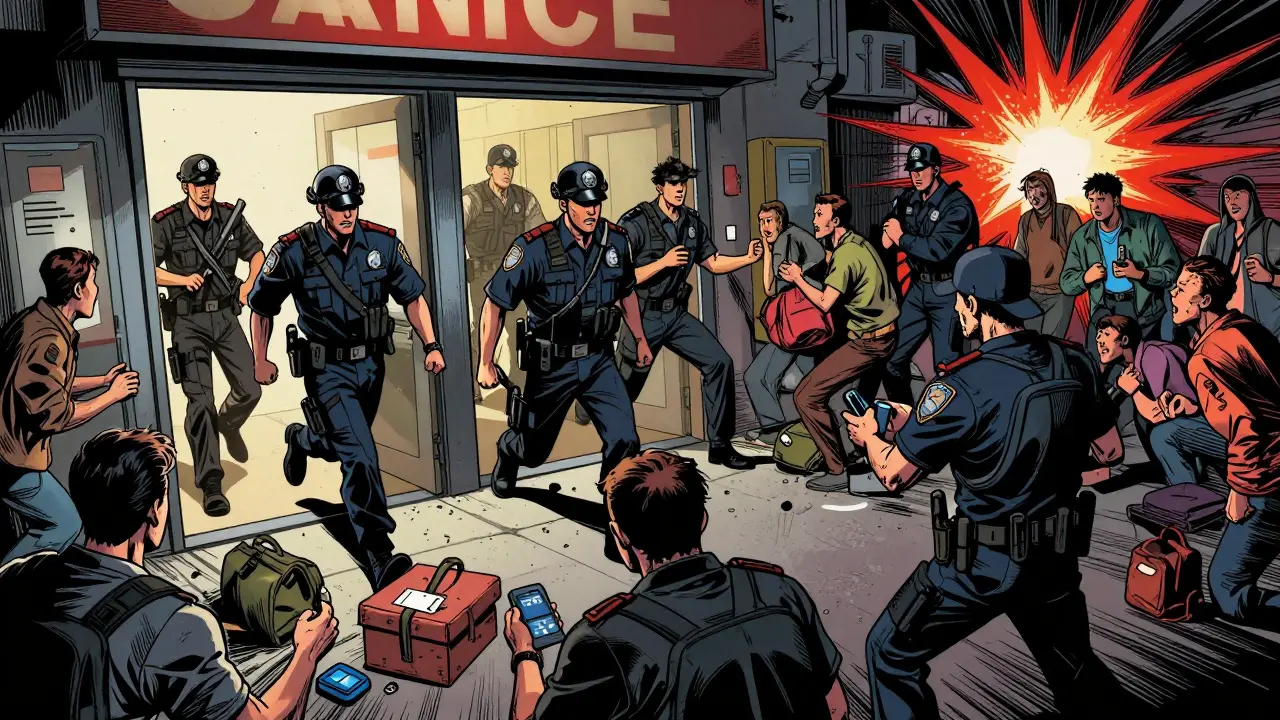
- Exchange Raids: Authorities regularly raid known crypto dealers. In November 2022, exchanges in Kabul and Herat were shut down, leading to significant losses for users who had funds held in custody.
- Arrests: Human Rights Watch documented 112 arrests related to crypto activities across 15 provinces in Q1 2025 alone.
- Internet Blackouts: Technical limitations are weaponized. A nationwide internet blackout lasting 48 hours in October 2024 affected 13 million citizens. Blockchain expert Michail Angelov noted this highlighted blockchain's dependence on centralized internet providers vulnerable to government intervention.
- SIM Registration: Anonymity is nearly impossible. Strict SIM card registration requirements allow authorities to trace communications used for coordinating trades.
The risk is real. Reddit archives from r/Afghanistan contain verified accounts of individuals losing life savings when exchanges were raided. One user, 'KabulTrader88', reported losing 1.2 Bitcoin (worth roughly $52,800 at the time) after a police raid. For many, the choice is between financial exclusion and criminal liability.
The Human Impact: Women and Financial Exclusion
Perhaps the most tragic aspect of the ban is its impact on women. The Taliban has severely restricted women's access to education and employment, effectively barring them from formal banking systems. In this context, Bitcoin has emerged as a lifeline. Roya Mahboob, founder of the Digital Citizen Fund, argued at the 2024 Bitcoin Policy Summit that "it's much easier for them to get it because it gives them a hope of financial freedom."
The Human Rights Foundation documented 127 cases between 2022 and 2024 where women used Bitcoin to circumvent banking restrictions. The Digital Citizen Fund trained 687 Afghan women through underground networks. Their 2024 report found that 89% of these women reported increased financial autonomy. However, the cost is high: 42% experienced harassment from authorities when attempting transactions.
For these women, crypto isn't about investment returns. It’s about dignity and survival. The ban forces them into dangerous, unregulated P2P markets where scams and theft are rampant. Without customer support or legal recourse, a single mistake can mean total loss.
Underground Adaptations and Technical Workarounds
Despite the risks, the demand for financial tools drives innovation. Users in Afghanistan have developed sophisticated workarounds to navigate the restrictions. The learning curve is steep, but necessary. Surveys indicate users spend 3-5 weeks mastering non-custodial wallets like Trust Wallet, often relying on peer-to-peer tutorials via Telegram groups like 'AfghanCryptoHelp' (which had over 15,000 members in mid-2025).
Common technical challenges include frequent internet outages and surveillance. To combat this, some users have adopted mesh networks during blackouts and multi-signature wallets to enhance security. However, only 22% of users successfully implement these advanced measures, according to a June 2024 UNODC report. Most rely on basic SMS-based blockchain solutions, with 12,500 users registered for services like 'CryptoSMS' by Q1 2025.
Language barriers remain a significant obstacle. With 92% of users citing difficulty accessing documentation in Dari or Pashto, they depend on translated guides from global projects. This reliance on informal knowledge increases the risk of private key exposure and phishing attacks.
Future Outlook: Will the Ban Lift?
Looking ahead, the consensus among experts is that the ban will persist in the short term. The Atlantic Council forecasts a 65% probability of continued prohibition through 2027, citing the regime's ideological rigidity. Mullah Abdul Ghani Baradar, Deputy Prime Minister, reaffirmed this in February 2025, stating, "digital currency has no place in an Islamic system."
However, long-term viability is questionable. Goldman Sachs’ 2025 Emerging Markets Report gives the ban only a 30% probability of lasting beyond 2028. The reasons are economic: Afghanistan’s GDP contracted by 20.7% between 2021 and 2023, and the state cannot ignore the massive volume of capital flowing through crypto channels. We may see a shift toward tacit tolerance, similar to Iran’s approach, where the government publicly denounces crypto while quietly allowing limited P2P activity to keep the economy functioning. Until then, the contradiction between religious decree and economic necessity remains unresolved.
Is Bitcoin legal in Afghanistan under the Taliban?
No. The Taliban has issued an absolute ban on all cryptocurrency activities, including trading, mining, and usage. They classify crypto as haram (forbidden) under their interpretation of Sharia law due to its lack of intrinsic value and speculative nature.
Why do Afghans still use crypto if it is banned?
Economic necessity drives usage. International sanctions froze Afghanistan's foreign reserves, causing a banking crisis. With traditional banks inaccessible and the local currency unstable, citizens use crypto, particularly stablecoins like USDT, for remittances and to preserve wealth.
What are the penalties for using crypto in Afghanistan?
Penalties include arrest, confiscation of digital assets, and forced closure of business operations. Authorities conduct regular raids on exchanges and dealers. In Q1 2025 alone, there were 112 documented arrests related to crypto activities.
How does the Taliban justify banning crypto under Sharia law?
The Taliban argues that cryptocurrencies lack intrinsic value (not backed by gold or silver) and constitute maysir (gambling/speculation). They believe this violates Islamic principles of fair trade and monetary stability.
Are there any exceptions to the crypto ban in Afghanistan?
There are no official exceptions. Unlike Iran, which allows licensed mining, Afghanistan prohibits all crypto activity. However, reports suggest some officials may accept Bitcoin for informal payments, though this is not sanctioned policy.
How does the crypto ban affect Afghan women?
The ban disproportionately harms women who are barred from traditional banking. Many use Bitcoin as a survival tool for financial independence. However, they face high risks of harassment and asset seizure when engaging in underground P2P trades.






man this is heavy stuff 🤯 seeing people risk their necks just to send money home breaks my heart honestly the whole haram argument feels like a smokescreen for control tbh 💔
you think its about religion really? no its about power they want to be the only gatekeepers of value in that country if you can move money without them they lose control simple as that
typical western ignorance crypto is gambling pure and simple these people are getting played by elites and u guys cheer them on pathetic behavior honestly 🙄
I find it incredibly inspiring how women are using Bitcoin to gain financial autonomy despite such oppressive restrictions. It shows true resilience and the human spirit's desire for freedom.
its so sad tho i cant even imagine living with that fear every time u try to buy something or send cash to family members must be terrifying 😞
i agree with the sentiment here but we also need to understand the local context maybe they feel threatened by foreign influence through digital assets its complicated stuff
The irony is palpable when one considers that the very concept of intrinsic value is a social construct itself :/ Gold has no utility other than decoration yet we trust it while code which secures transactions is deemed void of worth philosophical paradox indeed
It is fascinating to observe how the technological infrastructure of blockchain continues to operate regardless of political decrees, suggesting that perhaps the future of finance will inevitably outpace traditional regulatory frameworks in regions that attempt to suppress innovation due to ideological rigidity rather than practical economic necessity.
From a macroeconomic perspective the Taliban’s ban creates a classic black market dynamic where the scarcity of legal tender drives up the premium on stablecoins effectively creating a dual currency system that operates entirely outside state surveillance mechanisms.
america should step in and fix this mess instead of letting these terrorists run wild with their stupid laws we know whats best for global stability lol
ugh another article about crypto saving the day please spare me the tech bro fantasy narrative reality is far more grim and nuanced than your headlines suggest
Oh look, another group of fundamentalists trying to regulate the internet. How original. They’ll fail just like everyone else who tried to stop information flow.
people always forget that money is just trust and when the government loses trust the people find new ways to trade its basic human nature nothing new here really
THIS IS A DISASTER waiting to happen!! the volatility alone will wipe out savings and now theyre adding prison time?? absolutely insane behavior from leadership!!!
You need to wake up to the reality that censorship fails. The mesh networks mentioned are just the beginning of decentralized communication protocols that will make these bans obsolete within five years.
Listen up! If you're not paying attention to the P2P volumes growing by 37% annually you're missing the biggest trend in emerging markets right now! This is huge!
We must support initiatives like the Digital Citizen Fund because education is the key to overcoming these barriers and empowering communities to take control of their financial destiny.
The comparison to Iran is apt but Afghanistan lacks the industrial base to leverage mining profits so they have no incentive to tolerate it unlike Tehran which uses miners to subsidize energy costs.
One must consider the theological implications carefully as the definition of maysir is often debated among scholars and applying it rigidly to all digital assets seems like an oversimplification of complex jurisprudential concepts.
Let's keep the discussion respectful folks! While the situation is dire we can learn from how communities adapt under pressure and maybe apply those lessons to our own financial literacy journeys 🚀
Haha yeah good luck enforcing that on the dark web lol they might as well ban breathing next time
It is quite evident that the lack of intrinsic value argument is flawed since fiat currency holds no intrinsic value either yet is accepted globally. The Taliban's stance appears ideologically driven rather than economically rational.
The security risks associated with underground trading cannot be overstated and citizens should be aware that engaging in illegal activities leaves them vulnerable to exploitation by criminal elements operating within these shadow economies.
only fools fall for this scam obviously the elites are laughing at us while we debate sharia law vs bitcoin what a joke
I am deeply concerned about the humanitarian crisis exacerbated by these financial restrictions particularly for women who are already marginalized and now face additional barriers to economic participation and survival.
short answer: its bad 👎