
PureFi Protocol (UFI) Airdrop: Details, Eligibility, and Reality Check
Have you ever clicked on an "airdrop" link only to find yourself in a maze of dead links and vague promises? If you're hunting for PureFi Protocol details, you might be feeling that exact frustration. The project promised a bridge between traditional finance and decentralized finance using verifiable credentials, but the actual delivery of free tokens has been, to put it mildly, quiet.
Let's cut through the noise. As of late 2023 and into 2024, there is no massive, ongoing public airdrop campaign with a clear dashboard where you can claim thousands of dollars worth of UFI tokens just by signing up. Instead, what exists is a fragmented history of small distributions, quiz-based rewards, and community challenges that have largely slowed down or stopped. This article breaks down exactly what happened, how the protocol operates, and whether it’s worth your time today.
What Is PureFi Protocol?
To understand the airdrop, you first need to understand the tech behind it. PureFi Protocol is a decentralized finance compliance solution designed to bring Know Your Customer (KYC) and Anti-Money Laundering (AML) standards to DeFi without sacrificing user privacy. It uses Zero-Knowledge Proofs (ZKPs) to verify that a user is compliant without revealing their actual identity data on-chain.
The native token, UFI, powers this ecosystem. Launched via a Token Generation Event (TGE) in July 2021, the protocol raised over $1 million across seven funding rounds. Unlike typical meme coins, PureFi targets institutional adoption, aiming to make DeFi accessible to banks and regulated entities that can't touch unverified wallets.
- Core Mission: Bridge TradFi and DeFi using self-sovereign identity.
- Technology: Verifiable Credentials and ZKPs for private compliance.
- Token Utility: Governance, staking, and paying for verification services.
The History of UFI Airdrops
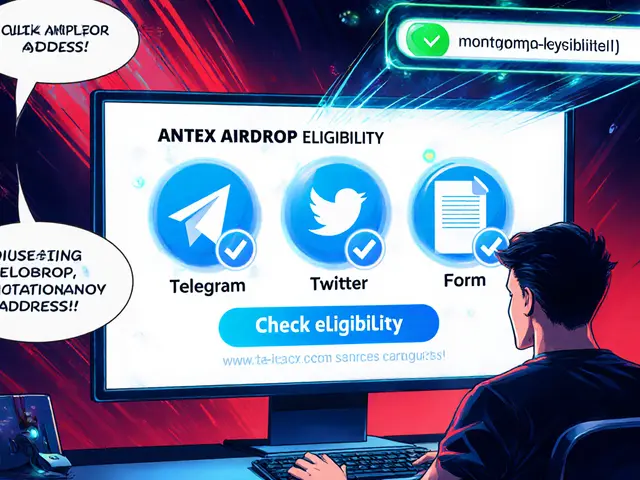
If you dig into the archives, PureFi did run airdrops, but they weren't the high-volume, hype-driven events seen with projects like Arbitrum or StarkNet. Between August 2021 and March 2022, the team executed three documented campaigns. These required users to complete Telegram quizzes, follow social media accounts, and refer friends.
The payouts were modest. Verified transactions on Etherscan show participants received between 25 and 100 UFI per task. At the peak prices in early 2022, this might have amounted to a few dollars. Today, with the token trading at fractions of a cent, those early rewards are negligible. Since April 2022, there have been no major, verifiable mass distributions. The official GitHub repository shows minimal activity related to airdrop smart contracts since then, suggesting the program is effectively dormant or operating on a very low frequency.
How to Participate (If Anything Is Active)
So, can you still get free UFI? The short answer is: maybe, but don't count on it. There is no dedicated "Airdrop Portal" currently live on purefi.io. Instead, participation relies on monitoring their official channels for sporadic community rewards.
Here is what you should look for if you want to try your luck:
- Monitor Official Twitter: Follow @Purefi_Protocol. They occasionally tweet about "community rewards" or contests. Be skeptical of any link not posted directly from this verified account.
- Join the Telegram Community: Past airdrops involved Telegram-specific tasks. Engaging here might alert you to micro-rewards.
- Check for Partnership Campaigns: In October 2023, PureFi announced a partnership with RegTech Solutions. Future airdrops might target users who verify their identity through these new institutional partners rather than general retail users.
Be aware that many "PureFi Airdrop" sites popping up in search results are often scams. Because the project lacks a high-profile, active distribution phase, scammers create fake claim pages asking you to connect your wallet and sign a transaction that drains your funds. Always verify the contract address against the official documentation before interacting.

Tokenomics and Vesting: Why Airdrops Are Small
You might wonder why PureFi doesn't drop millions of tokens to boost its market cap. The answer lies in its tokenomics. The total supply is capped at 1 billion UFI, but the circulating supply is around 4.9 billion (wait, check the math-actually, reports vary, but generally, a significant portion is locked). More importantly, the vesting schedules are strict.
| Allocation Category | Percentage | Vesting Schedule |
|---|---|---|
| Ecosystem Development | 33% | Gradual release over years |
| Strategic Partnerships | 25% | Cliff + Linear Vesting |
| Team & Advisors | 20% | 5-month cliff, 10-month vesting |
| Public Sale | 15% | Unlocked at TGE + Vesting |
| Marketing | 7% | Funds airdrops and promos |
Notice that Marketing gets only 7% of the supply. This limits the budget available for free giveaways compared to projects that allocate 15-20% to community incentives. Furthermore, the protocol prioritizes long-term stability over short-term hype, which means they avoid dumping large amounts of tokens onto the market at once.
Market Reality: Liquidity and Value
Before chasing any potential reward, look at the value proposition. As of recent data, UFI trades primarily on decentralized exchanges like Uniswap and PancakeSwap. You won't find it on Binance or Coinbase yet. This lack of centralized exchange listings hurts liquidity.
With a market cap hovering around $700,000 and daily trading volumes sometimes dropping below $5,000, selling a small airdrop amount could actually move the price against you due to slippage. If you receive 100 UFI, and each is worth $0.006, that’s $0.60. After gas fees, you might lose money trying to cash out. This economic reality explains why community engagement metrics are low; people aren't motivated by sub-dollar rewards when the friction of claiming and selling is high.
Expert Opinions and Community Sentiment
The consensus among analysts is mixed but leans toward caution. Dr. Elena Rodriguez from Stanford noted that while PureFi’s KYC approach is good for institutions, it kills retail appeal. Michael Chen from TokenMetrics called the communication strategy "fragmented," noting that unclear rules discourage participation.
Reddit users echo this. Comments range from "total scam vibes" due to broken links to cautious optimism about the tech. One user reported receiving 50 UFI after six weeks of waiting-a reminder that even when things work, they work slowly.
Is It Worth Your Time?
If you are already holding UFI because you believe in the compliance narrative, keeping an eye on their Twitter is free and easy. If you are looking for a quick profit, PureFi is likely not the best use of your time right now. The project is in a consolidation phase, focusing on B2B partnerships rather than retail marketing blitzes.
Watch for news regarding EU regulatory integration. If PureFi lands major deals with European fintechs, targeted airdrops for verified users could return. Until then, treat any "PureFi Airdrop" offer with extreme skepticism unless it comes directly from their verified social channels.
Is there an active PureFi Protocol airdrop right now?
There is no large-scale, continuous public airdrop campaign active as of late 2023/early 2024. The project focuses on sporadic community rewards and partnership-based distributions rather than open registration events.
Where can I trade UFI tokens if I win an airdrop?
UFI is primarily traded on decentralized exchanges (DEXs) such as Uniswap (Ethereum) and PancakeSwap (BNB Chain). It is not currently listed on major centralized exchanges like Binance or Coinbase, which may affect liquidity.
Do I need to do KYC to receive PureFi airdrops?
Not always. While the protocol itself is built on compliance and KYC principles, past airdrops often required simple social tasks (Twitter follows, Telegram joins). However, future targeted distributions linked to institutional partnerships may require identity verification.
Why is the UFI price so low?
The price reflects low trading volume, limited exchange listings, and a broader market correction affecting small-cap DeFi projects. Additionally, the focus on B2B utility rather than retail speculation has kept speculative demand lower.
Are third-party 'PureFi Airdrop' websites legit?
Most are not. Many sites claiming to offer PureFi airdrops are phishing attempts. Always verify links through the official @Purefi_Protocol Twitter account or the official website purefi.io before connecting your wallet.