
What is ARTFI (ARTFI) Crypto Coin? A Clear Breakdown of Its Purpose, Tokenomics, and Market Status
ARTFI isn’t just another crypto coin. It’s a bet on the future of how we own art - and whether blockchain can break open a $1.7 trillion market that’s been locked behind million-dollar price tags for centuries.
If you’ve ever looked at a Picasso or a Basquiat in a museum and thought, “I wish I could own even a piece of that”, then ARTFI is built for you. It’s not about buying JPEGs of cartoon apes. It’s about buying actual fractions of real, high-value fine art - like a Monet or a Warhol - using blockchain technology. And the coin that makes it all possible? ARTFI.
What Exactly Is ARTFI?
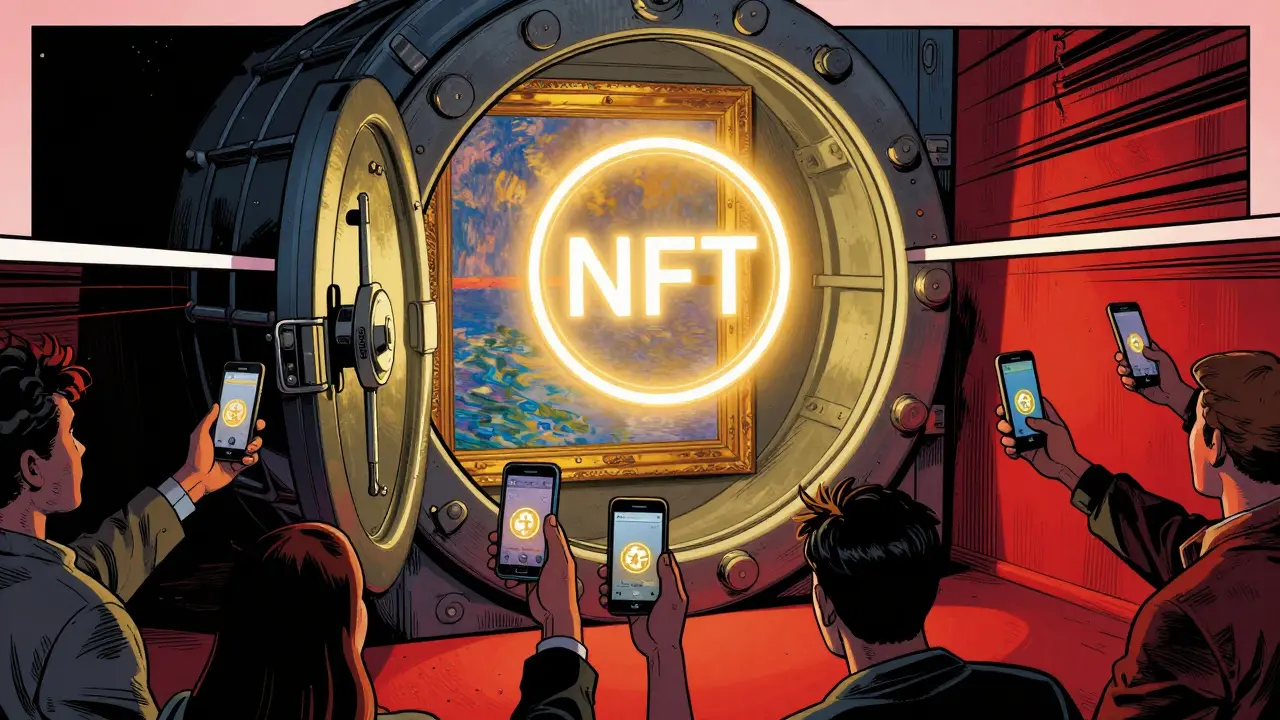
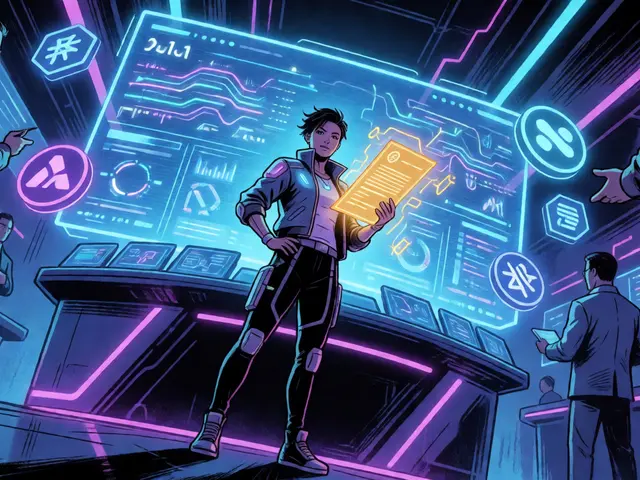
ARTFI is a blockchain platform that turns physical masterpieces into digital tokens. Think of it like this: instead of needing $50 million to buy a single painting, you can buy 0.01% of it for $500. Each piece of art is broken into hundreds or thousands of NFTs, each representing a tiny ownership stake. These NFTs are backed by real, authenticated artworks stored in secure vaults. The ARTFI token is the currency you use to buy, sell, and trade those stakes.
Unlike most NFT projects that deal with digital-only art, ARTFI focuses on blue-chip physical art - pieces with proven auction histories, museum credibility, and decades of value appreciation. The platform uses AI and blockchain to verify authenticity and track ownership. No more fakes. No more shady dealers. Just transparent, verifiable ownership on the Sui blockchain.
How Does the ARTFI Token Work?
The ARTFI token (ticker: ARTFI) is the engine behind the whole system. It’s not just a speculative asset - it has real utility within the platform. Here’s how:
- Total supply: 1 billion tokens. That’s it. No more will ever be created.
- Circulating supply: Around 130 million as of late 2024. That means over 86% of the tokens are still locked up, waiting to be released over time.
- How you use it: You need ARTFI tokens to buy fractional shares of art on the platform. You also earn them by staking, participating in governance, or trading fees generated on the marketplace.
This scarcity matters. With only 130 million in circulation out of 1 billion, the token has room to grow - if demand picks up. But right now, it’s still early.
Current Market Status: Price, Volume, and Liquidity
As of early 2026, ARTFI is still a small player in the crypto world. Its market cap hovers around $1.8 million, and its fully diluted valuation (what it would be if all 1 billion tokens were in circulation) is roughly $14.5 million. That gap tells you something: the market hasn’t fully priced in its potential yet.
Price swings are wild because liquidity is thin. On some exchanges, ARTFI trades around $0.0006. On others, it’s $0.0014. That’s not a glitch - it’s a sign of low trading volume. The 24-hour volume averages about $95,000, which is tiny compared to major coins like Bitcoin or Ethereum.
Technical indicators show mixed signals. The RSI (Relative Strength Index) is near 60 - neutral, not overbought. Moving averages suggest upward momentum, and Bollinger Bands are tightening, which often precedes a breakout. The next big resistance level is $0.015, then $0.02. If ARTFI breaks through $0.02, it could trigger serious buying interest.
Right now, the main place to trade ARTFI is on Cetus Exchange (on the Sui network) and MEXC. You won’t find it on Binance or Coinbase. That limits accessibility - but also means less pressure from big players.
Why Does This Matter? The .7 Trillion Opportunity
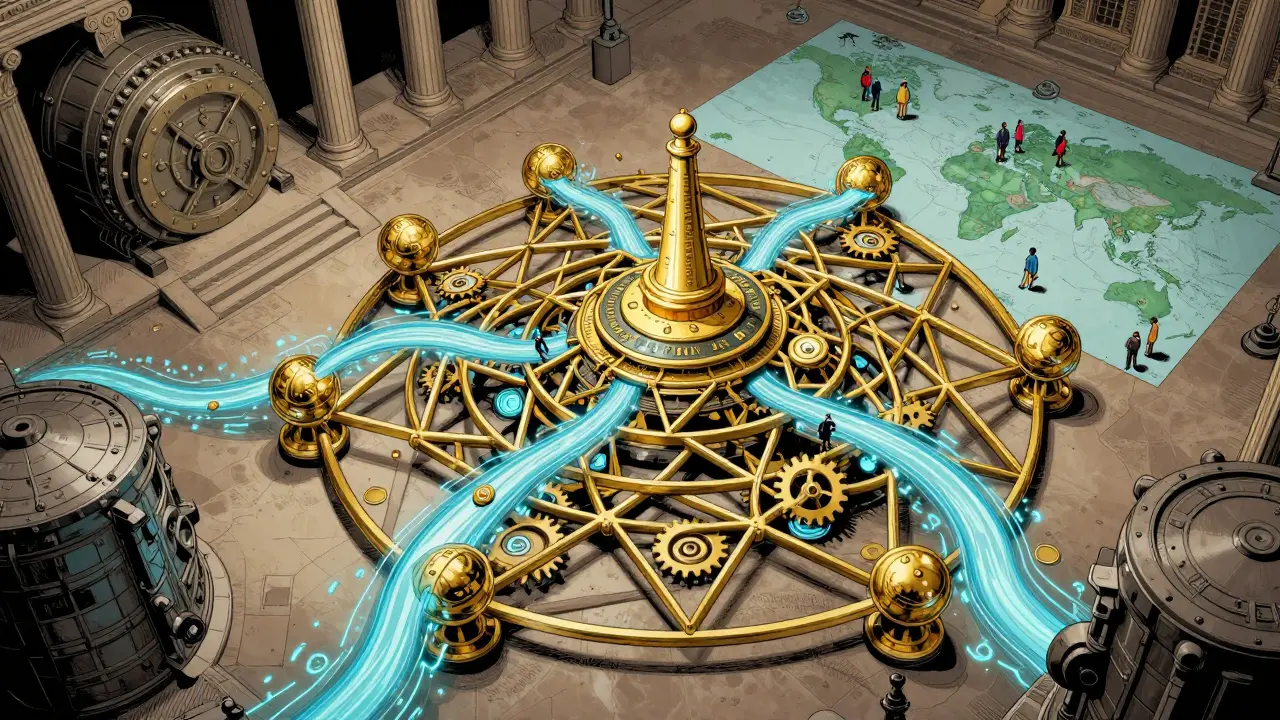
The global fine art market is worth over $1.7 trillion. But 99% of it is inaccessible to regular people. Why? Because:
- One painting can cost $10 million+
- Storage, insurance, and authentication are expensive
- Resale is slow, opaque, and full of middlemen
ARTFI removes all that. You can buy a 0.5% share of a $2 million painting for $10,000. You can sell it later on the open market. You get proof of ownership on-chain. You don’t need to worry about shipping, climate control, or insurance - the platform handles it.
This isn’t fantasy. Companies like Sotheby’s and Christie’s have already started experimenting with tokenized art. ARTFI is one of the first to build a full ecosystem around it - not just as a side project, but as its core mission.
How Is ARTFI Different From Other NFT Projects?
Most NFTs are digital art - pixels created by artists. ARTFI is different. It’s real art - oil on canvas, bronze sculptures, original prints - with physical provenance, museum records, and auction history.
It’s also not a meme coin. There’s no Elon tweet. No influencer hype. It’s built on a clear use case: democratizing access to an asset class that’s historically been for the ultra-rich.
Compare it to:
- Bored Ape Yacht Club: Digital collectibles. No real-world backing.
- RealT: Tokenized real estate. Similar model, but different asset class.
- ARTFI: Tokenized fine art. Unique blend of culture, history, and blockchain.
That’s its edge. It’s not trying to be everything. It’s trying to be the best at one thing: making fine art investable.
What Are the Risks?
ARTFI isn’t risk-free. Here’s what you need to watch:
- Regulation: Who owns the physical art? Who’s liable if it’s damaged? Laws around tokenized real-world assets are still being written. Some countries may ban it.
- Liquidity: If no one wants to buy your fraction of a painting, you’re stuck. Low volume = hard to exit.
- Platform risk: What if ARTFI’s team disappears? What if the vaults get hacked? The platform needs strong custody partners - and transparency.
- Market timing: Crypto is volatile. If Bitcoin crashes, ARTFI will likely fall with it - even if the art itself is still valuable.
These aren’t dealbreakers. But they’re real. This isn’t a get-rich-quick coin. It’s a long-term bet on a new financial infrastructure.
Predictions: Could ARTFI Hit $1.20 by 2029?
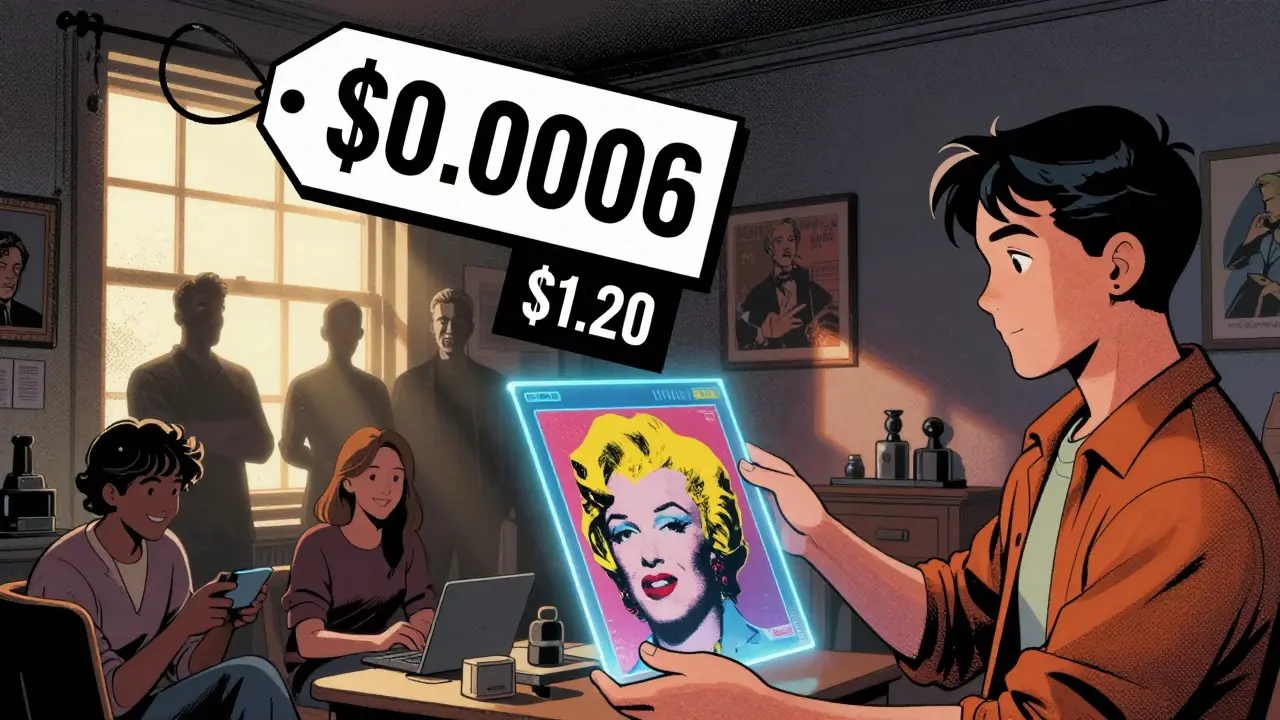
Some analysts say yes. They project ARTFI could reach $1.20 by 2029 - a 64x increase from its late 2024 price. That sounds insane. But consider this:
- If just 1% of the global art market moves onto blockchain, that’s $17 billion in value.
- If ARTFI captures 10% of that, its market cap hits $1.7 billion.
- With 1 billion tokens in supply, that’s $1.70 per token.
That’s not guaranteed. But it’s not fantasy either. It’s math based on real market size.
For that to happen, ARTFI needs:
- More institutional buyers
- Listings on major exchanges
- Clear regulatory approval
- Stronger partnerships with museums and auction houses
Right now, it’s still in the proof-of-concept phase. But if it scales, the upside is enormous.
Where Do You Go From Here?
If you’re curious about ARTFI:
- Visit the official ARTFI website and read their whitepaper. Look for details on their custody partners and art authentication process.
- Check trading volume on CoinGecko or CryptoRank. Is it rising? Is liquidity improving?
- Start small. Buy a fraction of a token. Don’t go all-in.
- Watch for news: Are they listing on a major exchange? Are they partnering with a museum?
ARTFI isn’t for everyone. If you want a quick flip, look elsewhere. But if you believe art should be more than a luxury for billionaires - and if you think blockchain can make that real - then ARTFI is one of the most interesting experiments in crypto today.
Is ARTFI a good investment?
ARTFI isn’t a traditional investment like stocks or Bitcoin. It’s a high-risk, long-term bet on the tokenization of fine art. If the platform succeeds in attracting institutions, regulators, and mainstream collectors, it could grow significantly. But if adoption stalls, it may stay small. Only invest what you can afford to lose.
Can I really own part of a real painting with ARTFI?
Yes. Each ARTFI NFT represents a fractional ownership stake in a real, physically stored artwork. The platform partners with secure vaults and uses AI and blockchain to verify authenticity. You don’t get the physical painting - but you do get legal ownership rights, documented on-chain, with proof of provenance.
Where can I buy ARTFI tokens?
As of 2026, ARTFI is primarily traded on Cetus Exchange (Sui network) and MEXC. It’s not listed on major exchanges like Binance or Coinbase. Always verify the official website before trading, as fake listings exist.
Why is ARTFI’s price so low compared to its fully diluted valuation?
The fully diluted valuation assumes all 1 billion tokens are in circulation. But only 130 million are currently circulating. The rest are locked up for future releases, staking rewards, or platform development. The market is pricing in scarcity - and waiting to see if demand grows before the remaining tokens hit the market.
Does ARTFI have a future if crypto crashes?
The value of the underlying art doesn’t disappear if crypto crashes. A Monet painting still has value even if Bitcoin drops 80%. ARTFI’s long-term viability depends on whether the art market accepts blockchain as a valid ownership system - not on crypto speculation. That’s why it’s fundamentally different from most meme coins.



This is the kind of innovation crypto actually needs. Not another meme coin chasing hype, but a real solution to a real problem. Imagine being able to own a piece of a Warhol without needing a trust fund. ARTFI isn't just a token-it's a gateway. And the fact that it's built on Sui? Smart move. Low fees, fast transactions. This could be the start of something massive.
While the concept is compelling, I must express caution regarding regulatory uncertainty. Tokenizing physical assets introduces legal complexities that have not yet been fully addressed by global jurisdictions. Ownership rights, liability for damage, and cross-border inheritance remain ambiguously defined. Until regulatory frameworks catch up, this remains a high-risk venture despite its elegant design.
bro this is literally the future lmao. monets on the block. i cant believe people still think nfts are just ape pics. this is what crypto was meant to do. democratize the unattainable. if u dont get this ur still living in 2017. #artfi #realdoge
i read this whole thing and honestly? i think it’s brilliant. but… what if the vault gets hacked? like, what if someone steals the actual monet? does the nft still mean anything? i’m not trying to be a downer, but this feels like putting all your eggs in one very expensive basket. also, who’s insuring the art? like… really?
Leveraging blockchain for fractional ownership of blue-chip art is a paradigm shift in asset liquidity. The tokenomics are elegantly structured-scarcity + utility = long-term value accrual. The Sui integration reduces friction, while AI-backed provenance eliminates counterfeiting risks. This isn’t speculation-it’s infrastructure. Early adopters will be the ones who benefit from network effects as institutional capital flows in. Don’t just HODL-engage.
I’d rather own the painting. But if I can’t? Then yes. This makes sense.
i love this idea but i’m worried about the long-term. what happens if the platform shuts down? or if the team disappears? the art’s still there, but the nfts might just become digital ghosts. maybe they should partner with a museum or a legacy trust to make sure the ownership records survive even if the company doesn’t. just a thought.
so like… this is basically just a way for rich people to feel like they’re not rich? like, i get it, it’s cool. but if i can’t even afford one fraction of a token, is this really for me? or is this just a new way for billionaires to flex? 🤔
this is wild 😍 i mean, imagine your grandkids inheriting a piece of a Monet like it’s a stock. that’s next level. i’d love to see this on a major exchange. also, if ARTFI ever does a merch drop, i’m buying the hoodie. 🙌
Oh, so now we’re going to tokenize art? How quaint. Next you’ll be tokenizing the Mona Lisa’s smile. I’m sure the Louvre is just *dying* to collaborate with a crypto startup. 🤡
The tokenomics are sound: fixed supply, controlled release, utility-driven demand. The real challenge lies in custody and legal enforceability. For ARTFI to succeed, it must establish binding agreements with accredited vault operators and obtain legal recognition of fractional ownership rights under international property law. Without this, the NFTs are merely digital receipts.
this is the future and you guys are overthinking it like always the art is real the blockchain is real the demand is coming just buy in and dont ask so many questions
The notion of democratizing fine art through blockchain is a compelling narrative, but one must consider the structural hierarchy of cultural capital. Art markets are not merely financial instruments-they are deeply embedded in social prestige, provenance, and institutional validation. Tokenization may facilitate liquidity, but it cannot replicate the aura of the original. This is finance, not culture.
I appreciate the ambition behind ARTFI, but I urge caution. The project’s long-term viability hinges on institutional adoption, which requires not just technological excellence, but legal clarity and fiduciary responsibility. Until major auction houses and regulatory bodies endorse this model, it remains an intriguing experiment-not a scalable asset class.
so wait… you’re telling me i can buy 0.01% of a warhol? for $500? cool. now tell me how much i get paid when i sell it. oh right. nothing. because the art’s still in a vault. so i guess i’m just paying for a digital sticker? 🤷♀️
this sounds cool but also like a lot of work 😴 i just want to buy a crypto and watch it go up. not learn about vaults and provenance and siiiiuiii blockchain. can i just rug pull this and move on?
I think about this differently. Art has always been about belonging. A painting in a museum is not owned-it is shared. ARTFI doesn’t just make art investable. It makes it communal. You don’t own a piece of Monet-you become part of a story that spans centuries. That’s not finance. That’s poetry. And poetry doesn’t need to be liquid. It just needs to be felt.