
What is Pascal Protocol (PASC)? A Guide to DeFi's Clearing Layer
Imagine trying to trade stocks on five different exchanges but having your money stuck in separate accounts for each one. You can't see your total risk at a glance, and if one market crashes, you might get liquidated even though your other positions are profitable. That is the problem Pascal Protocol aims to solve.
Pascal Protocol is an on-chain clearing engine designed for decentralized finance (DeFi). Instead of being a place where you buy and sell assets directly, it acts as the invisible infrastructure behind the scenes-the "clearing house" that manages risk and margin for various trading platforms. Its native token, PASC, powers this system.
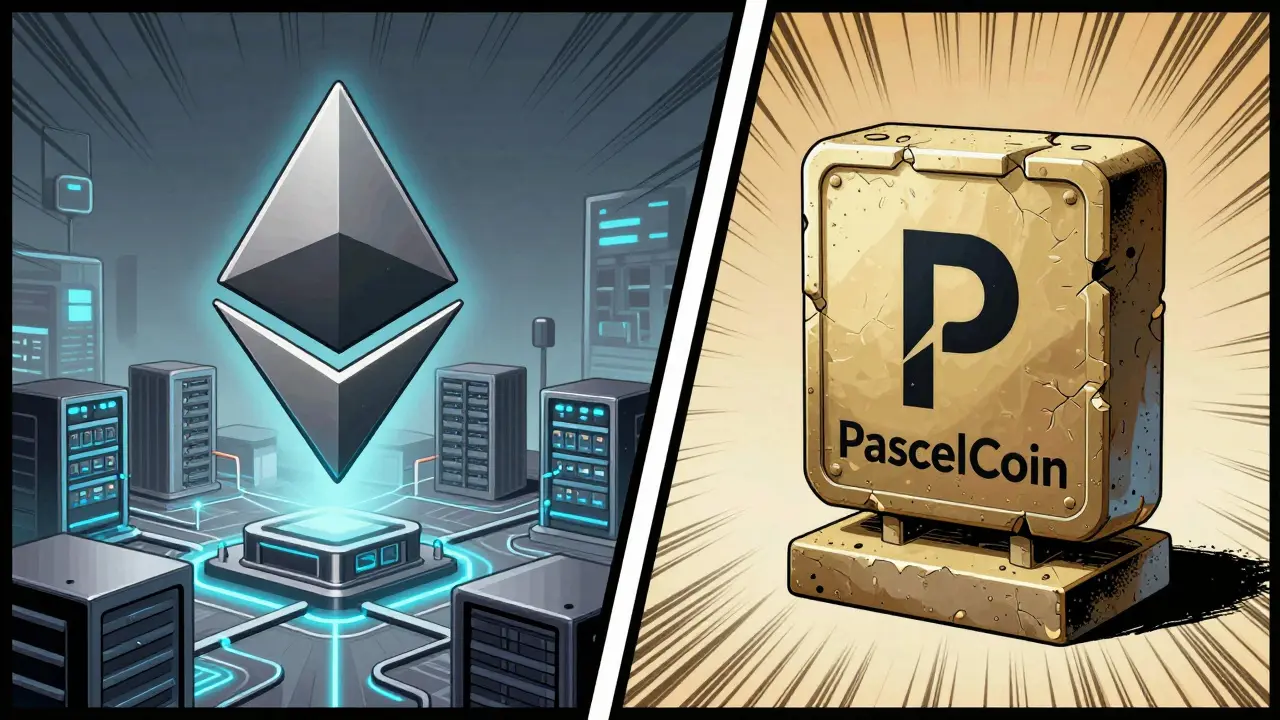
If you have seen the ticker symbol PASC before, you might be confused. There is another project called PascalCoin that uses the same abbreviation. They are completely different. This article focuses strictly on Pascal Protocol, the Ethereum-based infrastructure launched in 2024 that targets institutional-grade derivatives trading.
The Core Problem: Fragmented Risk in DeFi
To understand why Pascal Protocol exists, you need to look at how decentralized derivatives markets work today. Currently, most DeFi protocols operate in silos. If you trade perpetual futures on one platform and options on another, each protocol calculates your margin requirements independently.
This fragmentation creates two major issues:
- Inefficient Capital Use: You have to lock up more collateral than necessary because each platform doesn't know about your hedging positions elsewhere.
- Opaque Risk Management: Without a shared standard, it is hard for auditors or regulators to verify if a protocol is managing risk correctly. This lack of transparency keeps many traditional financial institutions on the sidelines.
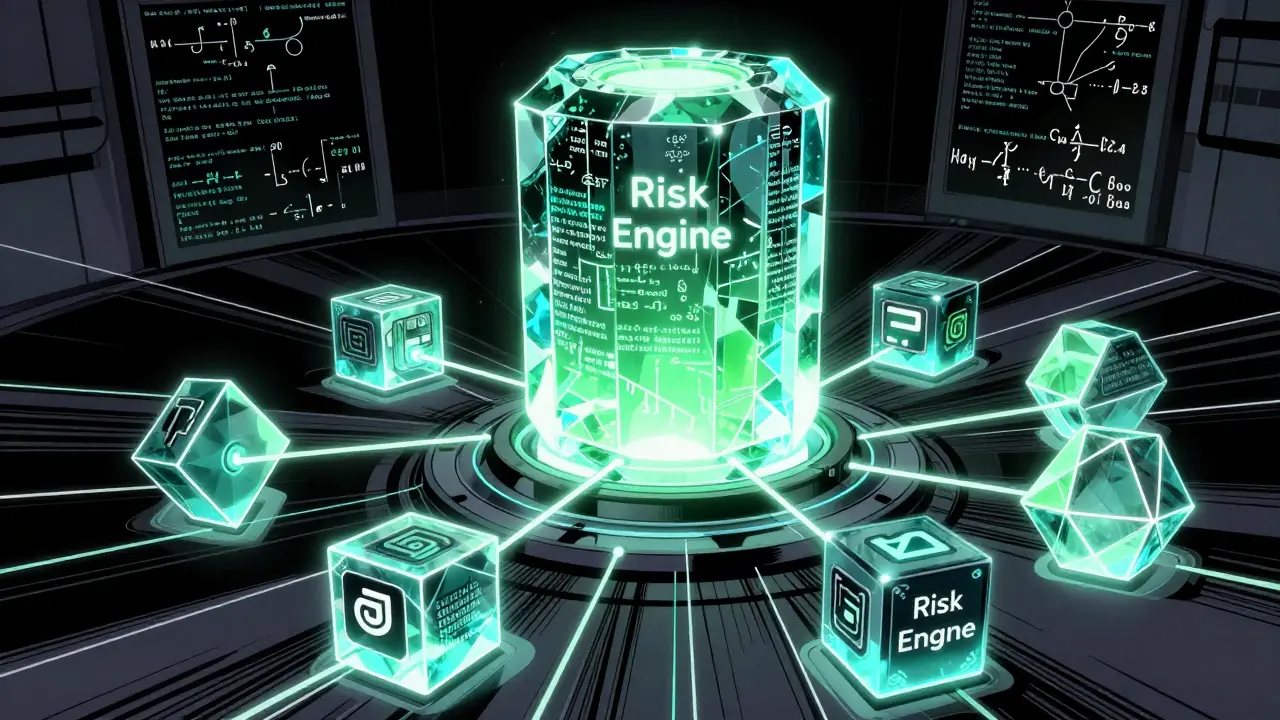
Pascal Protocol proposes a solution by creating a neutral, shared layer. Think of it like a universal translator for risk. It allows different decentralized exchanges (DEXs) and structured product platforms to plug into a single, deterministic risk engine. This enables "portfolio margining," where your total exposure across multiple venues is calculated together, freeing up capital and reducing the chance of unexpected liquidations.
How the Technology Works
Pascal Protocol operates on the Ethereum blockchain. The PASC token is implemented as an ERC-20 smart contract. While the front-end interfaces might change depending on which exchange you use, the core logic lives in Pascal's contracts.
The architecture relies on three main components:
- Collateral Management: Smart contracts that hold and track user funds securely.
- Risk Engine: The brain of the operation. It calculates mark-to-market values, determines margin requirements, and triggers liquidations based on transparent, on-chain rules.
- Integration Adapters: Interfaces that allow external protocols (like options markets or Real-World Asset platforms) to send their data to Pascal for unified risk assessment.
The key selling point here is "deterministic" logic. In complex financial systems, "deterministic" means that given the same inputs, the output will always be the same. This makes the system auditable. Anyone can verify the math behind a liquidation or a margin call, which is crucial for gaining trust from professional traders and institutions.
Tokenomics: Supply and Distribution
Understanding the economics of the PASC token is essential before considering any investment. The supply dynamics are fixed and relatively small compared to major cryptocurrencies.
| Attribute | Value |
|---|---|
| Total Supply | 10,000,000 PASC |
| Max Supply | 10,000,000 PASC |
| Blockchain | Ethereum (ERC-20) |
| Private Sale Allocation | ~46.35% (4.63M PASC) |
| Public Sale Allocation | ~0.71% (71,430 PASC) |
A few things stand out immediately. First, the supply is capped at 10 million tokens, meaning there is no inflationary pressure from new minting. Second, the distribution is heavily skewed toward private investors. Nearly half of all tokens were sold in private rounds, with less than 1% available to the general public during the initial sale.
This structure implies that liquidity in the early stages was likely thin. When a large portion of supply is held by a few entities (private investors, team, treasury), price discovery can be volatile. Investors need to watch vesting schedules closely, as unlocks from private sales could increase circulating supply significantly over time.
Market Data and Liquidity Challenges
One of the biggest hurdles for Pascal Protocol right now is inconsistent market data. If you search for "PASC price" across different aggregators, you might see wildly different numbers-or zero.
Here is why this happens:
- Listing Confusion: Some major exchanges list Pascal Protocol under legacy URL paths originally used for a different asset (Crypto Valley Exchange). This technical mix-up has led to broken data feeds on some platforms.
- Low Volume: As of mid-2026, trading volume remains low. Some aggregators report $0 volume in 24-hour windows, while others show sporadic activity on smaller decentralized exchanges.
- Circulating Supply Discrepancies: One aggregator might list only 666 tokens in circulation, while another implies millions based on market cap calculations. This makes it nearly impossible to determine the true free-float value without checking on-chain balances directly.
For a trader, this means high slippage risk. If you try to buy a significant amount of PASC, you might move the price drastically due to shallow order books. Always check the actual liquidity pools on DEXs rather than relying solely on centralized exchange listings.
Pascal Protocol vs. PascalCoin: Don't Get Them Mixed Up
This is critical. There is an older cryptocurrency called PascalCoin, which also uses the ticker PASC. It is an entirely separate Layer 1 blockchain project launched years ago.
Key differences:
- Pascal Protocol (This Article): An Ethereum ERC-20 token focused on DeFi derivatives clearing. Launched in 2024.
- PascalCoin: A standalone blockchain with its own consensus mechanism. Its base unit is Pascal, subdivided into Molinas (1 Pascal = 10,000 Molinas).
Because they share the ticker, accidental buys happen frequently. Before transferring funds, always verify the contract address. For Pascal Protocol on Ethereum, the correct address ends in ...C4AB5F4. Never send ETH to a PascalCoin address expecting to receive PASC tokens for the clearing protocol.
Future Roadmap and Institutional Goals
Pascal Protocol is not positioning itself as a consumer retail trading app. Its roadmap emphasizes becoming a "neutral, scalable clearing layer for institutional-grade DeFi." This means their primary customers are other protocols, not individual day traders.
Upcoming priorities include:
- Options Launch: Expanding beyond simple perpetual swaps to support options trading, which requires more complex risk modeling.
- Real-World Assets (RWAs): Integrating tokenized real-world assets into the clearing engine, allowing traditional financial instruments to benefit from DeFi efficiency.
- Volatility Surfaces: Deepening integrations with volatility trading products.
The long-term vision is to create a standardized risk language for the entire DeFi stack. If successful, this could bridge the gap between traditional finance (TradFi) and decentralized finance, making it easier for regulated entities to participate in crypto markets with confidence.
Is Pascal Protocol Right for You?
Pascal Protocol represents a niche but potentially vital piece of DeFi infrastructure. It is not a meme coin, nor is it a direct trading venue. It is a backend utility designed to make derivatives trading safer and more capital-efficient.
However, it carries significant risks typical of early-stage infrastructure projects:
- Liquidity Risk: Low trading volume means entering and exiting positions can be costly.
- Adoption Risk: The value of PASC depends entirely on other protocols integrating with its clearing engine. If major DEXs do not adopt it, the utility remains theoretical.
- Data Transparency: Inconsistent reporting across aggregators makes fundamental analysis difficult.
If you are a developer building derivatives products, Pascal offers a promising SDK for risk management. If you are an investor, treat PASC as a high-risk, speculative play on the future of institutional DeFi. Do your own due diligence, verify contract addresses, and never invest more than you can afford to lose.
What is the difference between Pascal Protocol and PascalCoin?
They are completely unrelated projects. Pascal Protocol is an Ethereum-based ERC-20 token launched in 2024 that serves as a clearing layer for DeFi derivatives. PascalCoin is an older, independent Layer 1 blockchain project. Both use the ticker PASC, so always check the contract address to avoid sending funds to the wrong network.
Where can I buy PASC tokens?
PASC is primarily traded on decentralized exchanges (DEXs) via Ethereum-compatible wallets like MetaMask. Some centralized exchanges list it, but liquidity varies widely. Always verify the official contract address (0x65d6ae56f6e4f3aa7C4249C4023698104C4AB5F4) before swapping.
What is the total supply of PASC?
The total and maximum supply of Pascal Protocol is fixed at 10,000,000 PASC. There is no inflationary minting mechanism. Approximately 46.35% was allocated to private sales, and 0.71% to public sales.
Why is the PASC price different on different websites?
Inconsistencies arise due to low liquidity, broken data feeds on some exchanges, and confusion with the PascalCoin ticker. Some aggregators may calculate market cap based on incorrect circulating supply figures. Always cross-reference prices with on-chain data from reputable DEXs.
Does Pascal Protocol require ETH to use?
Yes. Since Pascal Protocol operates on the Ethereum blockchain, users need ETH in their wallet to pay for gas fees when interacting with the smart contracts, such as depositing collateral or executing trades through integrated platforms.