Why Cryptocurrency Has Value: Supply, Utility, and Trust
You buy a cup of coffee with cash. You know it’s worth something because the government says so, and everyone else agrees to take it for goods and services. Now, imagine buying that same coffee with a string of digital code that no bank controls, no government backs, and which didn’t exist ten years ago. Why does that code have value? It feels like magic, but it’s actually a mix of strict math, human psychology, and technological utility.
People often ask why Bitcoin is worth thousands of dollars when you can’t hold it in your hand. The answer isn’t simple, but it’s not mysterious either. Cryptocurrency derives its value from a complex interplay of technological security, programmed scarcity, and network adoption. Unlike fiat money, which relies on central authority, crypto relies on decentralized consensus. If you want to understand where the price tag comes from, you need to look at three specific pillars: supply mechanics, real-world utility, and community trust.
The Power of Programmed Scarcity
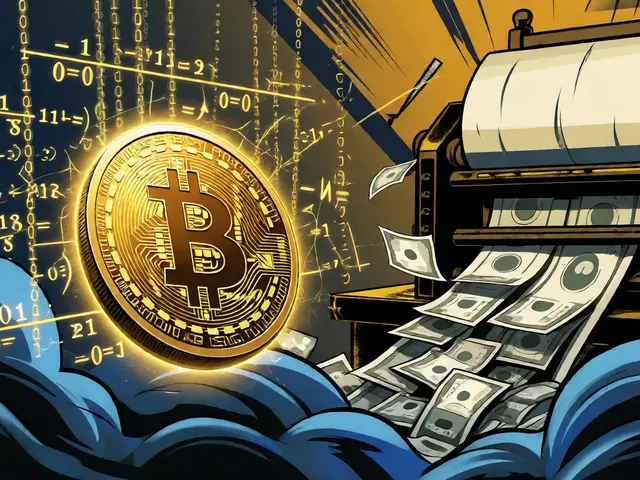
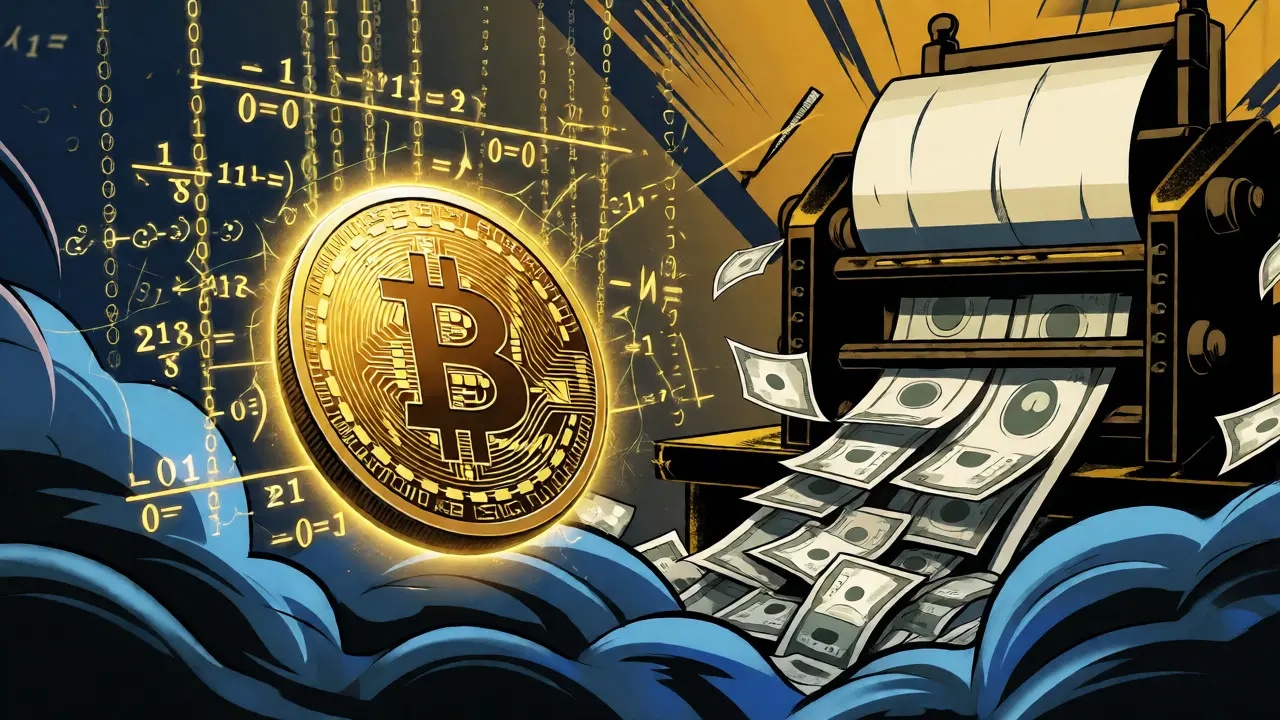
Think about gold. It has value partly because it’s rare. You can’t just print more gold like you can print paper money. Most cryptocurrencies mimic this model through supply caps. Take Bitcoin again. Its creator, Satoshi Nakamoto, hard-coded a limit of 21 million coins into the system. There will never be a 21,000,001st Bitcoin. This creates artificial scarcity, similar to how diamonds are valued, though diamonds’ scarcity is somewhat manufactured by mining companies.
This fixed supply meets fluctuating demand. When more people want to buy Bitcoin than sell it, the price goes up. Because the supply cannot expand to meet this demand (unlike fiat currency, which central banks can print endlessly), the price adjusts upward. This mechanism is transparent. Anyone can check the blockchain ledger to see exactly how many coins exist right now. There are no hidden inflation tricks or secret printing presses. For investors worried about their savings losing purchasing power due to inflation, this predictable monetary policy is a major draw.
| Feature | Fiat Currency (e.g., USD) | Cryptocurrency (e.g., Bitcoin) |
|---|---|---|
| Value Source | Government decree & legal tender status | Market consensus & mathematical scarcity |
| Supply Control | Central Bank decisions (elastic) | Protocol rules (inelastic/fixed) |
| Backing | Economic output of the nation | Network security & utility |
Utility Beyond Just Being Money
If scarcity were the only factor, we’d all be hoarding shiny rocks. But cryptocurrency offers something rocks don’t: functionality. Ethereum, for example, isn’t just a digital coin; it’s a platform. It runs smart contracts, which are self-executing agreements with the terms directly written into code. This allows developers to build applications-known as dApps-that run without a middleman.
Consider decentralized finance (DeFi). In traditional banking, if you want to lend money or earn interest, you go to a bank. They take a cut, set the rates, and control the access. With Ethereum-based DeFi protocols, you can lend or borrow assets directly from other users globally, 24/7, without needing approval from a loan officer. The value of Ether (the token used on Ethereum) rises because people need it to pay for these transactions and compute resources. It’s like paying for electricity to run a machine; the more machines you build, the more valuable the electricity becomes.
Other cryptocurrencies serve different utilities. Ripple (XRP) focuses on cross-border payments for financial institutions, aiming to make international transfers faster and cheaper than the current SWIFT system. Monero prioritizes privacy, offering transaction confidentiality that standard blockchains lack. Each project competes for value based on how well it solves a specific problem better than existing solutions.

The Security and Transparency Factor
Why trust code over a bank? Because the code is open for inspection. Traditional banks keep their ledgers private. You have to trust them not to make mistakes or commit fraud. A public blockchain is a distributed ledger visible to anyone. Every transaction ever made on the Bitcoin network since 2009 is recorded permanently. This transparency builds trust in the system’s integrity.
Security is maintained through cryptography and consensus mechanisms like Proof-of-Work. Miners use powerful computers to solve complex mathematical puzzles to verify transactions. This process requires significant energy and hardware investment, making it prohibitively expensive to hack the network. To alter a past transaction, an attacker would need to control more than 50% of the network’s computing power simultaneously. For a network as large as Bitcoin, that costs billions of dollars. This high barrier to entry ensures that the history of transactions remains tamper-proof.
This security feature translates directly to value. In countries with unstable governments or hyperinflation, such as Venezuela or Zimbabwe, citizens often turn to stablecoins or Bitcoin to preserve wealth. They aren’t necessarily speculating; they’re using the technology’s security features to protect their savings from local economic collapse. The ability to transfer value across borders without permission from a central authority adds a layer of financial sovereignty that traditional systems simply cannot match.
Network Effects and Community Sentiment
Here is the uncomfortable truth: much of cryptocurrency’s value is social. Economists call this the "network effect." A telephone network is useless if you are the only person who owns one. It becomes valuable as more people join. Cryptocurrencies work the same way. Bitcoin has value largely because millions of people, businesses, and even some nations believe it has value and accept it.
Developer activity is a key indicator here. If a project has active coders constantly improving the software, fixing bugs, and adding features, it signals long-term viability. Conversely, projects with stagnant development often lose value, regardless of their marketing hype. Social sentiment plays a huge role too. News events, regulatory announcements, or tweets from influential figures can swing prices wildly. This volatility scares off some traditional investors but attracts others looking for high-growth opportunities.
Institutional adoption is shifting this dynamic. When companies like Tesla or MicroStrategy put billions into Bitcoin on their balance sheets, it validates the asset class for mainstream finance. Similarly, the approval of spot Bitcoin ETFs in the US allowed traditional stock market investors to gain exposure without managing digital wallets. These moves reduce friction and increase liquidity, further stabilizing the perceived value.

Risks That Challenge Value
It’s not all upside. The very features that create value also introduce risk. Since there is no central bank acting as a lender of last resort, if you lose your private keys, your money is gone forever. There is no customer service hotline to reset your password. This places full responsibility on the user, which can be daunting for newcomers.
Regulatory uncertainty remains a shadow over the industry. Governments are still figuring out how to tax and regulate digital assets. A sudden ban on mining or trading in a major economy can crash prices overnight. Furthermore, the technology is still maturing. Scalability issues mean that during times of high congestion, transaction fees on networks like Ethereum can spike, making small purchases impractical. While Layer-2 solutions are addressing this, these technical growing pains affect short-term utility and, consequently, value.
Finally, environmental concerns impact perception. Proof-of-Work mining consumes vast amounts of electricity. Critics argue this makes crypto unsustainable, while proponents point to the increasing use of renewable energy sources by miners. As climate awareness grows, the carbon footprint of certain cryptocurrencies may influence institutional investors’ willingness to allocate capital.
Key Takeaways
- Scarcity: Fixed supply limits, like Bitcoin’s 21 million cap, drive value through basic economic principles of supply and demand.
- Utility: Platforms like Ethereum derive value from enabling smart contracts and decentralized applications, not just being a store of value.
- Trust: Decentralized security and transparent ledgers replace the need for trusted third parties like banks.
- Adoption: Network effects and institutional acceptance significantly boost legitimacy and price stability.
- Risk: Volatility, regulatory changes, and technical hurdles remain primary challenges to sustained value growth.
Is cryptocurrency backed by physical assets?
Generally, no. Unlike fiat currencies which are historically backed by gold (though mostly abandoned now) or government authority, most cryptocurrencies are not backed by physical commodities. Their value comes from market consensus, utility within their respective networks, and programmed scarcity. Some stablecoins are exceptions, designed to be pegged 1:1 with fiat currencies or commodities like gold.
Why is Bitcoin considered 'digital gold'?
Bitcoin earns this nickname because it shares key characteristics with gold: it is durable, portable, divisible, fungible, and scarce. Like gold, it acts as a hedge against inflation and currency debasement because its supply is capped and predictable, unlike fiat money which can be printed in unlimited quantities by central banks.
Does regulation affect cryptocurrency value?
Yes, significantly. Clear regulatory frameworks tend to increase investor confidence and institutional adoption, potentially raising values. Conversely, restrictive regulations, bans on mining, or harsh tax policies can suppress demand and lower prices. Regulatory clarity helps integrate crypto into the broader financial system, enhancing its utility and legitimacy.
What happens if a cryptocurrency project fails?
If a project loses developer support, faces insurmountable technical flaws, or fails to find a market fit, its token value can drop to near zero. Unlike stocks, where bankruptcy might leave shareholders with residual claims, failed crypto tokens often become worthless because they rely entirely on network activity and community belief for value.
How do transaction fees impact cryptocurrency value?
Transaction fees compensate miners or validators for securing the network. High fees can deter usage, reducing demand for the token if it becomes too expensive to use for everyday transactions. However, fee revenue also contributes to network security budgets. Technologies like Layer-2 scaling aim to lower fees while maintaining security, balancing utility and cost-effectiveness.