
What is Quantum Resistant Ledger (QRL)? A Guide to Post-Quantum Crypto
Most people don't think about the end of modern encryption, but in the world of finance, it's a looming shadow. Imagine a computer so powerful that it can crack the private keys of almost every Bitcoin or Ethereum wallet in existence. This isn't a plot from a sci-fi movie; it's the theoretical capability of a fully functional quantum computer. This is where Quantum Resistant Ledger is a post-quantum secure blockchain platform designed to protect digital assets from the cryptographic threats posed by quantum computing. Also known as QRL, it was launched on June 26, 2018, by Dr. Peter Waterland to solve a problem that most of the industry is currently ignoring.
The Quantum Threat to Your Wallet
To understand why QRL exists, you have to understand how your current crypto works. Most blockchains use Elliptic Curve Cryptography (or ECDSA), which is basically a complex math problem that would take a traditional computer trillions of years to solve. However, a quantum computer uses qubits and algorithms like Shor's algorithm to solve these specific math problems in minutes. If a quantum-capable adversary emerges, they could derive your private key from your public address and steal your funds.
While experts estimate we are 10 to 30 years away from this becoming a reality, the risk is existential. If a blockchain waits until the quantum computer arrives to upgrade, it might be too late. QRL takes a "security-first" approach by being quantum-resistant from day one, meaning it doesn't need a desperate hard fork in the future to survive.
How QRL Actually Works: The Tech Secret
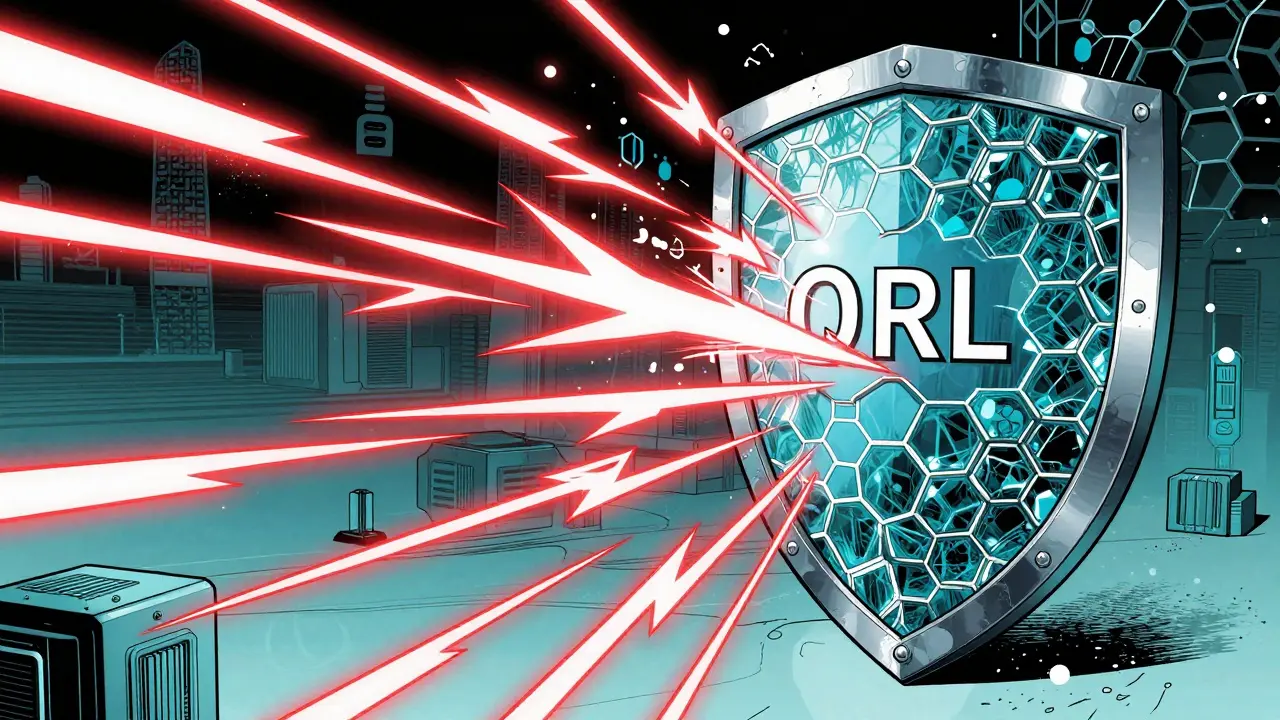
QRL doesn't rely on the vulnerable math used by Bitcoin. Instead, it uses the eXtended Merkle Signature Scheme, commonly called XMSS. This is a hash-based signature scheme that is recognized and approved by the NIST (National Institute of Standards and Technology). Because hash functions are fundamentally different from elliptic curves, they are naturally resistant to the types of calculations quantum computers excel at.
Beyond just the signatures, QRL implements several layers of protection:
- Lattice Key Storage: It uses on-chain lattice-based storage to keep keys secure.
- Ephemeral Messaging: An internode communication layer that ensures messages between servers are also quantum-secure.
- IETF Standards: The project follows standards set by the Internet Engineering Task Force, ensuring the cryptography isn't just a "home-grown" experiment but follows global security protocols.
Comparing QRL to Traditional Blockchains
If you're deciding whether QRL fits into your portfolio, it helps to see how it stacks up against the giants. While Bitcoin and Ethereum focus on scalability and smart contract ecosystems, QRL focuses almost exclusively on long-term cryptographic survival.
| Feature | Bitcoin / Ethereum | Quantum Resistant Ledger (QRL) |
|---|---|---|
| Cryptography | Elliptic Curve (ECDSA) | Hash-based (XMSS) |
| Quantum Status | Vulnerable | Resistant by Design |
| Standardization | Industry Standard | NIST & IETF Approved |
| Primary Goal | Store of Value / Utility | Long-term Cryptographic Security |
Tokenomics and Market Reality
From an investment perspective, QRL operates on its own independent blockchain; it is not a token riding on another network. The maximum supply is capped at 110 million tokens, which creates a hard ceiling on inflation. As of April 2026, roughly 78 million tokens are in circulation.
The price of QRL has shown significant volatility, which is typical for niche security projects. For instance, between March 2025 and April 2026, the price jumped from around $0.63 to approximately $1.35. This suggests that as the conversation around quantum computing becomes more mainstream, investors are moving toward "insurance" assets like QRL. With a market cap hovering around $105 million, it remains a mid-tier project, appealing more to security-conscious users than the average day-trader.
Practical Use and Wallet Integration
You can't just leave your QRL on an exchange if you actually care about the security the project promises. The most secure way to handle the asset is through Ledger. QRL has tight integration with Ledger hardware wallets, allowing users to keep their XMSS keys offline.
For developers, QRL provides a rich API and an open-source architecture. This means that companies wanting to build a private, ultra-secure blockchain for internal communications can leverage the QRL protocol without starting from scratch. The combination of audited cryptography and hardware support makes it an enterprise-grade tool rather than just a speculative coin.

Is QRL a Necessary Hedge?
You might wonder if it's worth holding a coin for a problem that might not happen for two decades. It's a bit like buying fire insurance for a house that hasn't caught fire yet. For most people, the current utility of Bitcoin or Solana is more attractive. But for institutional holders or those planning to hold assets for 20+ years, the risk of "quantum decryption" is a real variable.
The main trade-off is specialization. Because QRL focuses so heavily on security, it doesn't have the massive ecosystem of dApps or NFTs that you find on Ethereum. It's a tool for a specific job: surviving the quantum era. If you believe that quantum computing will inevitably break current encryption, QRL is one of the few projects providing a legitimate, standardized escape hatch.
Is QRL an ERC-20 token?
No, QRL is not an ERC-20 token. It operates on its own independent, native blockchain specifically engineered for quantum resistance.
What happens to Bitcoin if quantum computers arrive?
If a quantum computer can solve the ECDSA math used by Bitcoin, it could potentially steal funds from any address where the public key is known. Bitcoin would need to undergo a massive hard fork to implement a new, quantum-resistant signature scheme.
What is XMSS and why does it matter?
XMSS stands for eXtended Merkle Signature Scheme. It is a hash-based digital signature that doesn't rely on the mathematical problems that quantum computers are good at solving, making it a reliable defense against quantum attacks.
How do I store QRL safely?
The best way to store QRL is using a hardware wallet like Ledger, which has official support for the QRL app, ensuring your private keys never touch an internet-connected device.
Who founded QRL and when?
QRL was founded by Dr. Peter Waterland and officially launched on June 26, 2018.
Next Steps for Users
If you are new to post-quantum security, start by auditing your current holdings. Determine which of your assets rely on elliptic curve cryptography. If you're looking to diversify into a "hedge" asset, research the latest updates on the QRL API and community development. For those prioritizing security, the first step is acquiring a compatible hardware wallet to ensure your keys are stored in a cold environment.






It's actually really thoughtful how this project focuses on the long-term survival of assets rather than just chasing the next hype cycle.
Everyone acting like this is some magic bullet. It's just another niche coin that'll probably be dead long before a quantum computer can even boot up. I've seen a dozen 'next gen' security projects vanish into thin air while the big dogs just keep eating the market.
For those just starting out, remember that hardware wallets aren't just for the whales. Getting your keys off the web is the single best move you can make regardless of the quantum threat.
The notion that we have "10 to 30 years" is a convenient lie fed to the masses by the establishment to keep us complacent. The hardware already exists in black-site labs; the only thing missing is the public admission. This entire financial system is a house of cards waiting for a single qubit to knock it over, and honestly, the government probably wants that to happen so they can reset everything to zero. It is utterly naive to think a small project like this is the only lifeboat when the architects of the storm are the ones controlling the tide.
OH MY GOD! The sheer scale of this threat is absolutely terrifying! Imagine waking up and seeing your life savings gone because some lab in another country finally cracked ECDSA! We need to be shouting this from the rooftops right now!
who cares about quantum computers when the current exchanges just steal your money anyway lol
Oh, look at us, pretending that a mere hash-based signature like XMSS is a silver bullet while we ignore the blatant latency overhead and the absolute nightmare of state management in one-time signatures. It's just precious that people think migrating to a post-quantum primitive is as simple as flipping a switch without considering the catastrophic throughput degradation that usually accompanies these NIST-approved fossils. Honestly, the intellectual laziness of the current 'investor' class is just breathtaking, as if the only variable in a cryptographic transition is the algorithm itself and not the actual implementation of the stateful signatures which, by the way, is where most of these projects actually fail in a production environment.
A quaint little hedge for the paranoid 🙄. Most of these retail peasants wouldn't know a Merkle tree from a Christmas tree. 🎄 Truly a masterpiece of over-engineering for a problem that won't exist until the sun burns out. ☀️
It's not an ERC-20 token. It's its own chain. Simple.
Let's all get educated on this! It's so exciting to see tech that actually looks at the future!
too many words for a coin that basically does nothing but sit there
I feel truly overwhelmed by the complexity of these quantum machines. It is most distressing to think of such a loss of security.
Love the focus on security here! 🚀 Safety first always! 🛡️
If you're still holding BTC in a hot wallet, you're basically asking to be robbed. Wake up and use a real security layer or stop complaining when you lose everything.
The UX on this is honestly a joke. Why do we always prioritize the math over the actual human experience of using the product?
This technology is amazing and will make our digital infrastructure so strong! My country is adopting so many tech innovations right now and we will lead the way! 🇮🇳
It is quite prudent to maintain a diverse portfolio that accounts for systemic cryptographic failure. 😊
absolute garbage logic for the weak. i dont need a hedge when i control the game. the math is just a tool for those who cant handle the volatility
Spot on guide. Short and useful.
The analysis here is barely adequate. They gloss over the actual implementation of the XMSS trees. It's a typical amateurs mistake to assume that NIST approval equals seamless deployment in a decentralized environment. Ridiculous.
Actually, the claim that Bitcoin will just "hard fork" is optimistic. Coordinating a network of that size during a live attack is a logistical nightmare that most people ignore because it's easier to believe in a fairy tale.
It's interesting to think of this as a form of digital insurance. We aren't just buying a token, we're buying peace of mind for the future.
they want us in these new ledgers so they can track the movements once the old keys are dead its all a trap to move us into a controlled system
just buy it and wait lol
Exactly! The logistical nightmare of a hard fork is exactly why we need a native solution from the start! It's a total catastrophe waiting to happen!