

Russian Ruble Crypto Trading Restrictions: A 2026 Guide
If you're trying to move money between the Russian Ruble and digital assets, you've probably noticed that the rules change depending on whether you're staying inside Russia or crossing a border. It's not a simple "yes" or "no" situation. Instead, Russia has built a two-tier system: one that basically bans crypto for daily life and another that actively uses it to bypass global sanctions.
The core problem is that while the government wants the benefits of Bitcoin for international trade, they are terrified of it replacing the ruble at home. This has created a high-stakes environment where doing the wrong kind of trade could lead to criminal liability, while the right kind of trade-for the right people-is booming.
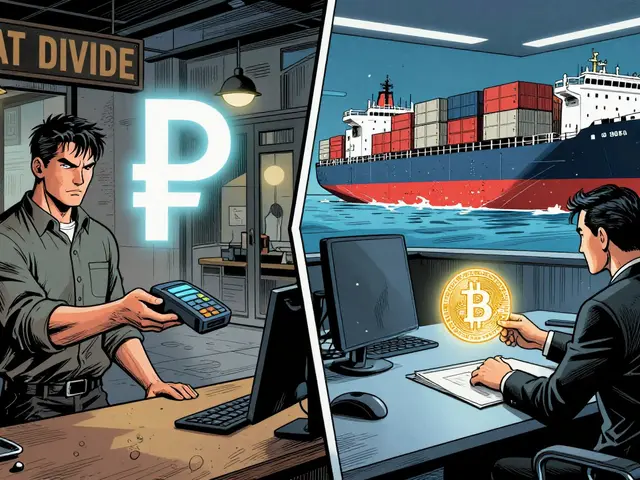
The Great Divide: Domestic Bans vs. International Trade
The most important thing to understand about Russian ruble crypto trading restrictions is the wall between domestic and foreign transactions. Since January 2021, it has been illegal to use cryptocurrency to pay for a coffee, a car, or a service within Russia. The ruble remains the only legal tender for internal payments. If you're caught using crypto as a payment method inside the country, you're breaking the law.
However, the script flips when you look at international trade. In 2024, Russia launched the Experimental Legal Regime (ELR). This is essentially a legal sandbox that allows specific companies to use crypto for cross-border settlements. Why? Because Western sanctions have made traditional banking like SWIFT nearly impossible for many Russian firms. By using crypto, exporters and importers can move value without needing a Western bank's permission.
This shift wasn't just a small tweak; it was a massive pivot. By 2025, the volume of trade facilitated by crypto reached 1 trillion rubles. It's a pragmatic move: the state hates decentralized currencies in their own backyard but loves them as a tool to fight financial isolation.
Who Can Actually Trade? The Qualified Investor Hurdle
You can't just open an app and start trading sophisticated crypto products in Russia. The Central Bank of Russia (CBR) has set the bar incredibly high to keep the general public away from high-risk volatility. To access crypto derivatives, like Bitcoin futures, you have to be a "qualified investor."
What does that actually mean in numbers? You typically need to prove you have assets worth over 100 million rubles or an annual income exceeding 50 million rubles. It's a strategy designed to ensure that only those who can afford to lose millions are playing with these instruments. When these products first opened up in May 2025, qualified investors jumped in quickly, purchasing $16 million in assets within a single month.
| User Type | Domestic Payments | International Trade | Crypto Derivatives |
|---|---|---|---|
| Retail User | Prohibited | Limited/Shadow Market | Prohibited |
| Qualified Investor | Prohibited | Permitted via ELR | Permitted |
| ELR Company | Prohibited | Permitted | Permitted |

Institutional Adoption and the Infrastructure Push
Despite the strict rules, the big players are moving in. You'll see institutions like Sber and the Moscow Exchange offering financial products tied to crypto prices. They aren't necessarily letting you buy the coins directly in a simple way, but they are building the plumbing for a regulated market.
The government is also obsessed with "homegrown infrastructure." The Ministry of Finance has been vocal about the need for Russian-owned mining operations and exchanges. They don't want to rely on foreign platforms that can be shut down by a US or EU regulator. This is why you'll see a push for regions with cheap, idle energy to turn into massive mining hubs.
Interestingly, even the skeptics are softening. By late 2025, reports indicated the Central Bank was studying Bitcoin not as a currency, but as a hedge against the debasement of fiat currencies. If the CBR officially accepts Bitcoin as a reserve asset, it would be a total 180-degree turn from their early days of calling crypto a "bubble."
Compliance, Taxes, and the Shadow Market
If you are operating legally, the paperwork is grueling. Businesses in the ELR must follow strict Anti-Money Laundering (AML) and Know Your Customer (KYC) protocols. The government is particularly focused on peer-to-peer (P2P) trades, which are often used to mask the origin of funds.
Then there's the taxman. If your cryptocurrency transactions exceed 600,000 rubles, you are required to declare them to the tax authorities. Failing to do so isn't just a slap on the wrist anymore; the government has been tightening the screws on financial fraud, and crypto is a primary target for monitoring.
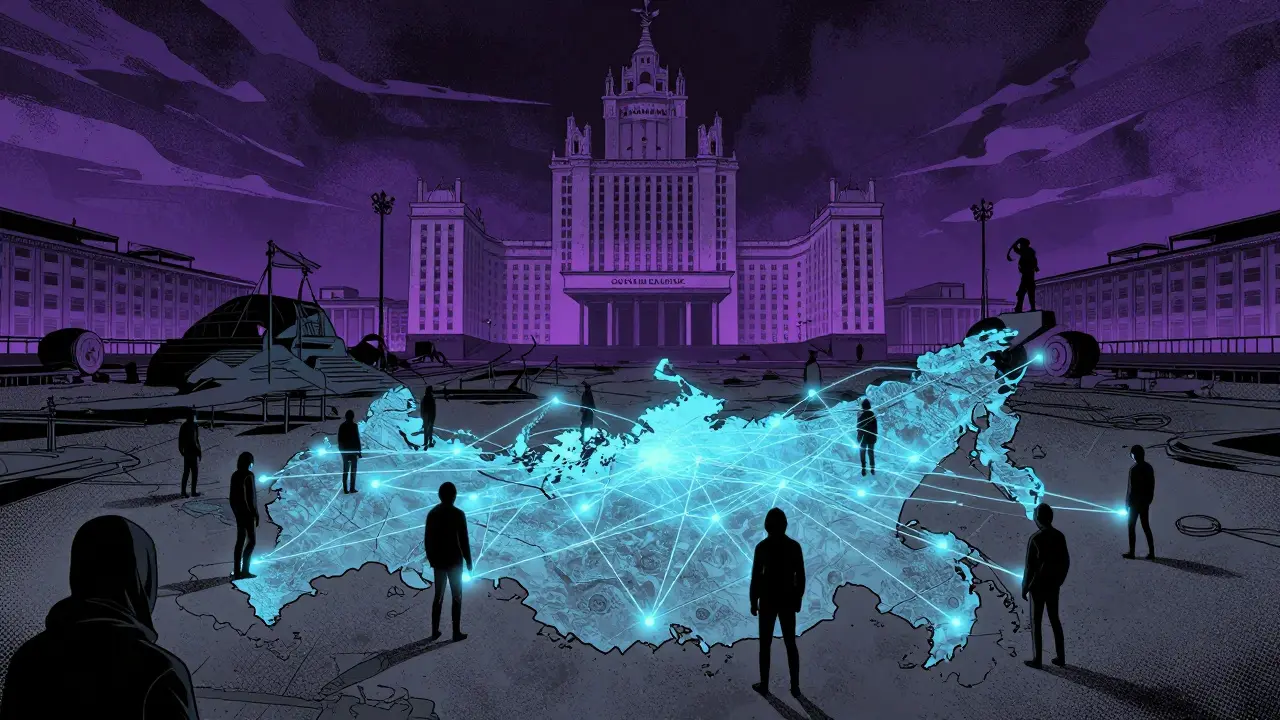
But here's the reality: a huge part of the market is still underground. Estimates suggest that Russian citizens hold over $25 billion in digital assets. Since there are no dominant, legal domestic retail exchanges, most people use foreign platforms or P2P networks. This creates a massive shadow economy where people trade rubles for USDT or Bitcoin, completely ignoring the "qualified investor" rules.
Looking Ahead: What Happens After the Trial?
The current system is based on a three-year experiment. This means that by 2027, the government will review everything they've learned from the ELR and decide on permanent laws. We're likely to see a few things happen in the next year:
- Institutional Expansion: Investment funds will likely get the green light to include crypto in their portfolios by 2026, opening the door for more corporate capital.
- Infrastructure Maturity: More domestic exchanges and mining farms will likely launch to reduce dependence on the West.
- Refined Regulations: The Finance Ministry may successfully push to lower the "qualified investor" thresholds to bring more people into the legal fold and away from the shadow market.
Essentially, Russia is trying to have its cake and eat it too. They want the high-tech, borderless efficiency of blockchain for their state interests, but they want the absolute control of a centralized currency for their citizens.
Can I use Bitcoin to buy things inside Russia?
No. Domestic payments using cryptocurrency are strictly prohibited by law. Only the Russian ruble is recognized as legal tender for payments within the country.
What is the Experimental Legal Regime (ELR)?
The ELR is a temporary legal framework introduced in 2024 that allows selected companies and qualified investors to use cryptocurrencies for international trade and settlements to bypass foreign sanctions.
Do I have to pay taxes on crypto in Russia?
Yes. Individuals and organizations are required to declare cryptocurrency transactions that exceed 600,000 rubles to the tax authorities.
How do I become a qualified investor for crypto trading?
To be a qualified investor under CBR rules, you generally need to prove assets exceeding 100 million rubles or an annual income of more than 50 million rubles.
Is crypto mining legal in Russia?
Yes, the government has actually encouraged crypto mining, especially in regions with surplus energy reserves, as part of its strategy to build domestic crypto infrastructure.





Oh sure, because nothing says "financial freedom" like a government deciding exactly who gets to use a decentralized currency based on how many millions they have in the bank. Just a totally normal and not-at-all contradictory way to run a crypto economy.
The sheer hypocrisy of the Russian state here is absolutely staggering. They attempt to pivot toward a borderless technology to evade the very consequences of their own geopolitcal aggression, yet they maintain a stranglehold on their own citizenry to prevent any real fiscal autonomy. It is a masterclass in cognitive dissonance and institutional greed.
This is exactly why we need to stop letitng these foreign regimes even touch our technolgy and why the US should have totaly locked down all the on-ramps way before now because its just a joke that they use our inventions to bypass the very sanctions that are there to stop them from acting like thugs on the world stage and honestly any company helping them with the ELR thing should be thrown in jail for treason against global stability!!
Notice how they only allow "qualified investors" to trade derivatives. It's a classic move to keep the elites in a closed loop while the average person is kept in the dark. They're probably using the ELR as a front for something much bigger, likely a digital ruble transition that will track every single breath you take. The "shadow market" is just bait to identify who is still resisting the system.
It's actually kind of wild to see how blockchain is being used in real-time for these massive shifts. Even with the rules, it shows that the tech is just too useful to ignore regardless of the politics! 🚀
they just want the data... its obviosly a honey pot to see who has what and where it's stored before they just seize everything in 2027. typical gov move.
It is profoundly regrettable that individuals seek to circumvent the law via these so-called shadow markets. One must adhere to the moral imperative of legal compliance, regardless of the financial allure of digital assets. Such recklessness only leads to spiritual and financial ruin.
Imagine thinking the CBR actually cares about "volatility" for the poor. They just don't want the ruble to crash because people realize it's basically monopoly money at this point. And let me tell you, the "qualified investor" threshold is just a fancy way of saying "people we can actually control through bribery." It's all a game and we're just the pawns. Honestly, the irony of using Bitcoin to fight isolation while isolating your own people from using it is just peak comedy.
Man, the learning curve for this stuff is steep but the infrastructure push is where the real opportunity is! If you're looking to get into the space, keep an eye on those mining hubs. Huge potential for growth there! 📈💎
it s kinda sad that normal people cant even use it for a coffee but i guess that's how it goes in those places. hope things get more open eventually
LMAO the absolute state of the ruble! They're literally begging for a way to trade because no one wants their paper. And the "qualified investor" rule is just hilarious. Like, oh no, please don't let the poor people have a hedge against your failing currency! The DRAMA of it all is just too much. 💀
Sovereign nations playing with crypto is the only thing keeping the global market interesting. While the West tries to police the world, the East is just building the plumbing they actually need. Too bad most of you can't see the brilliance in that pragmatic shift.
Seems like a classic double standard.
The distinction between the ELR and domestic law is a strategic move to protect state sovereignty while enabling economic survival. It is a calculated risk that prioritizes macro-stability over individual financial freedom.
For anyone looking to navigate this, focus on the legal frameworks and don't take shortcuts. The risks are too high when the laws are this volatile.
If you're dealing with the shadow market in Russia, be extremely careful with P2P. The bank freezes are becoming way more aggressive as the government tightens the screws on AML compliance. Always use intermediaries that have a proven track record of avoiding triggers.
this is all boring. just more govt control.
Why is the 600k ruble threshold the magic number for taxes? Seems arbitrary.
Glad to see some clarity on the domestic vs international split. it helps set a good boundary for anyone trying to understand the risks