

Germany Crypto Tax Guide: How the 12-Month Bitcoin Exemption Works
Imagine waking up to find that a massive jump in the price of your Bitcoin is completely tax-free. For most people in Europe, that's a pipe dream. In most countries, the government takes a significant cut of your gains the moment you sell. However, Germany has a loophole-or rather, a very specific law-that turns the country into a paradise for long-term investors. If you can hold your assets for just over a year, you might not owe a single cent in taxes on those profits.
The Magic of the 365-Day Rule
In Germany, cryptocurrencies aren't treated like stocks or bonds. Instead, they are categorized as "private money." This distinction is the foundation of the Germany crypto tax exemption is a tax rule under Section 23 of the German Income Tax Act (EStG) that allows individuals to sell digital assets tax-free if held for more than 12 months.
If you buy Bitcoin today and sell it 366 days later, your profit is exempt from income tax. This isn't just a rumor; it was formalized in the official guidance released by the Bundesministerium der Finanzenthe Federal Ministry of Finance in Germany on March 6, 2025. This rule applies to almost all digital assets, including Ethereum and various altcoins. While other EU nations like France slap a flat 30% tax on gains regardless of how long you held the asset, Germany rewards the "HODLer."
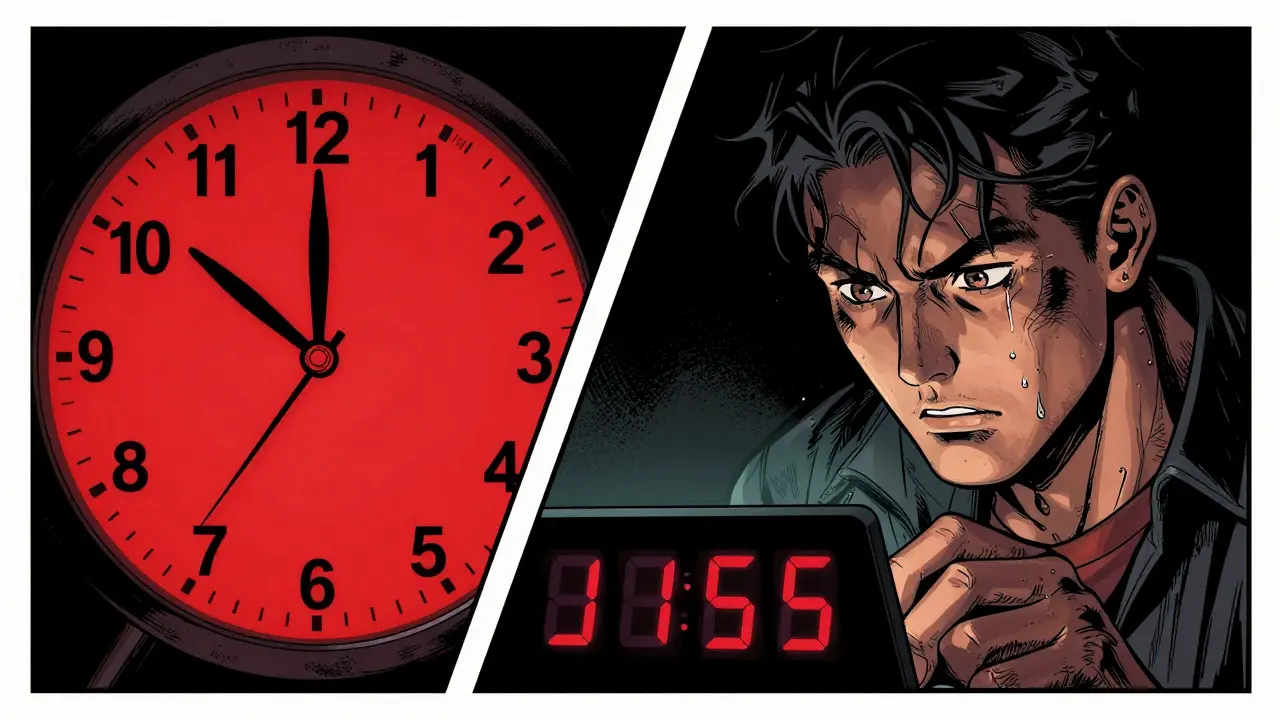
But there's a catch: the timing must be precise. Experts like Dr. Lena Schmidt from PwC Germany warn that the holding period is calculated down to the minute. If you sell your coins at 11:59 AM on the 365th day, you've missed the window and could be staring at a massive tax bill.
Short-Term Trading and the €1,000 Threshold
What happens if you can't wait a year? If you sell your crypto in under 12 months, you enter the world of short-term gains. Here, the tax bite is significant. You'll be taxed at your progressive income tax rate, which can climb as high as 45%. When you add the 5.5% Solidaritätszuschlagthe Solidarity Tax, a supplement to income tax in Germany, your effective tax rate could hit 47.475%.
There is a small safety net, though. There is a short-term trading exemption threshold of €1,000 net gains per financial year. If your total profits from short-term trades are under this amount, you don't need to file a tax return for them. But be careful: if you earn €1,001, the entire amount becomes taxable, not just the one euro over the limit.
| Feature | Holding < 12 Months | Holding > 12 Months |
|---|---|---|
| Tax Rate | Progressive (up to 47.475%) | 0% (Tax-Free) |
| Exemption Limit | €1,000 net gain per year | No limit on gains |
| Reporting Requirement | Mandatory if above €1,000 | Generally exempt |
| Strategy | Active Trading / Scalping | Buy and Hold (HODL) |
The FIFO Headache and Record Keeping
Even if you plan to hold for a year, the way Germany tracks your coins can trip you up. The Bundeszentralamt für Steuernthe Federal Central Tax Office (BZSt) in Germany requires the FIFOFirst-In-First-Out accounting method, where the first assets purchased are assumed to be the first ones sold method.
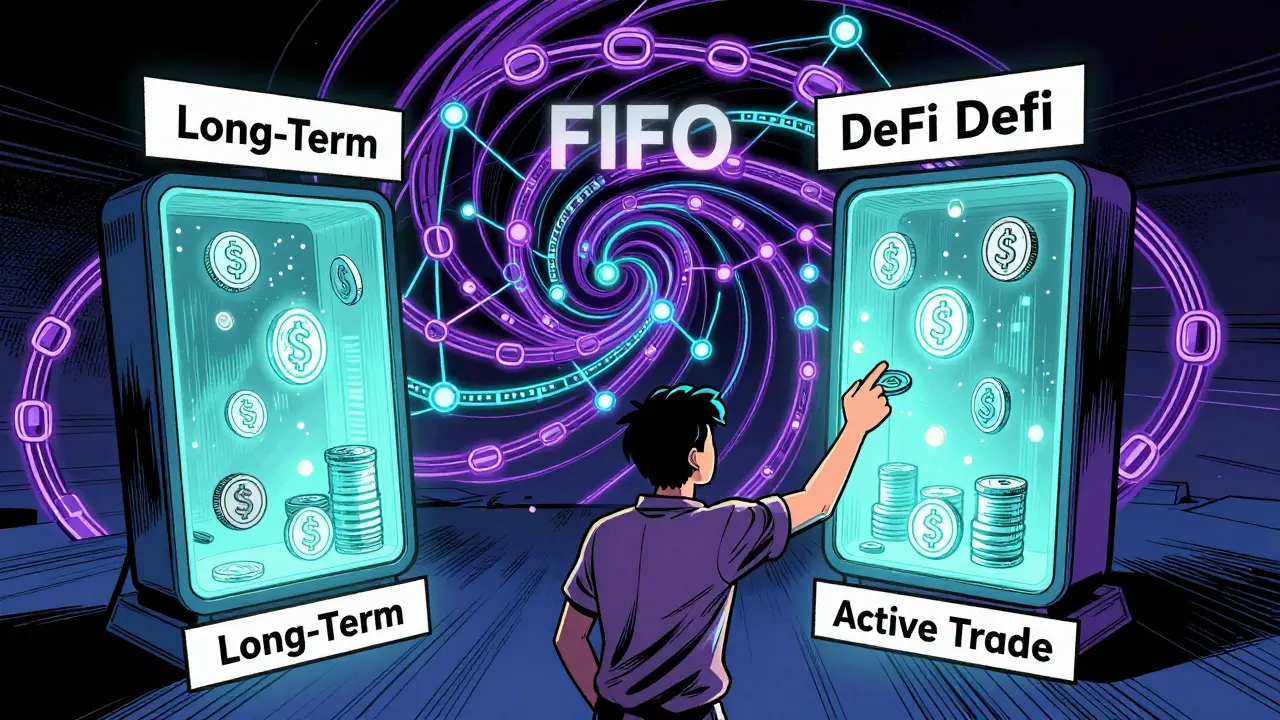
Why does this matter? Imagine you bought 1 BTC in January 2023 and another 1 BTC in December 2023. If you sell 1 BTC in February 2024, the tax office assumes you sold the one from January 2023. In this case, you're safe. But if you mix your coins in one wallet and sell in small increments, it's incredibly easy to accidentally sell a "young" coin before an "old" one, triggering a tax event you didn't see coming.
Experienced investors often suggest a simple fix: use separate wallets for different acquisition batches. One wallet for your long-term holdings and another for your active trades. This prevents the FIFO method from muddying your records and makes it much easier to prove your holding period to the tax office.
Staking, Mining, and DeFi Complexities
Not all crypto income is created equal. While selling a coin you've held for a year is tax-free, earning new coins is a different story. Stakingthe process of participating in a proof-of-stake blockchain to earn rewards and mining rewards are generally treated as income the moment you receive them.
If you earn more than €256 annually from these activities, you need to report it. However, there's a silver lining: once you receive those staking rewards, the 12-month clock starts. If you hold those specific reward coins for a year before selling them, the gain on the price increase from that point forward is tax-exempt.
DeFi (Decentralized Finance) is where things get murky. The March 2025 guidance from the Ministry of Finance clarifies that liquidity pool deposits and yield farming are often taxable events immediately. If you're deep into the DeFi ecosystem, the 12-month rule is much harder to apply because tokens are constantly being swapped and moved. This makes specialized tax software almost mandatory for anyone doing more than a few swaps a month.
The Future: Is the Exemption at Risk?
If you're considering moving to Germany just for the tax perks, you should keep an eye on the DAC8the eighth Directive on Administrative Cooperation, an EU regulation for tax transparency regarding crypto-assets directive. The European Union is pushing for a harmonized tax system. The goal is to stop "tax competition" between member states.
There's a draft proposal from the EU Commission that suggests a standardized 15% capital gains tax after a 365-day holding period. If this passes, Germany's 0% rate could vanish. While some analysts believe there will be "grandfathering" (meaning old holdings stay tax-free), new investments might be subject to this EU-wide tax by 2027. The clock is ticking for those who rely on the current system.
Practical Tips for Filing Your Taxes
Filing your taxes in Germany happens through the Elsterthe official online tax portal of the German tax administration portal. While the portal has improved, most people find it confusing for crypto. Here is a practical approach to stay compliant:
- Screenshot Everything: Don't rely on exchange histories alone. Exchanges can go bust or change their CSV formats. Keep your own timestamps of every acquisition.
- Use Specialized Software: Tools like Koinly or Blockpit are designed specifically for the German FIFO requirements. They can turn a mess of API data into a report the BZSt will actually accept.
- Separate Your Pots: As mentioned, keep "long-term" and "short-term" assets in different addresses. It's the easiest way to avoid FIFO mistakes.
- Mind the Deadline: Your tax returns are typically due by July 31 of the following year. Don't wait until the last minute, as calculating a year's worth of trades can take dozens of hours.
Does the 12-month rule apply to NFTs?
Yes. According to the Federal Ministry of Finance's guidance from March 2025, NFTs follow the same tax rules as other cryptocurrencies. If you hold an NFT for more than one year, the gain from its sale is generally tax-exempt.
What happens if I swap one crypto for another?
In Germany, a swap is treated as a sale of the first asset and a purchase of the second. If you swap BTC for ETH and you held that BTC for less than a year, it triggers a taxable event based on the profit made on the BTC at the time of the swap.
Is there a way to offset losses against gains in Germany?
Unfortunately, Germany does not have a tax-loss harvesting system like the US. If you have short-term gains above €1,000, you pay tax on them even if you lost money on other coins in the same year.
Do staking rewards count toward the 12-month period?
The rewards themselves are taxable as income when received. However, once they are in your wallet, they start their own 12-month timer. If you hold those rewards for a year, any further increase in their value becomes tax-exempt.
What is the current short-term exemption limit?
The limit was increased to €1,000 net gains per financial year starting January 1, 2024. If your total short-term profits are below this, they are not taxable.






Most people don't realize that the FIFO method is basically the gold standard for tax accounting globally, and Germany is just following a logical path here. If you are actually serious about investing, you wouldn't be relying on basic exchange CSVs anyway since those are notoriously unreliable for long-term auditing.
Great breakdown of the fiscal landscape! For those diving into DeFi, just remember that wrapping tokens or moving them into liquidity pools often creates a taxable event in the eyes of the BZSt because it's seen as a disposal of the original asset. Definitely leverage some robust portfolio tracking software to manage your cost basis and avoid any compliance nightmares during your annual filing! 🚀
Imagine actually living in a place where you pay half your gains to the government just for selling early... thank god we don't have that nonsense here. Germany's rule is a total steal for anyone with some actual discipline.
This is such a helpful guide! It's amazing how a simple holding period can make such a huge difference in your overall portfolio growth. Thanks for sharing this info! 😊✨
It is quite fascinating when you step back and consider how these legal structures reflect a society's philosophy on wealth and patience, as if the government is trying to reward a certain kind of mindfulness or stillness in an era of hyper-active trading where everyone is chasing a quick win without really thinking about the long-term trajectory of the technology. I often wonder if the shift toward a harmonized EU tax system is less about fairness and more about a collective fear of decentralized autonomy, because if people can truly move their wealth without a central authority taking a slice, it challenges the very notion of the state's control over the individual's labor and success. There is something almost poetic about the 366th day being the gateway to freedom, and it makes me ponder whether we are all just waiting for a timer to go off before we can truly own the fruits of our digital endeavors in a world that is increasingly designed to skim off the top of every single transaction we make.
The FIFO part is where most people screw up... I've seen so many folks try to 'game' the system by using different wallets, but the tax man usually sees right through that if the funds are coming from the same source... keep those records clean!!!
Oh sure, because the German government is just *so* generous and definitely not just using this as a bait to get more people to move their capital into the country before they inevitably change the rules anyway.
Stick to Koinly. It saves hours of work.
Bro this is amazing!! just imagine the gains if u hold for 1 year 🤑 totally game changer for crypto traders in europe!!
totally agree with the separate wallet tip 🙌 makes life so much easier
Imagine thinking the EU actually cares about 'tax competition' and not just about building a more efficient surveillance web to track every single satoshi we own 🙄💅 it's all just a game for the elites anyway ✨
The distinction regarding the €1,000 threshold is quite crucial... I believe it is imperative for all users to maintain meticulous records to avoid exceeding this limit inadvertently...
You're all acting like this is a miracle. Most of you probably don't even have enough in your wallets to trigger the threshold. It's cute that you think this applies to your 'portfolio' of a few hundred dollars.
THE DAC8 IS CLEARLY A FRONT FOR TOTALITARIAN CONTROL AND THE REMOVAL OF FINANCIAL PRIVACY ACROSS THE CONTINENT. they want us tracked and taxed into submission so we cannot fight back against the globalist agenda. do not trust the official guidance.