
What is Wrapped Bitcoin (WBTC)? A Guide to Using BTC in DeFi
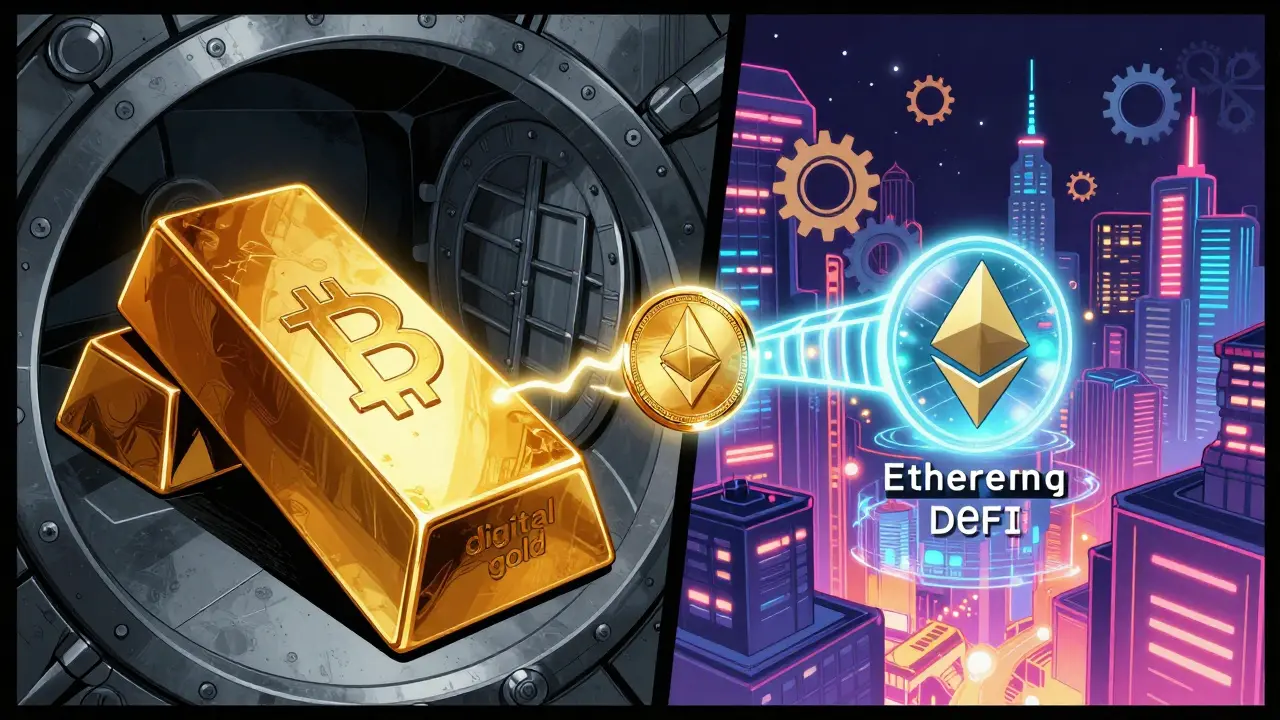
Imagine owning Bitcoin but feeling like you're missing out on the party happening over on Ethereum. You have the world's most secure asset, but you can't use it to earn interest on a lending platform or provide liquidity to a decentralized exchange. For years, Bitcoin was essentially a "digital gold bar"-great for holding, but useless for interacting with smart contracts. That is exactly why Wrapped Bitcoin is an ERC-20 token on the Ethereum blockchain that represents Bitcoin's value in a 1:1 ratio. Also known as WBTC, it acts as a bridge, letting you move your Bitcoin's value into the world of decentralized finance (DeFi) without actually selling your BTC.
The Core Mechanics: How Wrapping Actually Works
You can't just "send" a Bitcoin to the Ethereum network because they use different languages and protocols. To get around this, WBTC uses a custodial system. Think of it like a coat check at a club: you give your heavy coat (Bitcoin) to a trusted attendant (the custodian), and they give you a ticket (WBTC) in return. The ticket represents your coat and is accepted everywhere in the club.
The process involves three main players: custodians, merchants, and the wBTC DAO. When you want to wrap your Bitcoin, you send your BTC to an authorized merchant. That merchant coordinates with a custodian-entities like BitGo or BiT Global-who locks your Bitcoin in a secure vault. Once the Bitcoin is safe, an equal amount of WBTC is minted and sent to your Ethereum wallet. To get your original Bitcoin back, the process is reversed: the WBTC tokens are "burned" (destroyed), and the custodian releases the original Bitcoin to your wallet.
Why Use WBTC Instead of Just Holding Bitcoin?
If you're a long-term "HODLer," you might wonder why you'd bother with the wrapping process. The answer is utility. In a standard Bitcoin wallet, your assets are passive. With WBTC, your assets become active. You can take your Bitcoin exposure and put it to work in several ways:
- Collateralized Lending: You can deposit WBTC into platforms like Aave or Compound. This allows you to borrow other assets (like USDC or ETH) against your Bitcoin, giving you liquidity without forcing you to sell your BTC and trigger a taxable event.
- Yield Farming: By providing WBTC to liquidity pools on Uniswap, you can earn a share of the trading fees generated by other users.
- Portfolio Diversification: You can easily swap WBTC for other Ethereum-based tokens in a matter of seconds, rather than sending BTC back to a centralized exchange.
| Feature | Native Bitcoin (BTC) | Wrapped Bitcoin (WBTC) |
|---|---|---|
| Blockchain | Bitcoin Network | Ethereum (ERC-20) |
| DeFi Compatibility | None (Native) | Full Integration |
| Custody Type | Self-custodied (Private Keys) | Custodial (Third-party) |
| Speed | Slower (10 min blocks) | Faster (Ethereum block times) |
| Primary Use Case | Store of Value | Yield & Collateral |

The Trade-off: Security vs. Decentralization
Here is the catch: when you use WBTC, you are stepping away from the "not your keys, not your coins" philosophy. Because WBTC relies on custodians to hold the real Bitcoin, you are trusting those entities to stay solvent and honest. If a custodian were to lose the underlying BTC, the WBTC tokens would lose their 1:1 backing.
To mitigate this, the protocol has evolved. In August 2024, the system moved toward a shared custody model. Instead of relying on a single point of failure, the responsibility is split among multiple entities. The wBTC DAO also provides a layer of governance, using multi-signature wallets to ensure that no single person can unilaterally control the reserves. While this is safer than a single-custodian setup, it is still fundamentally more centralized than holding native BTC in a cold wallet.
Practical Steps: How to Get Started with WBTC
If you've decided the yield is worth the risk, getting started is relatively straightforward. You don't need to be a coder, but you do need an Ethereum-compatible wallet like MetaMask.
- Acquire Bitcoin: Ensure you have your BTC in a wallet you control or on a supported exchange.
- Choose a Merchant: Find an authorized WBTC merchant or a centralized exchange (like Binance or Kraken) that offers direct wrapping services.
- Complete Compliance: Because custodians are regulated entities, you'll likely need to go through a KYC (Know Your Customer) process. This is the part that often frustrates Bitcoin maximalists, but it's required for legal compliance in most jurisdictions.
- Wrap and Receive: Send your BTC. Once verified, the WBTC tokens will appear in your Ethereum wallet as an ERC-20 token.
- Deploy to DeFi: Connect your wallet to a platform like Aave or Uniswap to start earning yield.

Common Pitfalls and Pro Tips
The biggest surprise for new WBTC users is usually the gas fees. Because WBTC lives on Ethereum, every move you make-sending it to a protocol, claiming rewards, or unwrapping it-requires a payment in ETH. During periods of high network congestion, a single transaction can cost a significant amount, which can eat into the yields of smaller holders. If you're managing a small amount of WBTC, look into using Layer 2 solutions or timing your transactions for low-traffic windows (often weekends).
Another common mistake is forgetting the role of the merchant. Don't just send Bitcoin to a random address you found online; always use official channels or reputable exchanges to ensure your BTC is actually being locked by a legitimate custodian and that the WBTC is actually being minted.
Is WBTC the same as Bitcoin?
No. Bitcoin (BTC) is the native coin of the Bitcoin blockchain. WBTC is a digital token on the Ethereum blockchain. While they are designed to have the same value (1:1), they exist on different networks and have different technical properties.
What happens if the custodian goes bankrupt?
This is the primary risk of wrapped tokens. If the custodian fails to maintain the 1:1 reserve of Bitcoin, the value of WBTC could drop below the price of BTC, as the token would no longer be fully collateralized. This is why the protocol has moved toward shared custody to spread the risk.
Can I convert WBTC back to BTC?
Yes. This process is called "unwrapping." You send your WBTC back to an authorized merchant, who then coordinates with the custodian to burn the tokens and release the original Bitcoin to your BTC address.
Do I need to pay gas fees in BTC or ETH?
Because WBTC is an ERC-20 token, all transactions involving it on the Ethereum network are paid in Ethereum (ETH). You must have a small amount of ETH in your wallet to move your WBTC.
Why is WBTC better than a cross-chain bridge?
Bridges can be technically complex and are frequent targets for hacks. WBTC's custodial model is more centralized, but it provides a more stable and widely accepted standard (ERC-20) that is instantly compatible with almost every DeFi app on Ethereum without needing complex bridging logic.
Moving Forward: What to Explore Next
If the custodial nature of WBTC makes you uncomfortable, you might want to look into emerging "trustless" bridges or native Bitcoin Layer 2s that are attempting to bring smart contract functionality directly to the Bitcoin network. However, for those who want the most liquid and widely integrated way to use Bitcoin in DeFi today, WBTC remains the gold standard. Whether you're looking to hedge your bets or maximize your returns, understanding the balance between utility and custody is the key to navigating the tokenized asset market.







Imagine actually trusting a third-party custodian with your assets in the year 2024. Truly a masterclass in irony for anyone claiming to understand the ethos of cryptocurrency. 🙄
It really is a great way to bridge the gap between two awesome ecosystems! 🚀 Always nice to see more ways to make our assets work for us. 😊
the risk profile here is completely skewed because you are essentially trading sovereign ownership for a synthetic representation and if the custodian has a liquidity crisis or a regulatory freeze your wbtc is just a fancy entry on a ledger with zero recourse because the legal framework for wrapped assets is basically nonexistent in most jurisdictions which makes the yield a joke compared to the systemic risk you are taking on
Keep in mind that gas fees on Ethereum can be brutal. Check L2 options first.
There is something deeply poetic about the way we attempt to quantify the essence of a decentralized asset by wrapping it in a centralized shell, reflecting our own human struggle to balance the desire for absolute freedom with the practical need for utility and growth in a complex digital economy where we often sacrifice the soul of the technology for the sake of a few percentage points of yield, which makes me wonder if we are actually evolving or just creating new dependencies in a different form.
definitly a good way to earn extra while holdin. just be carefull with the kyc part cuz some ppl hate that but its how it works lol.
The synergy between BTC's store-of-value property and Ethereum's composability is where the magic happens! If you are looking at maximizing your APY, definitely explore the liquidity pools on Uniswap or the lending markets on Aave. It's all about optimizing your capital efficiency. Let's get those gains! 📈
Oh honey, imagine thinking a "shared custody model" actually fixes the problem. 🤡 It's just more people in the conspiracy to pretend your coins are safe while the elites play games with the reserves. I bet the custodians are probably laughing at us right now. 💅✨
I agree with the point about L2s! For those starting small, using an Optimism or Arbitrum bridge can save you a ton on those Ethereum mainnet fees.
The blatant disregard for the fundamental principle of self-custody in this proposal is absolutely appalling. One simply does not "wrap" their Bitcoin if they possess any modicum of financial intelligence.
this is just basic stuff. in india we alrdy know how to handle these things better than westerners. the logic is simple but the execution depends on who is hoding the keys. basic philosphy of money 101.
it sounds like a good way to use btc without selling it
I've used WBTC for a while and the convenience of swapping on Uniswap is great, but I always keep my main stack in cold storage just in case.
The institutionalization of the Bitcoin layer through these custodial wrappers is a necessary evil for liquidity provision within the current DeFi paradigm, despite the obvious centralization vectors that jeopardize the sovereign nature of the base asset. We are seeing a transition from pure cypherpunk ideals to a high-frequency financialized environment where the friction of the Bitcoin network is the primary bottleneck for capital deployment across cross-chain protocols.