
Wrapped Assets vs Native Assets: What You Need to Know About Cross-Chain Tokens
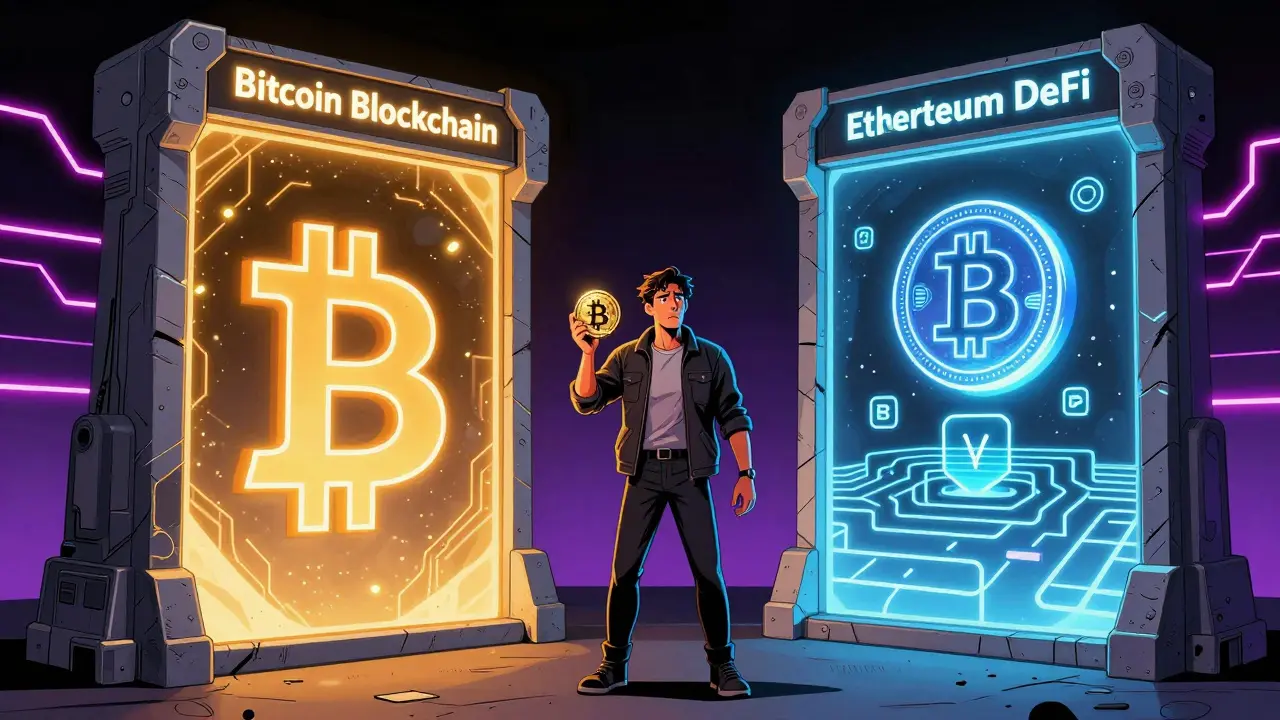
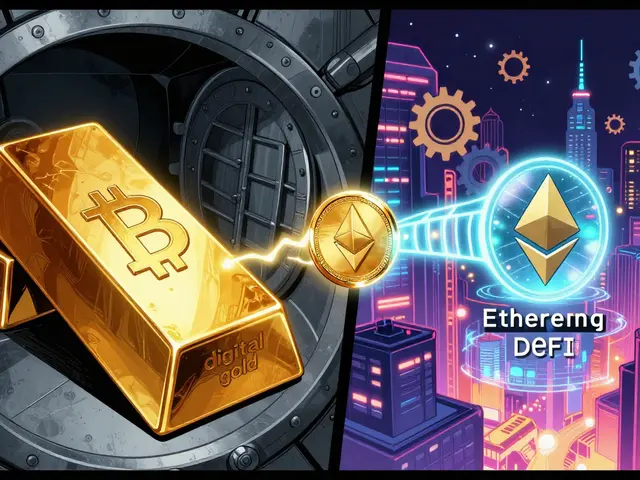
When you hold Bitcoin, you hold Bitcoin - on the Bitcoin blockchain. But what if you want to use that Bitcoin in a DeFi app on Ethereum? That’s where wrapped assets come in. They let you move value across blockchains without selling your original coins. But they’re not magic. They come with trade-offs. And understanding the difference between wrapped and native assets isn’t just technical - it’s about security, control, and where your money really lives.
What Are Native Assets?
Native assets are the real deal. They exist only on the blockchain they were born on. Bitcoin (BTC) runs on the Bitcoin network. Ether (ETH) runs on Ethereum. Solana (SOL) runs on Solana. These assets follow the rules of their home chain - their consensus, their fees, their security. No middlemen. No bridges. No custodians.
That means native assets are as secure as the blockchain itself. Bitcoin’s network has over 300 exahashes of computational power backing it. That’s more than all the world’s top supercomputers combined. It’s why Bitcoin hasn’t been hacked - not because it’s perfect, but because breaking it would cost more than the value of the coins it protects.
But here’s the catch: native assets are stuck. You can’t use BTC to lend on Aave. You can’t stake ETH on Polygon. You can’t pay gas fees on Solana with Bitcoin. Each blockchain is its own island. And that’s a problem when DeFi is worth over $35 billion on Ethereum alone.
What Are Wrapped Assets?
Wrapped assets are digital IOUs. They’re tokens that represent something else - usually a native asset - on a different blockchain. The most famous example is Wrapped Bitcoin (WBTC). Every WBTC token on Ethereum is backed by one real BTC locked in a secure vault. When you mint WBTC, you’re not creating new Bitcoin. You’re just getting a claim on Bitcoin that works on Ethereum.
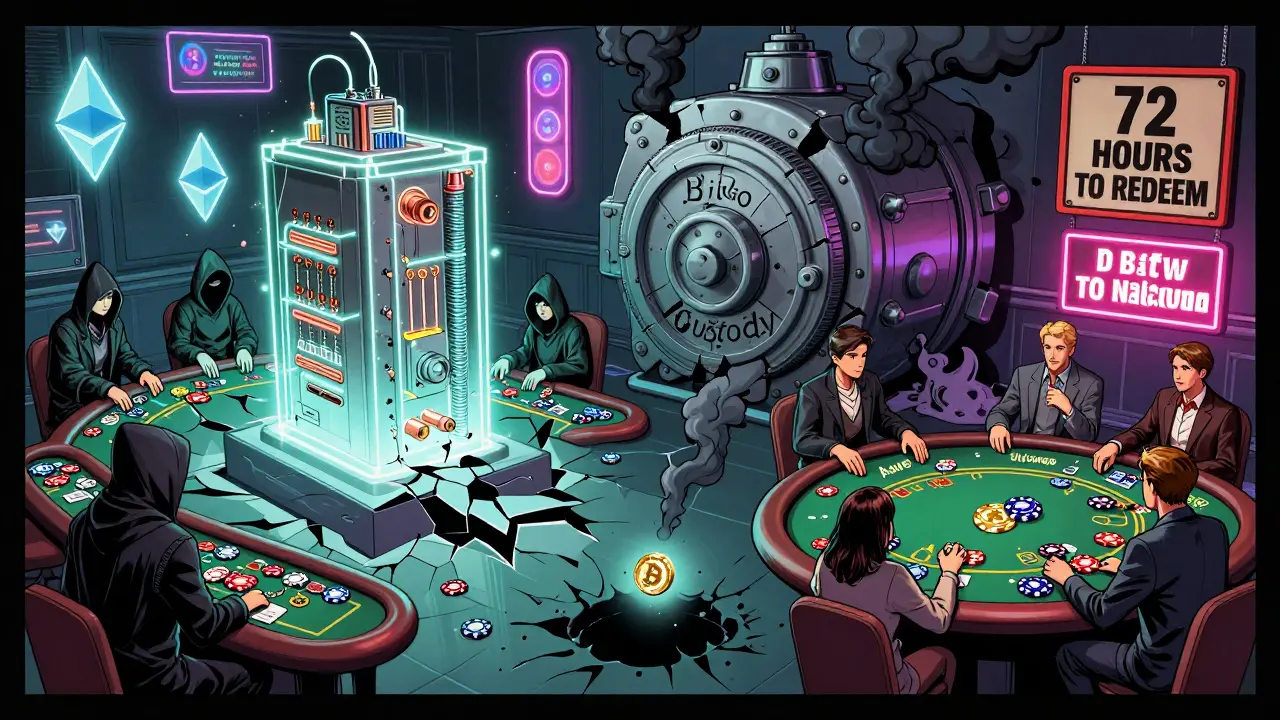
It’s like a casino chip. You can’t walk out of the casino with a chip and buy coffee. But inside the casino, you can use it to play poker, buy drinks, or even get a hotel room. WBTC lets you use Bitcoin inside Ethereum’s DeFi casino.
Other common wrapped tokens include WETH (Wrapped Ether), wMATIC (Wrapped Polygon), and wSOL (Wrapped Solana). They all follow the same pattern: lock the native asset, issue the wrapped version, and allow it to be used on the target chain.
How Do Wrapped Assets Work?
The system has three parts:
- The custodian - This is the entity that holds the real asset. For WBTC, it’s BitGo, a licensed crypto custodian. When you send BTC to BitGo, they confirm it, then trigger the minting of WBTC on Ethereum.
- The smart contract - This lives on the target blockchain (like Ethereum). It’s the code that mints new wrapped tokens when collateral is received, and burns them when you want to redeem the original asset.
- The verification layer - Daily attestations ensure the number of wrapped tokens matches the amount of native assets locked. If someone tries to mint more WBTC than BTC in reserve, the system should catch it.
It’s elegant in theory. But in practice, it’s fragile. If the custodian goes offline, gets hacked, or refuses to release funds, your WBTC becomes useless. And unlike Bitcoin, where you control your keys, with WBTC, you’re trusting someone else to do the right thing.
Security: Native vs Wrapped
This is the biggest divide.
Native assets rely on decentralized consensus. Bitcoin’s security comes from miners. Ethereum’s comes from validators. There’s no single point of failure. If one node goes down, the network keeps running.
Wrapped assets rely on centralized or semi-centralized systems. WBTC is managed by a consortium of 18 merchants, including BitGo. If even one of them gets compromised - or decides to stop cooperating - the whole system could freeze. In 2022, the FTX collapse caused delays in WBTC redemptions because some custodians were tied to FTX’s infrastructure. Users waited over 72 hours to get their Bitcoin back.
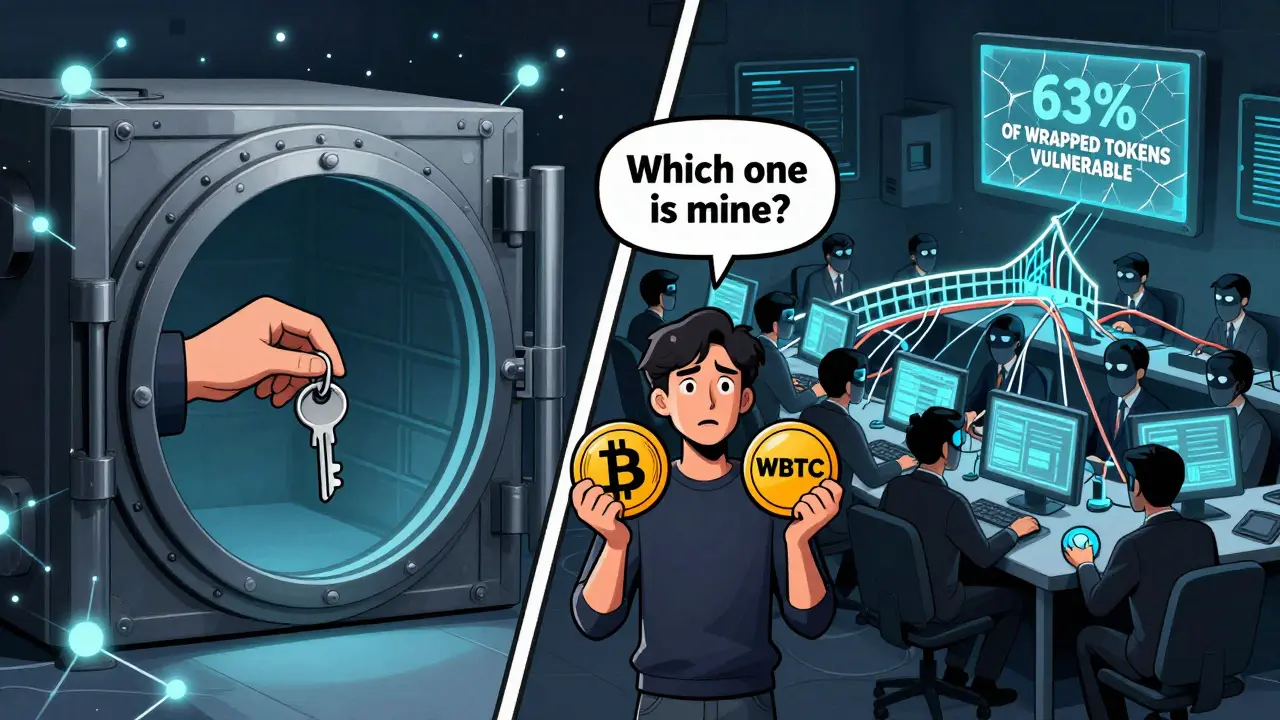
And it’s not just custodians. Smart contracts can be buggy. In 2022, security researcher Samczsun found that 63% of wrapped token protocols had critical vulnerabilities. One flaw in a minting contract could let someone create unlimited wrapped tokens - draining the reserves. The Nomad bridge hack in 2022 stole $600 million because of a single misconfigured smart contract.
Native assets have risks too - like losing your private key. But those risks are yours alone. Wrapped assets add new risks you didn’t ask for: third-party failure, code exploits, and regulatory crackdowns.
Liquidity and Use Cases
Wrapped assets exist to unlock liquidity. Before WBTC, Bitcoin holders had zero access to Ethereum’s DeFi market. Now, over $12.5 billion in wrapped tokens are locked in DeFi protocols. WBTC alone makes up 78% of that.
Why does this matter? Because DeFi is where the yields are. You can earn 4-6% APR lending WBTC on Aave. You can use it as collateral to borrow USDC. You can provide liquidity on Uniswap. None of that is possible with native BTC.
But wrapped assets aren’t perfect substitutes. You can’t pay Ethereum gas fees with WBTC. You can’t vote in Ethereum governance with it. You can’t stake it to earn rewards on Ethereum’s native staking system. It’s a utility token - not a native one.
Meanwhile, native assets still rule their own chains. ETH is the only token that pays for transactions on Ethereum. SOL pays for Solana’s fees. BTC is still the only way to send value on Bitcoin’s network. You need native assets to interact with the core functions of a blockchain.
Real-World Problems Users Face
People aren’t just using wrapped assets - they’re getting burned by them.
One common mistake? Sending WBTC to a Bitcoin address. It happens all the time. Users think “it’s Bitcoin,” so they send it to their BTC wallet. But WBTC is an ERC-20 token. It lives on Ethereum. If you send it to a Bitcoin address, it’s gone. Over $2.1 million has been lost this way since 2023.
Another issue? Network confusion. MetaMask users often select the wrong blockchain when sending wrapped assets. 37% of MetaMask support tickets relate to this. You need to know whether you’re on Ethereum, Polygon, or BSC - and pick the right network for the right token.
And then there’s trust. A Reddit user in r/CryptoCurrency reported that during the FTX collapse, they couldn’t redeem their WBTC for 3 days. “I thought I had Bitcoin. Turns out I had a promise from a company,” they wrote. That’s the hidden cost of convenience.
The Future: Will Wrapped Assets Last?
Some experts think wrapped assets are a temporary fix. Vitalik Buterin believes true cross-chain communication - where blockchains talk directly - will replace them. Projects like Chainlink’s CCIP are already testing decentralized bridges that don’t need custodians. By 2025, zero-knowledge proofs could let you prove ownership of BTC without locking it up at all.
But others, like Polkadot’s Gavin Wood, say wrapped assets will stick around for 5-7 years. Why? Because institutions won’t wait. JPMorgan is already using wrapped versions of JPM Coin across 7 blockchains. Fidelity is exploring wrapped Bitcoin for its institutional clients. Regulators are watching - the SEC has flagged wrapped tokens issued by centralized entities as potential securities.
So what’s next? Two paths: trust-minimized wrapped assets (using decentralized oracles and ZK proofs) and custodial wrapped assets (for banks and large investors). The market will split. WBTC will likely remain dominant for now - but it won’t be the only game in town.
When to Use Which?
Ask yourself:
- Do you need to interact with DeFi on another chain? Use a wrapped asset. WBTC on Ethereum, wSOL on Solana - it’s your ticket in.
- Do you want maximum security and control? Stick with native assets. Hold BTC on Bitcoin. ETH on Ethereum. Keep your keys. Avoid custodians.
- Are you an institutional investor? Wrapped assets might be your only option. Banks need to move value across chains - and they’re not comfortable with decentralized systems yet.
- Are you new to crypto? Start native. Learn how Bitcoin and Ethereum work before you add layers of complexity.
There’s no right answer - only trade-offs. Convenience vs control. Access vs security. Liquidity vs trust.
Wrapped assets opened the door to a multi-chain future. But they didn’t solve the problem - they just papered over it. The real solution? Blockchains that speak to each other without middlemen. Until then, know what you’re holding - and who’s holding your real assets behind the scenes.
Are wrapped assets the same as the original cryptocurrency?
No. Wrapped assets are tokens that represent the original cryptocurrency on a different blockchain. For example, WBTC represents Bitcoin on Ethereum, but it’s not Bitcoin itself. It’s a claim on Bitcoin, backed by real BTC locked in a vault. You can’t use WBTC to pay Bitcoin network fees or participate in Bitcoin governance. It only works within the ecosystem it was created for.
Can I lose my wrapped assets?
Yes - and not just from market crashes. If the custodian managing your wrapped asset goes offline, gets hacked, or refuses to release the underlying asset, you could be locked out. In 2022, users lost access to $87,000 in Wrapped Dogecoin after its developers abandoned the project. Also, sending wrapped tokens to the wrong blockchain (like WBTC to a Bitcoin address) results in permanent loss. Always double-check networks and addresses.
Why is WBTC so popular compared to other wrapped Bitcoin options?
WBTC is the oldest, most widely adopted wrapped Bitcoin token. Launched in January 2019, it’s backed by a consortium of trusted custodians like BitGo and has deep integration with major DeFi platforms like Aave, Compound, and Uniswap. It has the highest liquidity, the best documentation, and the most developer support. Other options like renBTC and sBTC are decentralized but slower and less liquid, which makes them less appealing for most users.
Do wrapped assets earn interest like native assets?
Yes - often more than native assets. While native Bitcoin can’t earn yield on its own chain, wrapped Bitcoin (WBTC) can be lent on Ethereum DeFi protocols to earn 4-6% APR. The same applies to WETH, wMATIC, and others. But remember: you’re earning yield on a token that represents your asset, not on the asset itself. The underlying asset remains locked and doesn’t earn anything until you redeem it.
Is it safer to hold native Bitcoin or wrapped Bitcoin (WBTC)?
Native Bitcoin is safer if you control your private keys. Bitcoin’s network is decentralized, secure, and has never been compromised. WBTC depends on centralized custodians and smart contracts - both of which have been hacked or frozen. If you want to use Bitcoin in DeFi, WBTC gives you access - but you’re trading security for utility. Only use wrapped assets if you understand and accept the added risks.




so like... wbtc is just bitcoin on vacation? 🤔 i mean, it's not even real bitcoin, it's like a coupon you can't use at the grocery store. why do people trust this? lol
wrapped assets = crypto's version of a gift card you forgot about in your drawer. 🙃 i lost $800 once sending wbtc to a btc address. not proud. but also... not surprised.
i think about this like a river. native assets are the source - pure, wild, untamed. wrapped assets? they're the canal. useful, yes. engineered. controlled. but do we forget what it means to be free-flowing? we trade soul for access. and then wonder why we feel empty.
oh wow, so you're telling me the 'decentralized' system is run by a consortium of 18 companies? that's not decentralization. that's a cartel with a whitepaper. and you're all just happy to hand your keys over to 'BitGo' like it's a bank named 'CryptoTrust LLC'. 🤦♂️
i love how we're all trying to make crypto more accessible, but we're also making it more complicated. 🤗 maybe the real win is just learning to use what you have before adding layers. start native. stay curious. no rush.
the fundamental flaw in wrapped asset adoption is the assumption that liquidity equals value. it doesn't. liquidity is just the illusion of motion. you can trade wbtc on uniswap all day, but if the custodian vanishes tomorrow, your 12.5 billion in 'liquidity' becomes a ledger entry in a dead system. the market is pricing convenience, not security. and that's a bubble waiting for a pin.
i just cried watching my wbtc get stuck during ftx. i thought i owned bitcoin. i didn't. i owned a promise. a digital handshake. a trust fall with a corporation. 💔 we're not building a financial revolution. we're building a casino where the house holds all the chips. and we're the ones handing over our keys. i'm done.
for anyone new to this: if you're using wrapped assets, always check the issuer, the custodian, and the smart contract audit history. wbtc is the safest because it's been around since 2019, has multiple auditors, and uses a multisig custodian model. renBTC and sBTC are more decentralized but have lower liquidity and higher slippage. if you're doing yield farming, stick with wbtc or weth. for long-term holding? go native. always. no exceptions.
The structural integrity of wrapped asset ecosystems is predicated upon the continued operational integrity of centralized custodial entities, which introduces a systemic vulnerability that fundamentally contradicts the philosophical underpinnings of blockchain technology. One must therefore conclude that the adoption of such instruments represents a strategic compromise between utility and ideological purity.
you people are literally begging for a hack. you want to use your bitcoin on ethereum? cool. but don't cry when the custodian gets owned or the contract gets drained. you signed up for this. no one forced you. if you can't hold your own keys, you don't deserve to own crypto. go buy apple stock instead.
the fact that we're still using custodians in 2025 is proof that crypto is a failed experiment. true decentralization doesn't need intermediaries. if you're relying on BitGo or any other 'trusted' entity, you're not in crypto - you're in a poorly regulated fintech startup with a blockchain logo. the real revolution is happening in zk-rollups and cross-chain proofs - not in wrapped tokens. this is crypto's equivalent of plastic gold.
i've been saying this for years: wrapped assets are the fed's backdoor into crypto. they're centralized, auditable, and easily frozen. the sec doesn't care about bitcoin - but wbtc? that's a security. mark my words - next year, the sec will classify all wrapped tokens as unregistered securities. and then we'll see who's really holding the bag.
i just... don't get it. why would anyone trade the unbreakable security of bitcoin for a token that could vanish because someone in a cubicle forgot to press a button? it's like trading a diamond for a glitter sticker. 🤷♀️
you're not alone if you're confused. 🫶 i was too. but here's the thing - wrapped assets aren't evil. they're just a bridge. and bridges need maintenance. if you use them, stay informed, use trusted ones like wbtc, and never send them to the wrong chain. you got this! 💪✨
wait so if i send wbtc to a btc wallet it's gone? like... permanently? that's not a bug, that's a crime. who designed this? a toddler? i just lost my entire portfolio because i thought 'bitcoin' meant 'same thing everywhere'. i'm so dumb.
native assets for the win 🚀 wbtc is just a scam with a nice website. if you're using it, you're already losing. get your keys. go native. or don't. i'm not your dad.