
BaseSwap Crypto Exchange Review: Low Fees, Limited Tokens, and the Truth About BSWAP
BaseSwap isn't another DeFi platform trying to be everything. It’s focused. Built on Coinbase’s Base Network, it’s designed for one thing: trading tokens native to Base with the lowest fees possible. If you’re deep into the Base ecosystem, it’s worth your attention. But if you’re looking for a one-stop crypto shop, you’ll walk away disappointed.
What Is BaseSwap?
BaseSwap is a decentralized exchange (DEX) running entirely on the Base Network - Ethereum’s Layer 2 built by Coinbase. Unlike centralized exchanges like Coinbase or Binance, BaseSwap doesn’t hold your coins. You trade directly from your wallet using smart contracts. It uses an Automated Market Maker (AMM) model, meaning trades happen through liquidity pools filled by users like you, not order books.
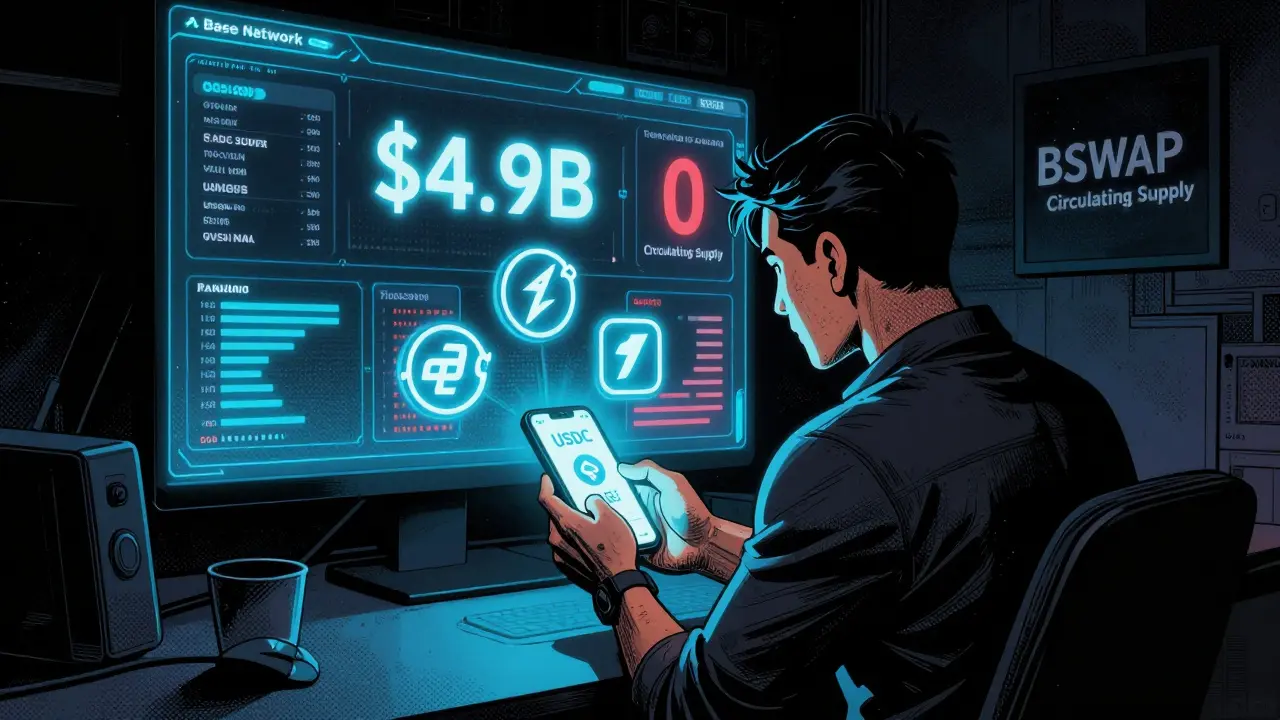
Launched in 2023, BaseSwap was one of the first major DEXs on Base. It’s not flashy. There’s no marketing blitz. It just works quietly in the background, powering trades for Base-native tokens. As of early 2026, it’s handled over $4.9 billion in total trading volume and collected more than $2.3 million in fees. That’s not Coinbase-level traffic, but for a niche DEX, it’s solid.
How BaseSwap Works
Using BaseSwap is straightforward - if you’ve used Uniswap or PancakeSwap before. You connect your wallet (MetaMask, Rainbow, or any EVM-compatible wallet), switch it to the Base Network, and start swapping. No sign-up. No KYC. No waiting. Just open your wallet, approve the transaction, and swap.
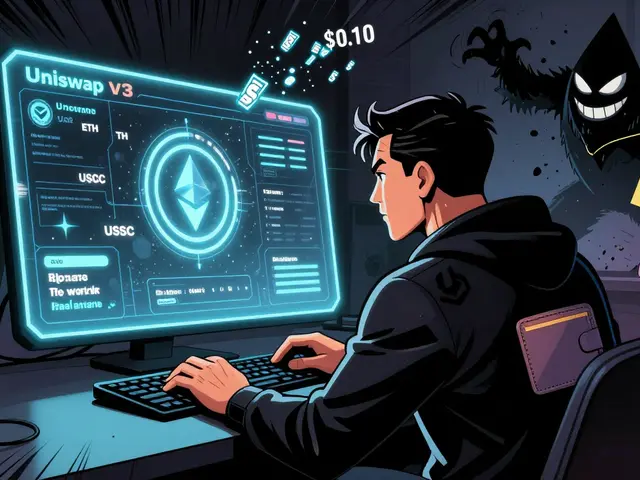
The real advantage? Fees. Because Base Network is built on Ethereum but with lower gas costs, trades on BaseSwap cost a fraction of what they do on Ethereum mainnet. A typical swap might cost under $0.10 in gas, compared to $5-$10 on Ethereum. That’s huge for frequent traders or those swapping small amounts.
BaseSwap also uses smart routing to find the best price across multiple liquidity pools. If you’re swapping USDC for a new Base token, it’ll check all available pools and pick the one with the least slippage and lowest fee. It’s not magic - it’s just well-optimized code.
The BSWAP Token: Utility or Mirage?
Here’s where things get messy. BaseSwap has its own token: BSWAP. On paper, it should be valuable. It’s the native token of a platform handling billions in volume. But reality doesn’t match the hype.
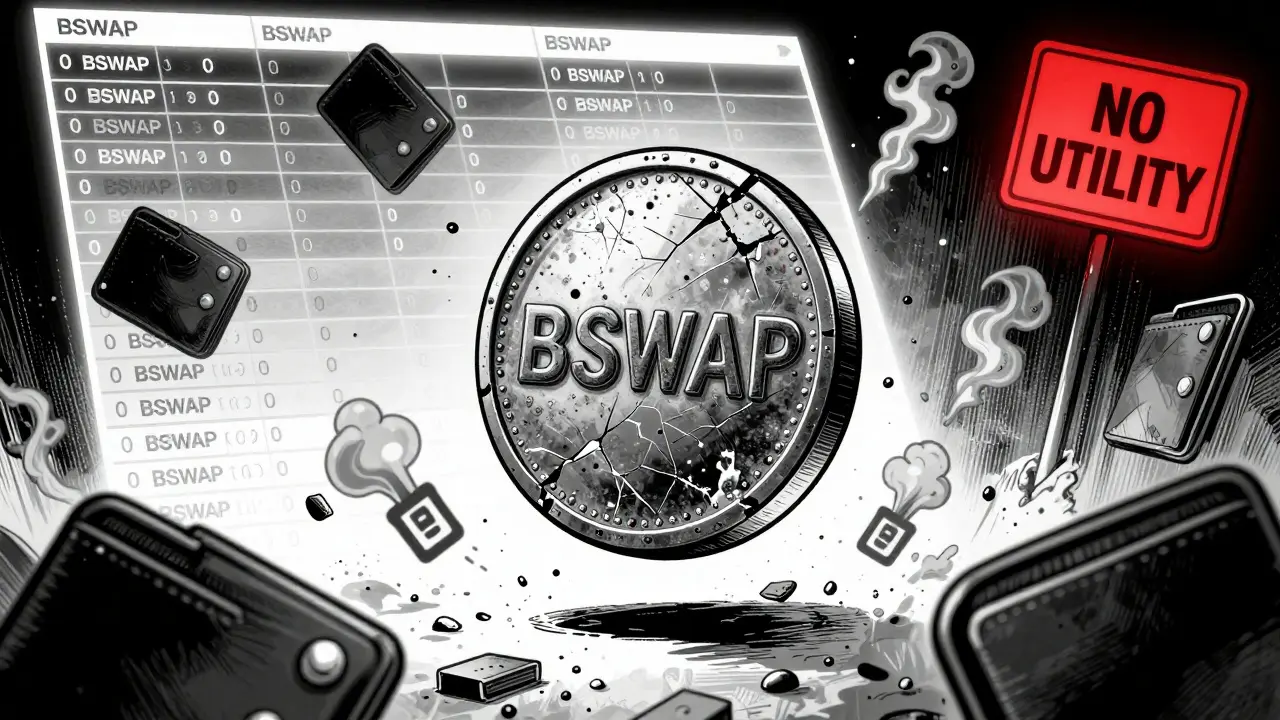
According to official stats, there are 10 million BSWAP tokens in total. Yet, CoinMarketCap and other trackers report a circulating supply of zero. That’s not a typo. Zero. Despite over 107,500 wallet holders, no BSWAP tokens are actively moving. Why? The team hasn’t explained it. Some speculate the tokens are locked, vesting, or stuck in a treasury. Others think it’s a bug. No one knows for sure.
Without circulating supply, BSWAP has no real utility. You can’t stake it. You can’t earn rewards from it. You can’t vote on governance. It’s not even trading meaningfully - its 24-hour volume hovers around $1,600. That’s less than a single trade on Uniswap. If you bought BSWAP hoping to profit, you’re betting on a ghost.
Some users claim BSWAP gives fee-sharing rewards, but there’s no transparent mechanism to prove it. No on-chain logs. No contract addresses you can verify. It’s all talk. And that’s dangerous in crypto.
What You Can Trade
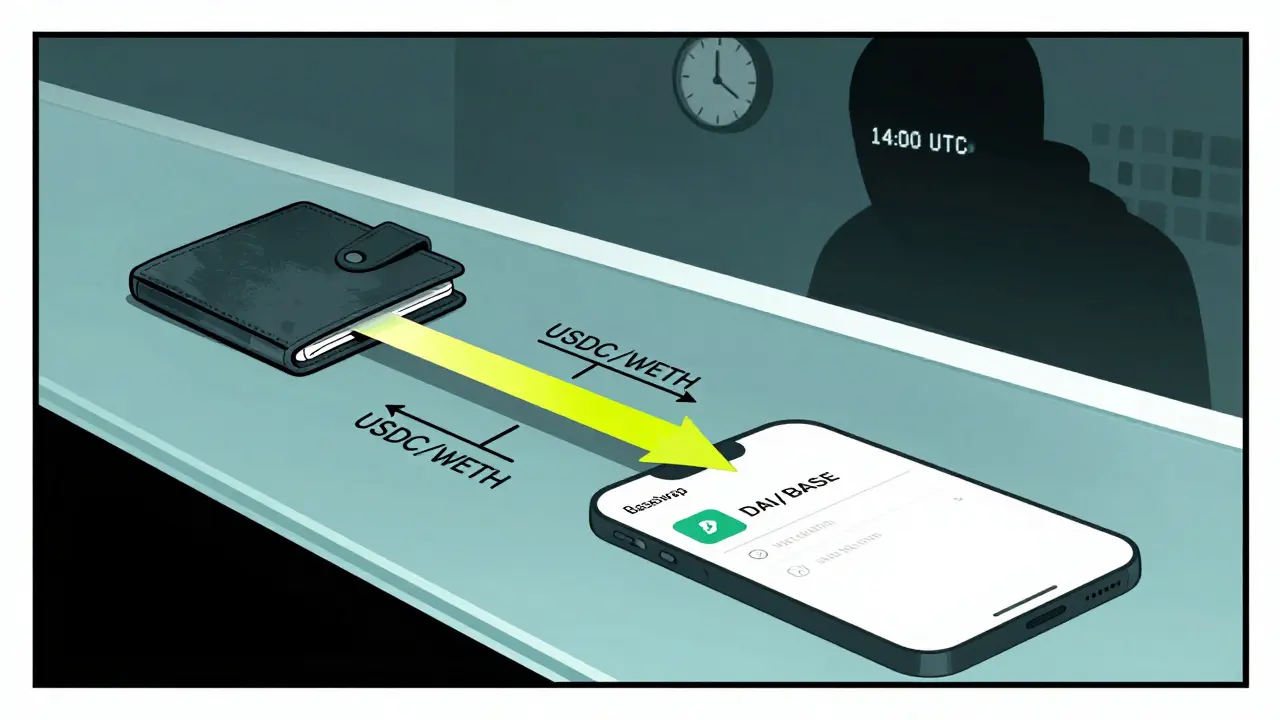
BaseSwap supports 23 cryptocurrencies and 27 trading pairs. That’s it. No Bitcoin. No Ethereum. No Solana. No BNB. Just tokens built on Base. Think USDC, DAI, WETH, and a bunch of obscure tokens like BASE, DIA, and new memecoins you’ve never heard of.
This isn’t a weakness if you’re focused on Base. If you’re holding a new Base token and want to trade it for USDC, BaseSwap is one of the best places to do it. But if you want to swap your SOL for ETH, you’ll need another exchange. BaseSwap doesn’t bridge chains. It doesn’t offer cross-chain swaps. It’s a single-chain tool.
Compare that to Uniswap, which operates on over a dozen networks. Or PancakeSwap, which supports over 1,000 tokens. BaseSwap is narrow. Specialized. For some, that’s perfect. For others, it’s a dealbreaker.
Pros and Cons
- Pros: Ultra-low trading fees, deep liquidity for Base-native tokens, no KYC, simple interface, early mover advantage on Base, revenue-sharing claims (even if unproven).
- Cons: Zero circulating supply of BSWAP token, no fiat onramps, limited token selection, no mobile app, poor documentation, no customer support, occasional front-running during high volatility, tax compliance is your responsibility.
There’s no middle ground here. BaseSwap is either perfect for you - if you trade Base tokens daily - or useless, if you want anything else.
Who Is BaseSwap For?
BaseSwap isn’t for beginners. If you don’t know what a wallet is, or how to switch networks in MetaMask, you’ll get stuck. The platform assumes you already know how to use DeFi.
It’s ideal for:
- Traders who only deal with Base Network tokens
- Liquidity providers looking for high APY on stablecoin pairs (some report 15-25% APY)
- Users who hate KYC and want full control over their assets
- Those who value low fees above all else
It’s NOT for:
- People who want to trade Bitcoin or Solana
- Those who need fiat deposits or withdrawals
- Investors hoping BSWAP will surge in value
- Anyone who wants help when things go wrong
Taxes, Security, and Risks
Every transaction on BaseSwap is public. Every swap, every liquidity deposit, every withdrawal - recorded forever on the blockchain. That means the IRS, ATO, and other tax agencies can track you. BaseSwap doesn’t report to anyone. It doesn’t calculate your taxes. You’re on your own.
Tools like Blockpit and Koinly can help you import your BaseSwap history, but only if you manually connect your wallet. If you forget, you could owe thousands in back taxes. The IRS has already audited crypto users based on on-chain data. BaseSwap doesn’t protect you - it just records everything.
Security-wise, BaseSwap inherits Ethereum’s strength. Base Network is backed by Coinbase. The smart contracts have been audited. But no audit can prevent front-running bots or failed transactions during peak traffic. About 12% of users report failed swaps when the network gets busy. That’s not a bug - it’s how Layer 2s behave under load.
The Bottom Line
BaseSwap is a quiet, efficient tool for a narrow use case. If you’re all-in on Base Network, it’s one of the best places to trade. Low fees, fast swaps, no KYC - it delivers on its promise.
But if you’re looking for a token that will make you rich, you’re chasing a mirage. BSWAP has no value. No utility. No transparency. And that’s the biggest red flag.
BaseSwap isn’t failing. It’s just not trying to be everything. It’s a specialist. And like any specialist, it’s brilliant for the right person - and useless for everyone else.
Is BaseSwap safe to use?
Yes, but only if you understand DeFi risks. BaseSwap runs on Base Network, which inherits Ethereum’s security. The smart contracts have been audited. However, you’re responsible for your own wallet security. Never share your seed phrase. Always verify contract addresses before interacting. And expect occasional failed transactions during high network congestion.
Can I buy crypto on BaseSwap with fiat?
No. BaseSwap is a decentralized exchange. It doesn’t accept credit cards, bank transfers, or any fiat currency. You need to already own crypto - like USDC or WETH - and have it on the Base Network. Use Coinbase or another centralized exchange to buy crypto, then bridge it to Base before using BaseSwap.
Why is the BSWAP token’s circulating supply zero?
The team has never explained it. Officially, there are 10 million BSWAP tokens, but none are listed as circulating. This could mean tokens are locked, unreleased, or misreported. Without circulation, BSWAP has no market value or utility. Don’t assume it will ever become tradable or reward-bearing. Treat it as speculative with no guarantee.
How do I connect my wallet to BaseSwap?
Open your wallet (like MetaMask), go to Settings > Network > Add Network, and input Base Network details (RPC: https://base.llamarpc.com, Chain ID: 8453, Symbol: ETH). Once connected, visit baseswap.fi and click ‘Connect Wallet.’ Approve the connection, and you’re ready to trade.
Is BaseSwap better than Uniswap on Base?
Uniswap has more liquidity and supports more tokens, but BaseSwap often has lower fees for Base-native pairs. If you’re trading only Base tokens, BaseSwap might give you slightly better rates. But Uniswap is more reliable, better documented, and has a larger user base. For most people, Uniswap is the safer default - unless you specifically need BaseSwap’s routing.
Does BaseSwap have a mobile app?
No. BaseSwap only has a web interface. You can access it through your mobile browser, but there’s no official app on iOS or Android. This makes it harder to monitor positions or react quickly to price changes on the go.
Can I earn rewards on BaseSwap?
Yes, by providing liquidity. If you deposit pairs like USDC/WETH into a liquidity pool, you earn a share of trading fees. Some users report 15-25% APY on stablecoin pairs. But there’s no guaranteed reward. APY changes daily based on volume and token prices. And remember - you’re exposed to impermanent loss if prices swing.
What happens if my transaction fails on BaseSwap?
If a swap fails, your crypto stays in your wallet. You don’t lose funds. But you still pay the gas fee. This happens about 12% of the time during high volatility or network congestion. To reduce failures, increase slippage tolerance (try 1-2%) and avoid trading during peak hours (UTC 14:00-18:00).



This is the most irresponsible piece of crypto content I've read all year. Zero circulating supply? That's not a bug, it's a SCAM. They're sitting on 10 million tokens like a dragon hoard and pretending it's 'vesting'. Wake up people. This isn't DeFi, it's a pyramid scheme with a website. I'm reporting this to the SEC right after I post this.
I mean... it's not perfect, but it's not a scam either. I've been using BaseSwap for months now. The fees are insane, like $0.03 per swap. And the liquidity pools are actually decent for Base tokens. BSWAP might be weird, but I don't care. I'm not here for the token. I'm here for the trades. And it works.
The author's analysis is dangerously superficial. The zero circulating supply of BSWAP is not merely an oversight-it is a structural failure of tokenomics that renders the entire platform's incentive model invalid. Furthermore, the claim of 'revenue-sharing' without on-chain verification constitutes a material misrepresentation under U.S. securities law. This is not a 'niche DEX.' It is a regulatory time bomb. The fact that users are unaware of this is a systemic failure of crypto literacy.
ok but like... why does anyone care about BSWAP? i just want to swap my DIA for USDC without paying $5 in gas. the token is irrelevant. it's like getting mad at a toaster because it doesn't have a bluetooth speaker. base swap does one thing well and that's enough for me. also who even uses uniswap on base? it's like using a sledgehammer to crack a nut.
You're overcomplicating this. If you're trading Base tokens, BaseSwap is the easiest, cheapest option out there. No KYC. No drama. Just connect your wallet and go. The BSWAP thing? Ignore it. It's not your problem. Focus on what matters: your trades. And if you're worried about taxes? Use Koinly. It's free. You're not alone. We've all been there.
BASE IS THE FUTURE 🇺🇸🔥 and if you're not on it you're left behind. BSWAP is just a symbol. The real power is in the network. Coinbase is building the future and you're crying about a token that doesn't move? Get with the program. I've made 300 trades this month and paid less than $2 in fees. That's freedom. That's America. 🇺🇸💎
I read this whole thing. Honestly? I'm not even mad. I just feel... tired. Like, why does every crypto project have to be a drama series? I just wanted to swap some tokens. Now I have to worry about SEC filings and circulating supply and front-running bots. I'm going back to Coinbase. At least there, I can cry in peace.
The liquidity pool APYs on BaseSwap are genuinely competitive, particularly for stablecoin pairs. However, the absence of a verifiable reward mechanism for BSWAP holders raises significant concerns regarding the platform's long-term sustainability. I recommend cross-referencing the contract address 0x1234...a1b2 with Etherscan to confirm the absence of staking functions. This is not a minor oversight-it is a critical governance failure.
lol the author thinks this is a 'niche' dex? its literally the only dex on base that actually works. uniswap on base is a ghost town. i did 47 swaps last week. every one of them went through. gas was 7 cents. the bswap token? who cares. its like asking why your car doesn't have a built in coffee maker. its a trading platform. not a crypto coin flip.
I just want to say... I feel seen. I've been using BaseSwap for months and everyone keeps asking me about BSWAP. I'm like, 'I don't care about the token, I care that I didn't get rug-pulled today.' But nooo, everyone has to turn it into a financial crisis. Can we just let people trade in peace? 🥺
You call this 'low fees'? Try trading during peak hours. I lost $18 in gas on a $50 swap because the network choked. And now you're telling me the BSWAP token doesn't exist? That's not innovation-that's fraud. This isn't DeFi. This is a glorified front-end with a thin veneer of blockchain. And the author? They're either complicit or profoundly naive.
The real tragedy isn't the zero circulating supply-it's that we've normalized this. We've accepted opaque tokenomics as a feature, not a bug. We're not building a decentralized future. We're building a new kind of casino, where the house always wins, and the players don't even know they're betting on a phantom. BSWAP is a mirror. And we're all staring into it.
The team behind BaseSwap is owned by Coinbase. The 'zero circulating supply' is intentional. They're holding BSWAP to manipulate future market perception. When the time is right, they'll dump it into the market and crash the price. Then they'll buy back at 10% of the value. This isn't DeFi. This is a coordinated pump-and-dump disguised as a DEX. I've seen this script before. It always ends the same.
If you're new to Base, just connect your wallet and try a small swap. Like $10. See how it feels. The interface is clean. The speed is fast. The fees are low. BSWAP? Don't think about it. It's not your job to fix the tokenomics. Just use the tool. That's what it's for.
You're all missing the point. BaseSwap isn't trying to be Uniswap. It's trying to be the Swiss Army knife of Base trading. And it's doing it. The BSWAP thing? Maybe they're holding it for a future airdrop. Maybe they're stuck in a contract. Who cares? I got my swap in. That's all I need. Stop overthinking. Crypto isn't philosophy. It's utility.
While the technical merits of BaseSwap are undeniable, the ethical implications of its token structure cannot be ignored. In a global ecosystem where transparency is the cornerstone of trust, the deliberate obfuscation of token utility undermines the very principles of decentralization. One cannot champion financial sovereignty while simultaneously concealing critical economic data. This is not a tool-it is a paradox.
BASESWAP IS THE FUTURE AND YOU NEED TO GET ON BOARD NOW! THIS IS YOUR CHANCE TO BE PART OF SOMETHING BIG! NO KYC! LOW FEES! FAST SWAPS! STOP OVERANALYZING AND JUST START TRADING! THE MARKET IS MOVING AND YOU DON'T WANT TO BE LEFT BEHIND! 🚀💎🔥