
Loopring Exchange Review: Is This Layer-2 DEX Worth Your Trade?
Imagine trading on Ethereum without the heart-stopping gas fees that usually eat half your profit. That is the promise of Loopring Exchange is a decentralized exchange (DEX) protocol and Ethereum Layer-2 scaling solution that allows users to trade assets directly from their wallets. Launched back in 2017, it doesn't just offer a place to swap tokens; it fundamentally changes how transactions hit the blockchain to keep things fast and cheap.
If you are tired of centralized exchanges (CEXs) holding your keys hostage but hate the sluggishness of traditional DEXs, Loopring tries to offer the best of both worlds. But is it actually practical for the average trader in 2026? Let's break down how it works and where it falls short.
The Secret Sauce: How zkRollups Actually Work
Most people are used to Automated Market Makers (AMMs) like Uniswap, where you trade against a liquidity pool. Loopring is different. It uses an order book model, which feels more like a professional trading platform where buyers and sellers set specific prices.
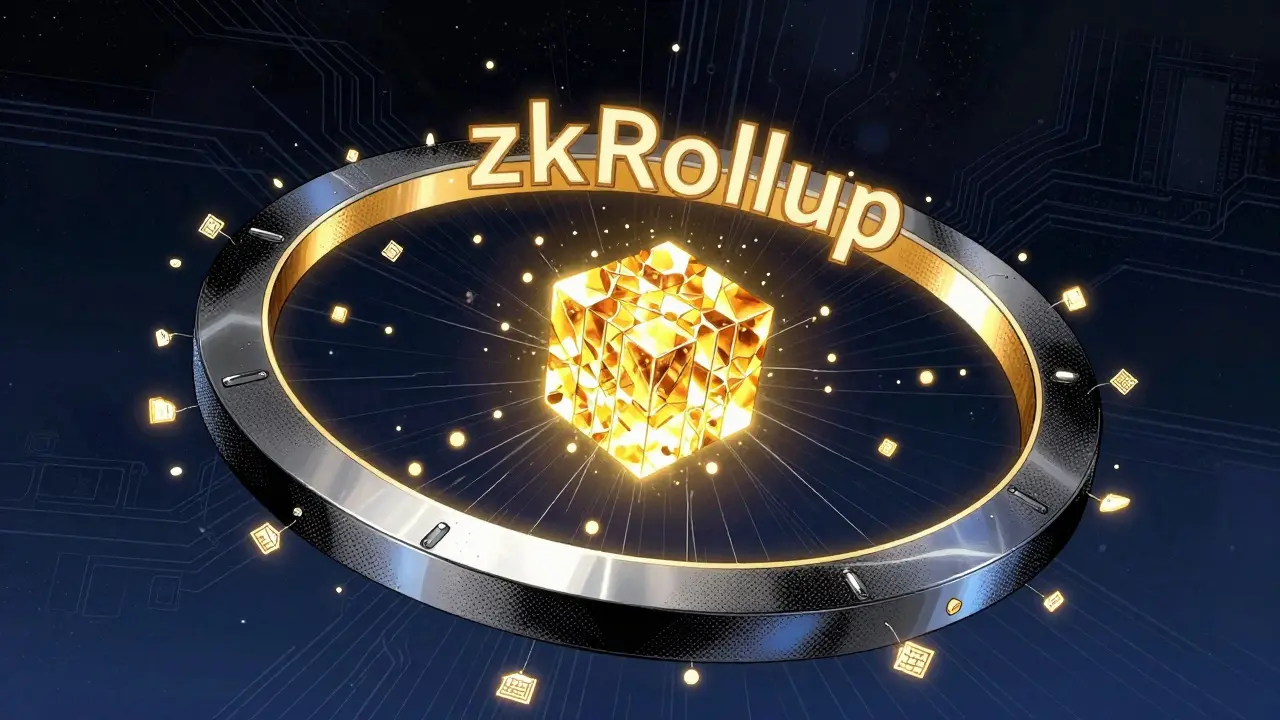
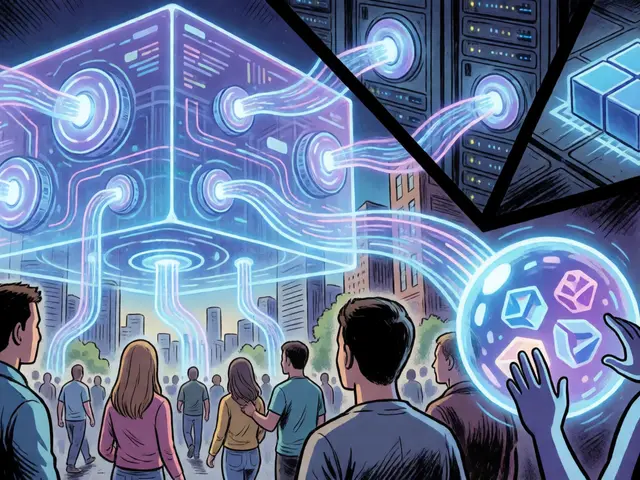
The magic happens through zkRollups (Zero-Knowledge Rollups). Instead of sending every single trade to the Ethereum mainnet-which is slow and expensive-Loopring bundles thousands of transactions into a single batch. It processes these off-chain and then sends a single "proof" back to the main blockchain to verify that everything was done correctly. This means you get the security of Ethereum without having to pay for every tiny move you make.
Essentially, Loopring creates a "ring" of trades. These ring orders can handle up to 16 trades at once using atomic swaps, ensuring that either all trades in the sequence happen, or none do. No partial fills, no hanging orders.
Trading Costs: The Good and the Bad
When you look at trading fees, Loopring looks like a dream. If you are a "maker" (someone who provides liquidity by placing an order that isn't immediately filled), you pay zero fees. If you are a "taker" (someone who takes an existing order), the fee is a lean 0.10%. Compare that to the broader industry average of about 0.21% for takers, and it's a clear win.
However, there is a catch. While trading is cheap, getting your money out can be pricey. The ETH withdrawal fee sits at 0.002 ETH. While that might sound small, it's actually one of the highest in its class. For a "whale" moving thousands, it's a rounding error. For a beginner moving small amounts, it's a frustrating bottleneck.
| Fee Type | Loopring Exchange | Industry Average |
|---|---|---|
| Maker Fee | 0% | ~0.178% |
| Taker Fee | 0.10% | ~0.218% |
| ETH Withdrawal | 0.002 ETH | Variable (Lower) |
The LRC Token: More Than Just a Ticker
You can't talk about the platform without mentioning LRC (Loopring Coin). As of late 2025, the token has been riding a rollercoaster, trading around $0.09 with a market cap of roughly $121 million.
LRC isn't just a speculative asset; it's the fuel for the ecosystem. It's used for governance and staking, allowing token holders to have a say in how the protocol evolves. If you believe in the growth of Layer-2 scaling, LRC is the direct bet on this specific technology. That said, the price volatility-dropping over 11% in a recent month-shows that the market is still undecided on which Layer-2 solution will eventually dominate.

User Experience: Is the Learning Curve Too Steep?
If you've only used Coinbase or Binance, Loopring will feel like a jump into the deep end. Because it is non-custodial, you are the only one with the keys to your funds. There is no "forgot password" button here.
To get started, you have to understand the difference between Layer-1 (the main Ethereum chain) and Layer-2 (Loopring's fast lane). You'll need to deposit funds from your wallet into the Loopring ecosystem to enjoy those gas-free transfers. Once you are "inside" the Layer-2 environment, the speed is impressive, and the transaction costs vanish. But the initial setup and the concept of "topping up" your L2 wallet can be confusing for newcomers.
Another limitation is the asset variety. Loopring is an Ethereum-centric world. If you are looking to trade Bitcoin (BTC) or Solana (SOL) directly, you're out of luck. You'll need to stick to ERC-20 tokens and Ethereum-based assets.
Verdict: Who is Loopring For?
Loopring isn't trying to be everything to everyone. It's a specialized tool for a specific type of trader.
It is perfect for the DeFi power user who trades frequently and wants the speed of a centralized exchange without giving up their private keys. The order book model provides much better price discovery than the slippage-prone pools of a standard AMM, making it a great choice for those who care about precision in their entry and exit points.
On the flip side, if you are a casual investor who just wants to buy some ETH and hold it for five years, the withdrawal fees and the technical complexity of managing Layer-2 wallets might be more trouble than they are worth.
Is Loopring Exchange safe?
Yes, Loopring is considered very secure because it is non-custodial and leverages Ethereum's own security. By using zkRollups, it ensures that transaction validity is proven on the main chain, meaning you maintain control of your funds via your own private keys rather than trusting a company to hold them for you.
Can I trade Bitcoin on Loopring?
No, Loopring is specifically designed as an Ethereum Layer-2 solution. It supports Ethereum (ETH) and tokens that run on the Ethereum blockchain (ERC-20), but it does not support native Bitcoin trading.
What is the difference between a Maker and a Taker on Loopring?
A Maker is someone who creates an order and adds it to the order book, providing liquidity to the market; they currently pay 0% fees on Loopring. A Taker is someone who executes a trade against an existing order, "taking" the liquidity; they pay a 0.10% fee.
Why are the withdrawal fees higher than other DEXs?
Withdrawals require a transaction to be settled back on the Ethereum Layer-1 mainnet. Because this involves interacting with the main blockchain, the costs are higher. Loopring's 0.002 ETH fee is a result of the current protocol structure and the cost of finalizing those proofs on-chain.
Do I need LRC tokens to use the exchange?
While you can trade without holding LRC, owning the tokens allows you to participate in the platform's governance and staking rewards, which can help support the long-term growth of the network you are using.




The order book model is indeed a significant advantage for those accustomed to traditional finance. It allows for far more precise execution than the standard AMM pools, which often suffer from heavy slippage on smaller liquidity pairs. It's a solid choice for a more professional approach to DEX trading.
Makes sense.
Exactly!! The zkRollups are the real winner here... the efficiency is just unmatched compared to L1!!
Imagine thinking a 0.002 ETH withdrawal fee is 'small' 🙄. It's literally a barrier for the little guy. The irony of 'scaling' while keeping the exit doors expensive is just peak crypto 💅
Actually, for most serious traders, that fee is negligible. :)
The sheer audacity of calling this 'practical' for the average trader is laughable. This is just another playground for the self-proclaimed elite who enjoy tinkering with L2 bridges while the rest of the world waits for a UI that doesn't look like it was designed in a basement. The linguistic gymnastics used to justify these withdrawal fees is honestly impressive, if not completely fraudulent in spirit. I find the entire premise of 'fueling the ecosystem' with LRC tokens to be a tedious exercise in vanity. One simply cannot ignore the clunky nature of the onboarding process, which is an absolute nightmare for anyone without a computer science degree. It's a pretension of decentralization that barely masks the inefficiency of the underlying infrastructure. Truly a pedestrian effort in the grand scheme of DeFi evolution.
the L2 gas optimization is lit but the bridge UX is still kinda mid. tried to move some funds and the latency on the finality of the zk-proof was a bit sketch. def need better abi documentation for the non-custodial side of things.
dont sweat the learning curve too much guys it gets easier with practice and once you get that first deposit in the fees really do disappear
LRC is just a ghost town. All these 'rollups' are fighting for the same tiny piece of the pie and Loopring is barely holding on. The market cap is a joke.
I totally agree with the part about non-custodial wallets! 💖 It's so empowering to actually own your keys and not trust a big corp with your money! 🚀✨
Oh wow, so we're just pretending that not supporting BTC is a 'specialized tool' choice and not just a massive limitation? Brilliant logic.
The analysis of the maker/taker fees is correct, but it ignores the liquidity depth. A 0% maker fee is useless if there is no volume to absorb the orders. The slippage on mid-cap ERC-20 tokens remains an issue.
This is just such a wild ride! Like, we're literally redefining how value moves through the ether! The drama of the L1 vs L2 struggle is the real art here, people! Let's just embrace the chaos of the blockchain revolution and dive in headfirst!
The balance between security and accessibility is the central tension of all decentralized finance. Loopring chooses security and professional utility over ease of use.
if you are new just start with a small amount to test the bridge first it helps build confidence
L2 is the only way man. I can't deal with L1 gas anymore it's literally stealing my money. Loopring is okay but I need more tokens in there. Why is the liquidity so low on some pairs? It's killing me!
It is a commendable effort to provide a detailed breakdown of the zkRollup mechanism. The distinction between AMM and order book models is quite pertinent for the reader.
I believe we will see more people adopting this as they grow more comfortable with the tech. It's a great step forward!
The explanation of the maker and taker roles was very helpful. I appreciate the simplicity of the fee table.
We must ask ourselves if the convenience of L2 is worth the spiritual cost of trusting a bridge. True decentralization is a path, not a product you just 'deposit' into.
I tried it and honestly it's great once you get past the setup stuff... just be careful with your keys!!
Too many steps just to trade some coins. I'll just stay on my CEX.
The atomic swap feature is the most underrated part of this. Ensuring that a sequence of trades either all happen or none do is critical for complex arbitrage strategies. It removes the risk of getting stuck with a leg of a trade that doesn't close.
Sounds like a cool tool for people who really know what they're doing!