Birake Exchange Review: Is This White-Label Crypto Network Worth Your Time?
Imagine launching your own cryptocurrency exchange tomorrow. You have the brand, the website, and the customers. But you have zero liquidity. No one is trading on your platform because there are no buyers or sellers. This is the classic "chicken and egg" problem that kills most new exchanges before they even start. Birake Exchange claims to solve this by letting you plug into a shared network of order books. But does it actually work for traders? Or is it just a backend tool for business owners?
If you are a regular trader looking for deep pockets and tight spreads, you might be in the wrong place. If you are an entrepreneur wanting to launch a branded exchange without building code from scratch, you might be exactly where you need to be. Let’s break down what Birake really offers, where it falls short, and who should actually use it.
What Exactly Is Birake Exchange?
Birake isn’t like Binance or Coinbase. It doesn’t try to be the biggest exchange in the world. Instead, it operates as a white-label decentralized exchange network based in Estonia. Think of it less as a single store and more as a franchise model for crypto trading.
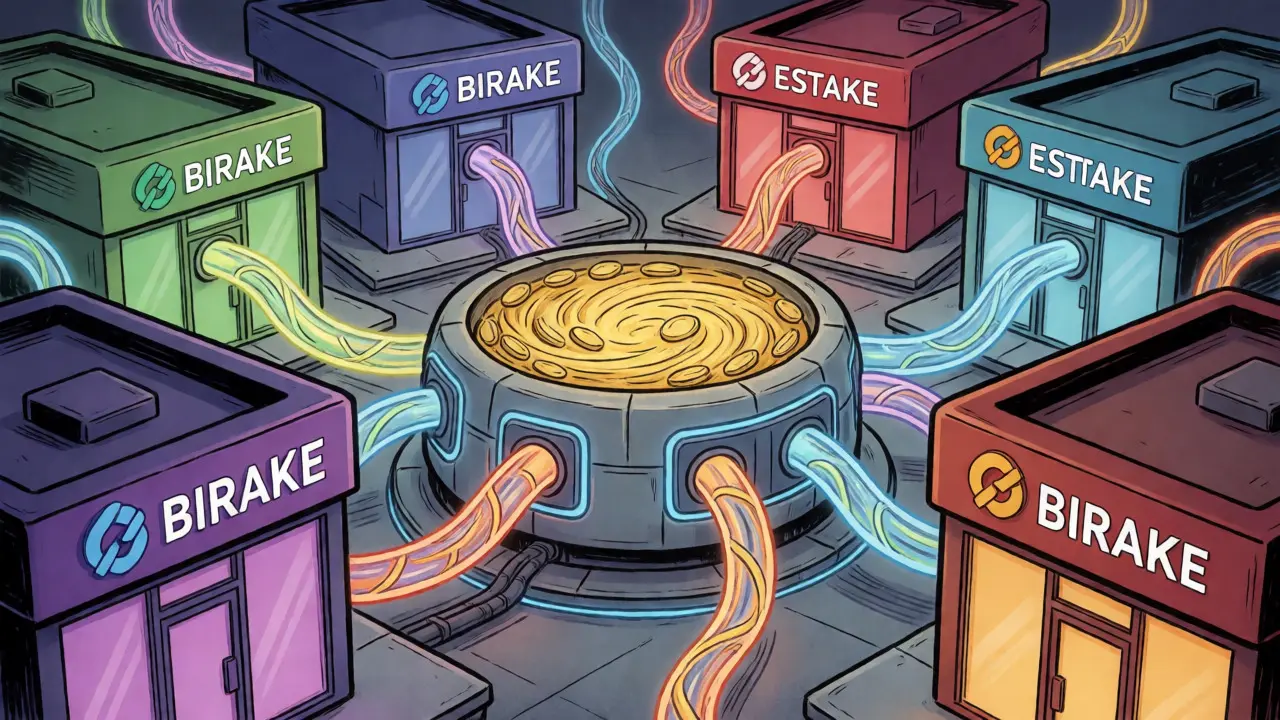
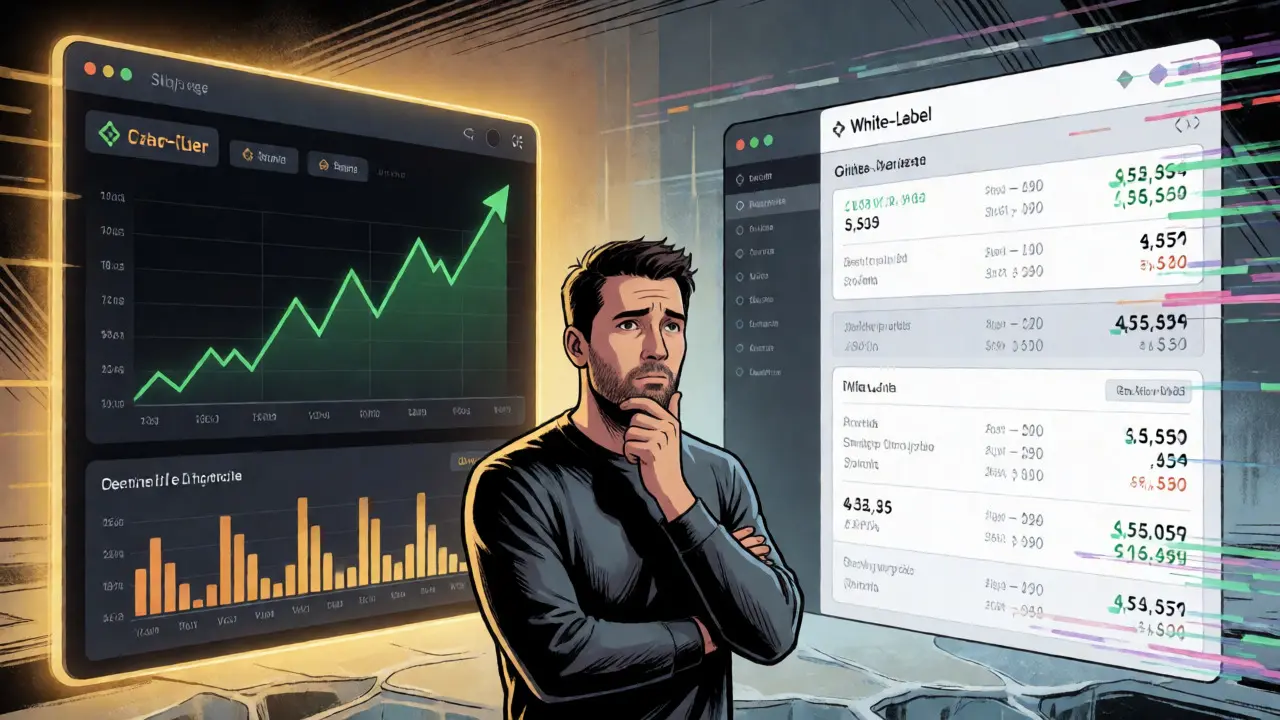
The core idea is simple: multiple independent exchanges connect to one central system. When a user on "Exchange A" places a buy order, it can match with a sell order from "Exchange B." They all share the same liquidity pool but keep their own logos, domains, and branding. Birake launched in December 2018 with this specific mission: help small exchanges survive by borrowing liquidity from each other.
| Feature | Detail |
|---|---|
| Founded | December 2018 |
| Headquarters | Estonia |
| Model | White-Label DEX Network |
| Native Token | BIR |
| Status (2025) | Untracked Listing on CoinMarketCap |
The White-Label Model: Who Is This Actually For?
This is the most critical point to understand. Birake is primarily a B2B (business-to-business) solution. The main customers aren’t necessarily individual traders; they are companies wanting to launch their own exchanges.
Here is how the value proposition works for these business owners:
- Instant Liquidity: Even if your new exchange has only one user, they see the full order book of the entire Birake network. You don’t need to wait months to build volume.
- Custom Branding: You get your own domain, logo, and interface. To the end-user, it looks like your proprietary platform.
- Shared Infrastructure: Birake handles the technical heavy lifting-the matching engine, security protocols, and server distribution. You focus on marketing and customer support.
For the average trader, this means you might not interact with "Birake" directly. You might trade on "CryptoHub EU" or "TokenTrade Asia," which are both powered by Birake’s backend. You likely won’t know it unless you dig into the footer links.
Liquidity and Trading Volume: The Elephant in the Room
Let’s look at the hard numbers. In late 2021, data showed Birake’s daily trading volume hovering around $1.1 million. Compare that to Binance, which routinely processes billions per day. By 2025, Birake’s status on major aggregators like CoinMarketCap is listed as "Untracked." This usually means the volume is too low or inconsistent to meet their monitoring standards.
Why does this matter to you? Low volume equals high slippage. If you try to buy $10,000 worth of a smaller altcoin on a Birake-powered exchange, you might move the price against yourself significantly. The spread (the difference between the buy and sell price) will likely be wider than on top-tier centralized exchanges.
Furthermore, the available trading pairs are limited. Historically, the network focused heavily on BTC-based coins, ETH pairs, and its native token, BIR. If you are looking for obscure meme coins or newly launched tokens, you probably won’t find them here. The network prioritizes established assets that provide enough stability for the shared order book.
Security and Technical Architecture
Because Birake functions as a Decentralized Exchange (DEX) network, its architecture differs from traditional centralized exchanges (CEXs). Servers are distributed globally rather than concentrated in one location. This design choice offers two distinct advantages:
- Downtime Resilience: If one server goes down due to maintenance or a local outage, the rest of the network keeps running. You aren’t locked out of your funds because a single data center failed.
- Attack Resistance: Hacking a distributed network is harder than breaching a single centralized database. Compromising one node doesn’t give an attacker access to the whole system.
However, "decentralized" doesn’t automatically mean "perfectly secure." Users still rely on the specific white-label exchange operator for account management features like Two-Factor Authentication (2FA) and cold storage practices. Since each partner exchange manages its own customer interface, security standards can vary slightly depending on the implementation quality of the specific brand you are using.
User Experience and Reputation
Here is where things get tricky. Public sentiment around Birake hasn’t been glowing. On platforms like Cryptogeek, the user rating sits around 1.7 out of 5, based on a very small sample size of reviews. While a small number of reviews isn’t statistically massive, a score that low usually points to recurring issues.
Common complaints in the white-label space often include:
- Customer Support Delays: Since the technical layer is handled by Birake, but the customer relationship is owned by the local exchange, users can get stuck in the middle when something breaks.
- Withdrawal Issues: Low liquidity networks sometimes struggle with processing times during high-volume periods.
- UI Glitches: White-label solutions can feel generic or buggy compared to the polished interfaces of giants like Coinbase or Kraken.
It’s worth noting that the lack of widespread community discussion on Reddit or Trustpilot suggests Birake hasn’t captured the retail imagination. Most users there are either business partners or casual traders who stumbled upon a specific branded exchange without realizing it was part of the Birake network.
Birake vs. The Competition
To understand Birake’s place in the market, we need to compare it to alternatives. It’s not competing directly with Binance for retail dominance. It competes with other white-label providers and niche DEX networks.
| Platform Type | Example | Best For | Liquidity Level |
|---|---|---|---|
| Birake Network | Branded Micro-Exchanges | New exchange startups needing instant liquidity | Low to Medium |
| Centralized Giants | Binance, Coinbase | High-frequency traders, large volume | Very High |
| Pure DEXs | Uniswap, PancakeSwap | DeFi users, token swapping | High (but fragmented) |
| Other White Labels | Binance Cloud, AlphaPoint | Institutions wanting enterprise-grade tech | Variable (depends on host) |
The key takeaway from this comparison is specialization. Birake wins on ease of entry for exchange operators. It loses on raw trading power for the end-user. If you are a trader, you choose Birake-powered exchanges only if they offer a specific regional advantage or a unique coin listing not found elsewhere. Otherwise, stick to the majors.
The BIR Token: Utility and Value
The native token of the ecosystem is BIR. Like many exchange tokens, it serves several purposes within the network:
- Fee Discounts: Holding or paying fees in BIR often reduces transaction costs.
- Governance: Token holders may have voting rights on network upgrades or new listings.
- Staking Rewards: Some implementations allow staking BIR for yield.
However, the value of BIR is tied closely to the success of the Birake network itself. With low trading volumes and limited mainstream adoption, the token’s price action has historically been volatile and disconnected from broader market trends. Do not treat BIR as a blue-chip investment. View it as a utility token for the specific communities operating on the Birake rails.
Should You Trade on a Birake-Powered Exchange?
So, is Birake good? The answer depends entirely on your role.
Yes, if you are:
- An entrepreneur launching a crypto exchange in a niche market (e.g., Southeast Asia, Eastern Europe).
- A developer looking for a turnkey solution to avoid coding a matching engine from scratch.
- A trader already registered on a specific local exchange that uses Birake technology and wants to stay there for convenience.
No, if you are:
- A high-volume trader seeking the lowest possible fees and tightest spreads.
- Someone looking for the widest selection of altcoins and new listings.
- A beginner who wants a highly polished, well-supported mobile app experience.
Birake solves a specific business problem effectively. It provides liquidity to those who would otherwise have none. But for the average person buying Bitcoin once a month, the friction of dealing with a lesser-known white-label brand might outweigh the benefits.
Frequently Asked Questions
Is Birake Exchange safe to use?
Birake uses a decentralized architecture which generally reduces the risk of single-point-of-failure hacks. However, safety also depends on the specific white-label exchange operator you use. Always check if the specific platform has two-factor authentication enabled and positive recent user feedback regarding withdrawals.
Can I withdraw my funds easily from Birake?
Withdrawals are processed through the specific exchange interface you are using. Because Birake shares liquidity across the network, withdrawal speeds can vary. During periods of high network activity, some users have reported delays. It is recommended to test with a small amount first.
Does Birake support US customers?
Birake is based in Estonia and complies with European regulations. US customers can technically access the platform, but regulatory compliance is complex. Users must verify if their specific white-label exchange accepts US residents, as KYC requirements differ by jurisdiction.
What makes Birake different from Uniswap?
Uniswap is a pure Automated Market Maker (AMM) DEX where users swap tokens from liquidity pools. Birake is an order-book based network that aggregates orders from multiple independent exchanges. Birake mimics the experience of a centralized exchange but distributes the infrastructure.
Why is Birake listed as 'Untracked' on CoinMarketCap?
CoinMarketCap tracks exchanges that meet certain volume and transparency criteria. Birake's trading volume is relatively low compared to top-tier exchanges, and its data feeds may not consistently meet the threshold for active tracking. This reflects its niche position rather than a technical failure.