

E-CNY vs Bitcoin: How China Is Building a State-Controlled Digital Currency to Replace Crypto
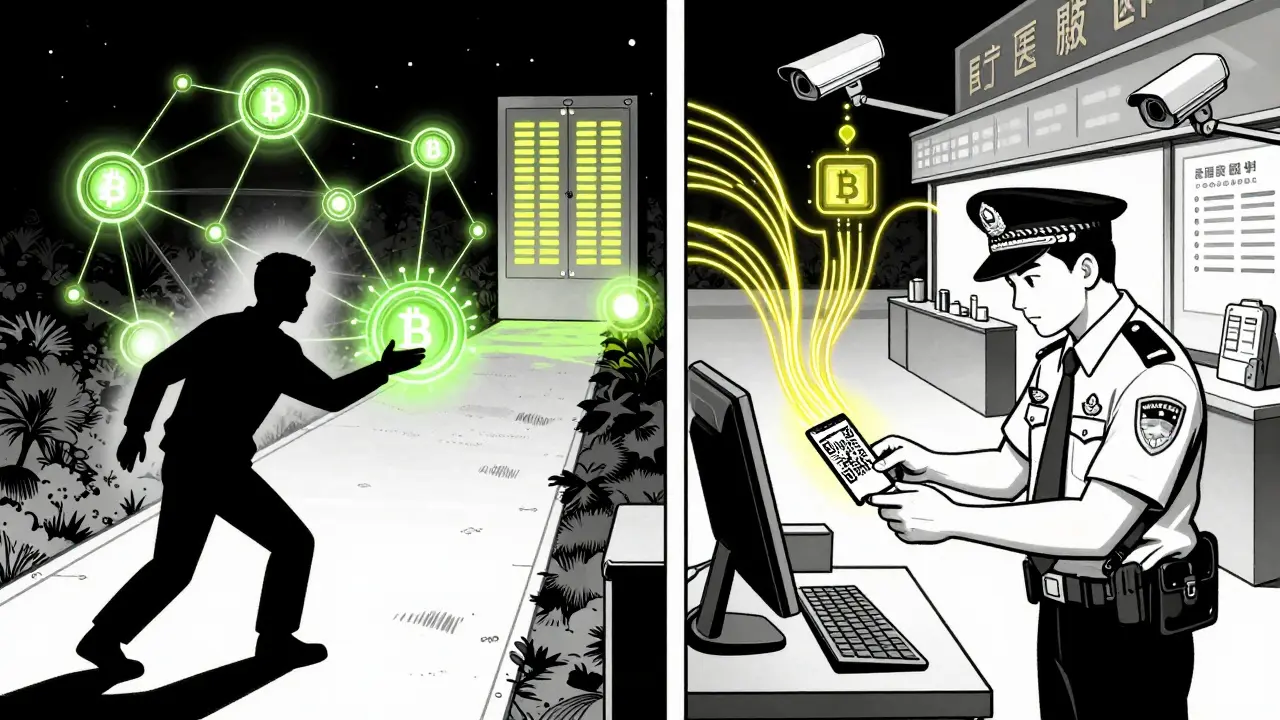
China isn’t trying to improve Bitcoin. It’s trying to erase it. While Bitcoin runs on a global, decentralized network where no single government can shut it down, China’s e-CNY - the digital yuan - is designed to be controlled, tracked, and confined. This isn’t about innovation. It’s about power. And it’s working.
What Exactly Is the E-CNY?
The e-CNY, or digital yuan, is China’s official central bank digital currency (CBDC). Unlike Bitcoin, which exists on a public blockchain anyone can join, the e-CNY is issued, managed, and monitored entirely by the People’s Bank of China (PBOC). It’s not a new currency. It’s just the yuan - but digital. Every transaction is recorded in a government database. Every wallet is linked to your real identity. There’s no anonymity. No pseudonymity. Just traceability.As of July 2024, the e-CNY had processed over 7.3 trillion yuan ($1 trillion USD) in transactions across 26 cities. That’s not a trial anymore. It’s a rollout. You can use it to pay for groceries, subway rides, public transit, and even your civil servant salary. It works offline, through QR codes or NFC, and integrates directly with Alipay and WeChat Pay. No bank account? No problem. The system was built for mass adoption, not for financial freedom.
Why China Banned Bitcoin
In 2021, China shut down Bitcoin mining completely. Then came the trading ban. By 2025, owning, buying, or selling Bitcoin within mainland China was illegal. Not risky. Not discouraged. Banned.Why? Because Bitcoin threatens control. Bitcoin moves money without permission. It bypasses capital controls. It lets people store value outside the state’s reach. And China’s government sees that as a threat to monetary sovereignty - and political stability.
Chinese regulators don’t just block exchanges. They monitor on-chain activity. They track IP addresses, VPN usage, and wallet behavior. If you’re sending Bitcoin to a foreign wallet, they know. If you’re using a non-registered wallet, you’re breaking the law. The government even uses the FATF Travel Rule - requiring all crypto transfers to carry sender and receiver details - but only for its own system. For Bitcoin? No such rules apply. Just enforcement.
E-CNY vs Bitcoin: The Core Differences
| Feature | E-CNY (Digital Yuan) | Bitcoin |
|---|---|---|
| Control | State-owned, fully centralized | Decentralized, no central authority |
| Supply | Unlimited - PBOC can print more | Capped at 21 million coins |
| Privacy | Zero anonymity - government sees everything | Pseudonymous - transactions visible, identities hidden |
| Use Case | Domestic retail payments only | Global, peer-to-peer value transfer |
| Energy Use | Low - runs on existing infrastructure | High - proof-of-work mining consumes massive power |
| Accessibility | Restricted to Chinese citizens and approved entities | Open to anyone, anywhere |
The e-CNY isn’t trying to be like Bitcoin. It’s trying to be the opposite. Bitcoin is about removing intermediaries. The e-CNY is about adding more control. Bitcoin lets you send money without asking. The e-CNY makes you answer questions before you even tap your phone.
How China Is Exporting Its Model
China isn’t just building this system for its own people. It’s exporting it. Through the Belt and Road Initiative, China is pushing the digital yuan into trade corridors across Africa, Central Asia, and Southeast Asia. Countries with weak financial systems or limited access to SWIFT are being offered e-CNY as a way to settle cross-border payments - without using the U.S. dollar.In Pakistan, the China-Pakistan Economic Corridor now uses e-CNY for energy and infrastructure deals. In Kenya and Nigeria, Chinese firms are installing e-CNY payment terminals at local markets. The goal? To create a parallel financial network - one that bypasses Western banking rules, sanctions, and dollar dominance.
Hong Kong, meanwhile, has passed strict rules on stablecoins: they must be 1:1 backed by reserves. That’s not a coincidence. It’s a blueprint. China is shaping global standards - not through votes, but through infrastructure.
What About Privacy?
If you think the e-CNY is just a more convenient way to pay, think again. Every purchase you make - whether it’s a coffee, a bus ticket, or a gift for your child - is logged. The government can freeze funds. It can limit spending. It can block transactions to certain merchants or categories.Imagine if your city decided you couldn’t buy alcohol after 10 p.m. - and your digital wallet automatically blocked the transaction. That’s not sci-fi. That’s how the e-CNY works. It’s programmable money. And that’s why critics call it surveillance currency.
Compare that to Bitcoin. With Bitcoin, no one can freeze your wallet. No one can block your transaction. No one can decide what you’re allowed to buy. That’s not just a technical difference. It’s a philosophical one.

Is the World Following China’s Lead?
Over 130 countries are exploring CBDCs. But none are as aggressive as China. The European Central Bank is still testing. The U.S. Federal Reserve is studying. China is already paying its civil servants in digital yuan.Global crypto trading volume hit $5.4 trillion in Q1 2025. Over 580 million people now hold cryptocurrency. Yet China’s crackdown hasn’t stopped demand - it’s just pushed it underground. A 2025 survey found that 26% of ETF investors in Greater China still plan to invest in crypto ETFs. People want alternatives. The question is: can they get them?
China’s answer? No. Not here. Not now. And maybe not ever.
What’s Next?
China is investing $54.5 billion annually into blockchain tech through 2030. That’s not just for the e-CNY. It’s for global influence. The mBridge project - a multi-CBDC platform led by the Bank for International Settlements - is already testing cross-border settlements between China, Thailand, Hong Kong, and the UAE.But here’s the irony: while China bans Bitcoin, it’s quietly building the infrastructure that could one day support it. Blockchain technology isn’t owned by any one country. The code is open. The networks are global. Even if China locks its citizens out of Bitcoin, the world outside won’t.
The e-CNY is a powerful tool - for control, for efficiency, for state power. But it’s not a replacement for Bitcoin. It’s a different kind of money. One that asks for permission. One that watches. One that remembers.
Bitcoin asks for nothing. It just works.
Is Bitcoin illegal in China?
Yes. Since 2021, China has banned all cryptocurrency trading and mining. Owning Bitcoin isn’t a criminal offense, but using it to transfer value, buying it on exchanges, or mining it is illegal. The government actively blocks access to foreign crypto platforms and monitors wallet activity to enforce compliance.
Can I use the e-CNY outside China?
Limited. The e-CNY is designed for domestic use, but China is testing cross-border payments through the mBridge project. So far, pilots have been conducted with Hong Kong, Thailand, and the UAE - mainly for trade settlements between Chinese firms and partner nations. It’s not available to tourists or ordinary citizens abroad yet.
Why does China care so much about replacing Bitcoin?
Bitcoin threatens the state’s control over money. It lets people move wealth without permission, bypass capital controls, and store value outside the banking system. For a government that tightly manages its economy and monitors its citizens, that’s unacceptable. The e-CNY gives the state full visibility - and control - over every digital transaction.
Is the e-CNY more secure than Bitcoin?
It depends on what you mean by secure. The e-CNY is less vulnerable to hacking because it’s centralized - there’s one system to protect. But if that system is compromised, or if the government decides to freeze your funds, you have no recourse. Bitcoin’s security comes from decentralization - no single point of failure. But if you lose your private key, you lose your money. Each has trade-offs.
Will other countries copy China’s model?
Some already are. Countries with authoritarian governments or weak financial institutions are most likely to adopt the e-CNY-style CBDC - full control, no privacy, state oversight. But democracies like the U.S. and EU are moving slower, prioritizing privacy and financial inclusion. China’s model is attractive for control. But it’s not universally appealing.
Can the e-CNY replace the U.S. dollar globally?
Not yet. The dollar still dominates global trade, reserves, and finance. But the e-CNY is being positioned as an alternative for countries that want to avoid U.S. sanctions or SWIFT. Through Belt and Road partnerships, China is building a parallel system. It won’t replace the dollar overnight - but it’s creating cracks in its dominance.









e-CNY is just another tool for control. Bitcoin doesn't care who you are or where you live. It just works. No permissions. No tracking. Just code. And that's why it'll outlast every government that tries to ban it.
This isn't even a competition. The state wants obedience. Bitcoin wants freedom. One is a leash. The other is a sunrise. You can't regulate a concept. You can only try to bury it. And history always digs things up.
I've used the e-CNY in Shenzhen. It's convenient. But convenience isn't freedom. I get why people are drawn to it. But when your wallet can block your purchase of medicine because you're flagged? That's not innovation. That's surveillance dressed up as efficiency.
I don't trust either side completely. The state has power. Bitcoin has chaos. But I choose chaos over control. At least with Bitcoin, if I lose my money, I know I did it to myself. Not because some bureaucrat decided I was 'risky'.
China know what they doing. Bitcoin is for cowards who dont wanna work. e-CNY is real money. Real control. Real future. You think freedom is good? Try living without food or electricity. Then come talk to me about decentralization.
LMAO. The US is still debating CBDCs while China already pays teachers in digital yuan. This isn't even close. We're playing chess while they're playing 4D chess. And we're still arguing if blockchain is 'real'. 😅
I used to think Bitcoin was just for tech bros. Then I saw how e-CNY can freeze your account if you buy from a 'sensitive' merchant. Suddenly, Bitcoin didn't seem so wild. It seemed like the only thing left that still respects your right to be left alone.
Bitcoin is dead. Long live the e-CNY. Done.
So let me get this straight. You're saying the government that monitors your WeChat messages, tracks your Baidu searches, and knows when you buy toilet paper... is now giving you a digital wallet so you can 'pay for groceries'... and this is supposed to be *progress*? 😏
China banned Bitcoin because it works too well. Why let people escape the system when you can just build a better cage?
The fundamental flaw in Bitcoin maximalism is the assumption that decentralization = resilience. But resilience requires infrastructure, liquidity, and adoption. e-CNY has all three. Bitcoin has memes and mining rigs. The real world doesn't care about your ideological purity.
I just think people are missing the point. It's not about Bitcoin vs e-CNY. It's about who gets to decide how money works. The state? Or the people? I'm not pro-Bitcoin. I'm pro-choice.
Oh wow. So China is 'building a parallel financial system'? How original. Next they'll be using QR codes to pay for air. And calling it 'innovation'. Meanwhile, the rest of the world is still trying to figure out if crypto is a pyramid scheme or a religion. 🙄
In Nigeria, we see this every day. The dollar is a weapon. The e-CNY is a bridge. It's not about replacing Bitcoin. It's about replacing the dollar's monopoly. And honestly? I'm not mad about it.
i think bitcoin is just a fad. like pet rocks. or beanie babies. e-cny is real. it works. you dont need to be a techie to use it. my grandma uses it to buy rice. thats what matters. 🤷♀️
If you think Bitcoin is freedom, you’ve never had your bank account frozen for buying a VPN. The real issue isn't control. It's who controls it. And right now? The people with the most money.
The deeper question isn't whether the e-CNY is better or worse than Bitcoin. It's whether any system that requires consent to function can ever be truly free. Bitcoin doesn't ask permission. It simply exists. And in that existence, it challenges the very idea that money must be governed. Not because it's perfect. But because it refuses to be owned. And that refusal? That's the revolution.
I used to think privacy was overrated. Then I saw what happened to people who tried to use crypto in China. Their bank accounts vanished. Their jobs disappeared. No warning. No appeal. Just silence. Bitcoin isn't about getting rich. It's about having a way out. And sometimes, that's worth more than any currency.
I don't hate the e-CNY. I just wish we were having this conversation without fear. The real tragedy isn't China's model. It's that so many people now see surveillance as the price of convenience. And that's a cost no one's really willing to pay... until it's too late.
I get why people are scared of e-CNY. But I also get why people are scared of Bitcoin. One feels like a cage. The other feels like a storm. Maybe the real answer isn't choosing one. It's remembering that money was never meant to be either. It was meant to serve us. Not the other way around. 🌿