
Crypto Foreign Exchange Violations in Morocco: Fines, Rules & 2026 Status
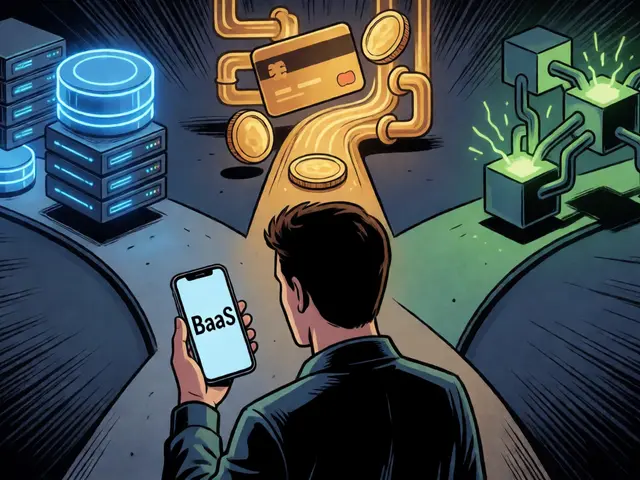
Imagine sending money to a friend abroad using Bitcoin, only to get hit with a fine for breaking foreign exchange laws. For years, that was the reality for anyone touching cryptocurrency in Morocco. The country’s stance on digital assets has been one of the strictest in Africa, rooted deeply in its control over the Moroccan Dirham (MAD). If you are wondering whether your crypto activity counts as a violation today, the answer is nuanced. While the blanket ban is technically gone, the rules are tight, and the penalties for messing up are real.
Morocco treats currency stability as a national security issue. When Bank Al-Maghrib is the central bank of Morocco responsible for monetary policy and financial stability cracked down on crypto in 2017, it wasn't just about hating new technology. It was about preventing capital flight. Every time someone swapped Dirhams for Dollars or Euros without going through the official banking system, it weakened the country's reserves. Crypto made this invisible. So, the government declared all crypto transactions a violation of foreign exchange regulations. Fast forward to 2025 and 2026, and the landscape has shifted from total prohibition to regulated permission-but the ghost of those old violations still haunts unlicensed traders.
The Evolution: From Total Ban to Regulated Trading
To understand what constitutes a violation now, you have to look at where we came from. In November 2017, Governor Abdellatif Jouahri is the Governor of Bank Al-Maghrib who announced the shift in crypto policy and his team issued a circular that effectively killed the local crypto market. Banks were ordered to block any account linked to exchanges like Binance or Coinbase. At that point, holding Bitcoin wasn't illegal per se, but buying or selling it was treated as an illegal foreign exchange transaction. You couldn't legally convert your salary into crypto because the Dirham isn't freely convertible.
That changed dramatically in 2024 and 2025. The government realized they couldn't stop the flow of digital assets forever, especially as younger Moroccans turned to peer-to-peer (P2P) networks. Instead of fighting it blindly, they drafted a new law. By 2025, this legislation was finalized. It didn't say "everything is free." It said, "you can trade, but only if we watch you." This shift moved crypto from the shadows into a supervised environment. However, the core principle remains: the Dirham must remain controlled. Any attempt to use crypto to bypass these controls is still a violation.
What Counts as a Foreign Exchange Violation Today?
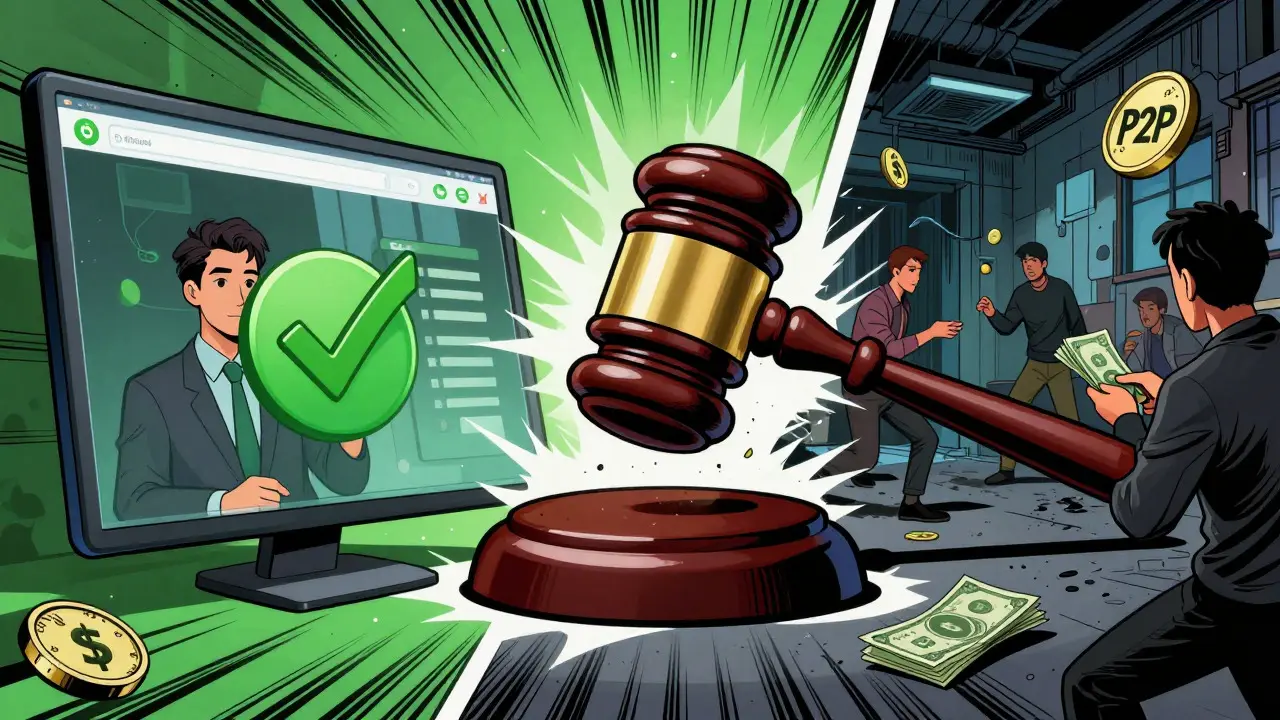
So, what exactly gets you in trouble in 2026? It helps to separate trading from spending. Under the current framework, limited cryptocurrency trading is permitted, but only through platforms that have received explicit licensing from Bank Al-Maghrib. If you use an unlicensed offshore exchange to swap MAD for USDT (Tether), you are likely committing a foreign exchange violation. Why? Because that transaction bypasses the official channels where the central bank monitors capital outflows.
Here is the tricky part: commercial payments. Even if you trade legally on a licensed platform, you cannot use that crypto to pay for goods or services internationally. Businesses are required to use traditional banking channels for cross-border trade. If a Moroccan company pays a supplier in Dubai using Bitcoin instead of a wire transfer, they are violating payment restrictions. This is seen as circumventing the foreign exchange office's oversight. The government wants innovation, but it doesn't want to lose its grip on how money leaves the country.
| Activity | Legal Status | Risk Level |
|---|---|---|
| Trading on Licensed Platforms | Legal | Low |
| Trading on Unlicensed Exchanges | Violation | High |
| Crypto Mining | Illegal | Critical |
| Paying Bills with Crypto | Restricted/Violation | Medium-High |
| Holding Cold Storage Wallets | Gray Area | Low-Medium |
The Mining Ban: A Persistent Prohibition
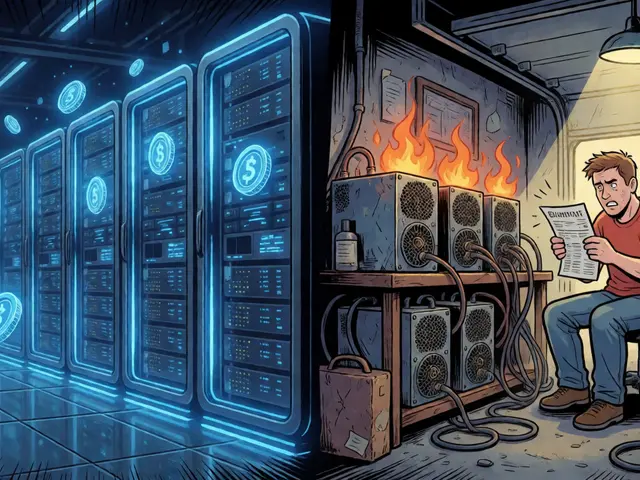
If you thought mining Bitcoin might be a side hustle, think again. Cryptocurrency mining remains completely illegal in Morocco as of 2026. This ban hasn't lifted despite the partial liberalization of trading. The reason is purely economic and infrastructural. Mining requires massive amounts of electricity and often involves importing expensive hardware. Both of these factors drain foreign currency reserves-exactly what the foreign exchange laws are designed to protect.
When you import ASIC miners, you're spending Dirhams to buy dollars/euros. When you run them, you're consuming energy that could be used by local industries. The government views large-scale mining operations as a threat to both the energy grid and the balance of payments. Consequently, authorities maintain a strict focus on shutting down unauthorized mining farms. Unlike trading, where there is a path to compliance, mining has no legal pathway. It is a hard stop.
Fines and Penalties: What You Could Lose
The consequences for breaking these rules are not just theoretical warnings. They carry substantial financial weight. The enforcement mechanisms vary depending on whether you are an individual or a business, and how severe the offense is. For individual citizens engaging in unauthorized cryptocurrency activities-like using black-market P2P rates to move large sums abroad-the fines range from MAD 20,000 to MAD 100,000. That translates to roughly $2,000 to $10,000 USD. For many people, that’s a significant chunk of savings wiped out in a single penalty.
For corporate entities, the stakes are much higher. Companies caught using crypto to bypass payment restrictions or operating unlicensed exchanges can face penalties up to MAD 500,000 (approximately $50,000 USD). But it doesn't always end with a fine. Repeat offenses can escalate to criminal proceedings under Morocco's financial laws. Authorities are particularly aggressive toward businesses attempting to circumvent payment restrictions, viewing them as systemic threats to financial integrity. If you are running a business, the risk isn't just a ticket; it's potential jail time and reputational ruin.
Compliance Requirements for Businesses
If you want to operate in the legal space, you need to follow the playbook set by the regulators. The cornerstone of compliance is the license. All cryptocurrency platforms must obtain explicit authorization from Bank Al-Maghrib. Without this stamp of approval, you are operating illegally. Once licensed, the work isn't done. You must implement rigorous Know Your Customer (KYC) procedures. This is part of the broader Anti-Money Laundering (AML) and Countering the Financing of Terrorism (CFT) framework.
Platforms are required to monitor every transaction and report suspicious activity to financial authorities immediately. Transparency is non-negotiable. Additionally, the taxman is watching. Profits from cryptocurrency transactions are subject to a 15% capital gains tax. You must report these gains properly to the tax authorities. Failure to do so adds tax evasion to your list of violations. Furthermore, if you are dealing with Initial Coin Offerings (ICOs) or tokenized securities, the Moroccan Capital Market Authority (AMMC) is the regulatory body overseeing capital markets and securities in Morocco steps in. They require specific approvals to ensure investors are protected and securities laws are respected. It is a multi-layered compliance structure designed to leave no room for ambiguity.
The Underground Reality: OTC and P2P Markets
Despite the regulations, demand for crypto in Morocco hasn't disappeared. In fact, projections indicate the market will reach nearly $280 million USD in 2025 and exceed that figure in 2026. How does this happen if everything is so restricted? The answer lies in the underground economy. Many crypto enthusiasts have turned to Over-the-Counter (OTC) trading and peer-to-peer platforms to navigate the legal minefield.
In these informal markets, users meet privately or use encrypted messaging apps to arrange trades. One person sends cash via mobile money or bank transfer, and the other sends crypto from a personal wallet. This method avoids the licensed platforms entirely, keeping the transaction off the radar of Bank Al-Maghrib. While this allows Moroccans to participate in the global crypto economy, it comes with risks. There is no consumer protection. Scams are common. And if authorities catch wind of a large OTC network, everyone involved faces the full brunt of foreign exchange violation penalties. It is a game of cat and mouse that shows the resilience of the community but also the limitations of top-down regulation.
Regional Context and Future Outlook
Morocco's cautious approach stands in stark contrast to some of its neighbors and international peers. Countries like Kazakhstan have embraced crypto mining due to cheap electricity and favorable laws. Canada offers a clear regulatory framework for exchanges. This divergence has led some Moroccan investors to seek opportunities abroad, further complicating the capital flight issue the government tries to prevent. Within North Africa, there are growing discussions about harmonizing regulations. If Egypt or Tunisia moves faster, Morocco may feel pressure to adjust its stance to remain competitive in fintech innovation.
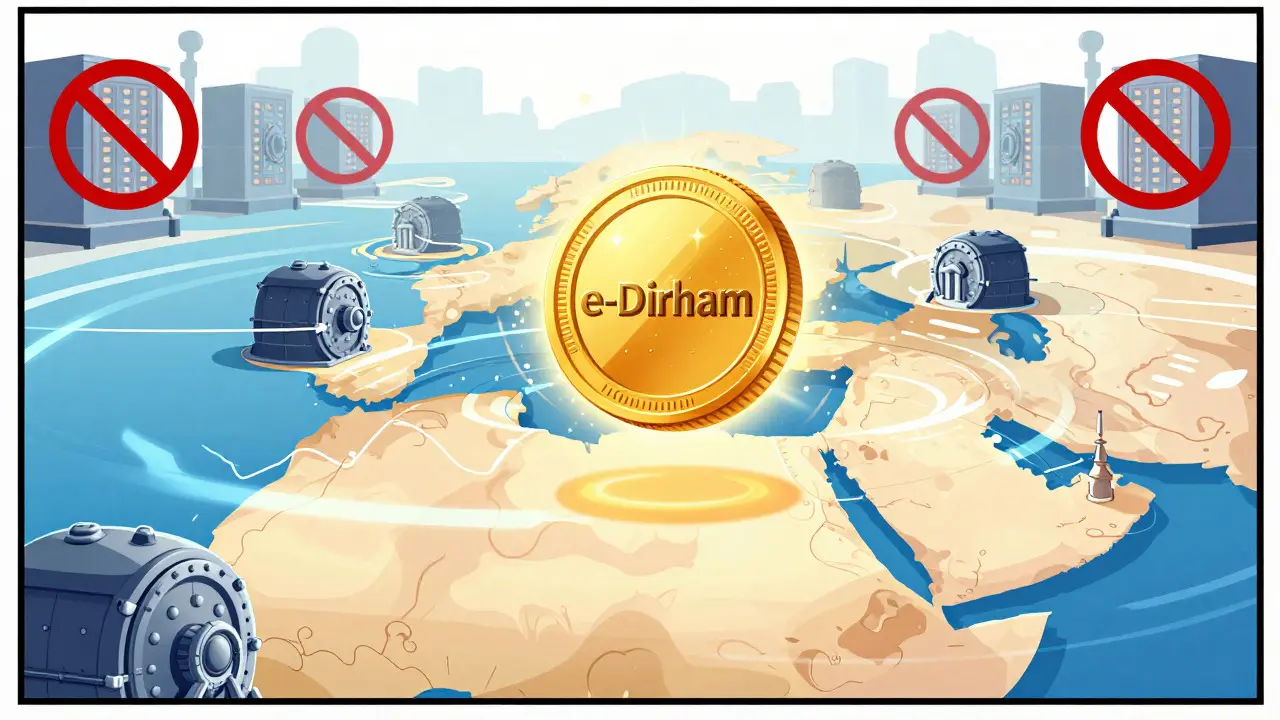
However, Morocco is playing a long game. Alongside regulating private crypto, Bank Al-Maghrib is developing its own sovereign digital currency, the e-Dirham is Morocco's central bank digital currency (CBDC) aimed at reducing cash dependence. The first pilot program was completed, and a second phase is underway in collaboration with the Central Bank of Egypt and the World Bank. This initiative focuses on cross-border transfers, directly addressing the foreign exchange concerns that sparked the original crypto ban. The idea is to offer a government-controlled alternative that provides the speed of crypto without the loss of monetary sovereignty. Industry observers believe this measured approach could serve as a model for other developing economies. For now, though, the rules are strict, the fines are steep, and the line between legal and illegal is drawn firmly around licensed platforms.
Is cryptocurrency legal in Morocco in 2026?
Yes, but with strict conditions. Limited cryptocurrency trading is legal only through platforms licensed by Bank Al-Maghrib. Using unlicensed exchanges or using crypto for commercial payments is considered a violation of foreign exchange regulations.
How much is the fine for crypto violations in Morocco?
Individuals face fines ranging from MAD 20,000 to MAD 100,000 ($2,000-$10,000 USD). Corporate entities can be penalized up to MAD 500,000 ($50,000 USD). Repeat offenses may lead to criminal charges.
Can I mine Bitcoin in Morocco?
No. Cryptocurrency mining remains completely illegal in Morocco as of 2026. The ban is tied to concerns over energy consumption and foreign currency outflows associated with importing mining equipment.
Do I have to pay taxes on crypto profits?
Yes. Profits from cryptocurrency transactions are subject to a 15% capital gains tax. These profits must be reported to tax authorities to avoid additional penalties for tax evasion.
What is the e-Dirham?
The e-Dirham is Morocco's central bank digital currency (CBDC). It is being piloted to reduce cash dependence and streamline cross-border transfers while maintaining government control over foreign exchange flows.