
EU Sanctions and Cryptocurrency Compliance: What Businesses Must Do Now
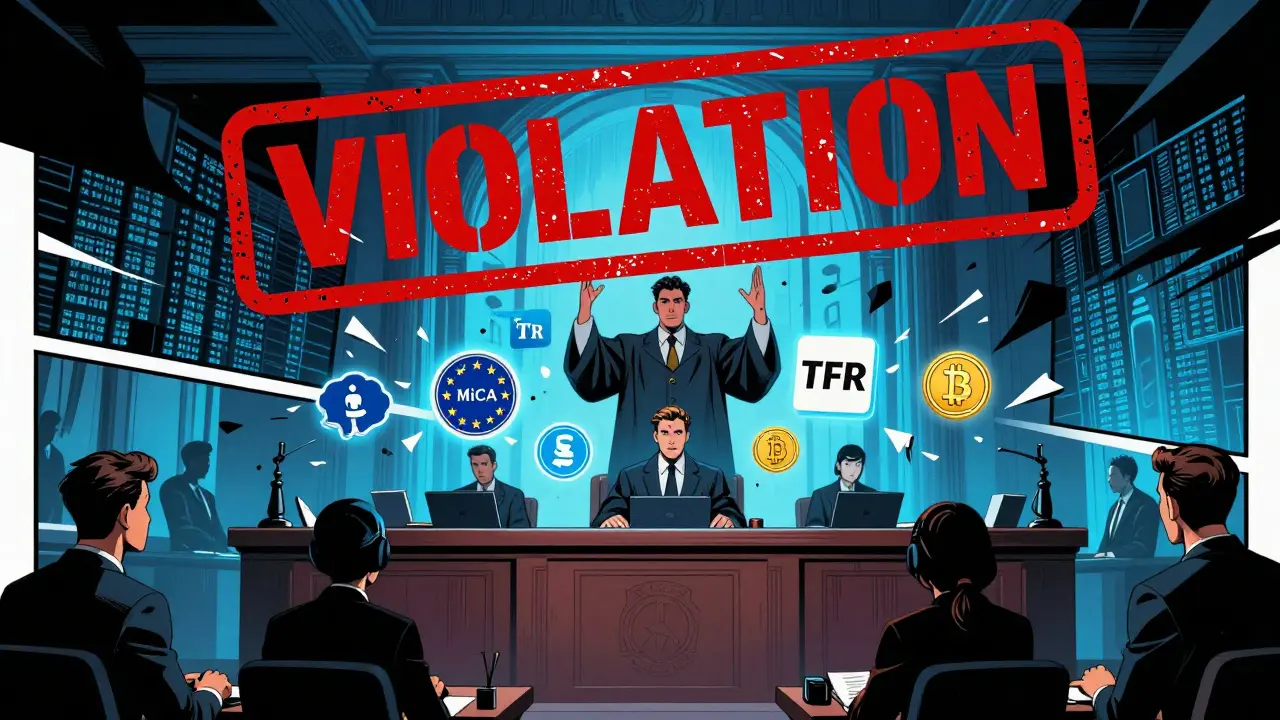
On December 30, 2024, the European Union turned a page in digital finance. The MiCA regulation went fully live - no extensions, no grace periods for most. If you’re running a crypto business that touches EU users, you’re either compliant or already in violation. There’s no middle ground. And it’s not just about fines. It’s about being blocked, blacklisted, or shut down across all 27 EU countries at once.
What MiCA Actually Means for Crypto Businesses
MiCA isn’t a suggestion. It’s a legal requirement with teeth. It applies to any Crypto Asset Service Provider (CASP) - exchanges, wallet providers, custodians, even decentralized platforms that interact with EU residents. If your platform lets someone in Germany buy Bitcoin or a French user stake Ethereum, you’re under MiCA’s scope. The core rule? You must be authorized. No license, no access. The European Securities and Markets Authority (ESMA) now handles approvals, and national regulators enforce them. Companies that applied before December 30, 2024, had an 18-month grace period to transition. But if you started after that date? You had to apply before even taking your first EU customer. No exceptions. This isn’t just paperwork. It’s operational overhaul. You need documented policies for AML, KYC, market manipulation detection, insider trading prevention, and staff training. You need to file suspicious transaction reports. You need to prove you can trace every crypto transfer - not just the sender, but the recipient too.The TFR: The Real Game-Changer
If MiCA is the foundation, the Transfer of Funds Regulation (TFR) is the enforcement tool. It’s the reason many crypto firms are scrambling. TFR forces CASPs to collect and transmit personal data for every crypto transaction over €1,000 - full names, addresses, wallet IDs - for both sender and receiver. Think of it like the banking world’s SWIFT system, but for crypto. If you send €1,500 in USDT from your wallet to someone in Spain, your provider must send their full identity details to the recipient’s provider. If the recipient’s provider doesn’t exist or refuses to cooperate, the transaction gets blocked. This kills anonymity. It breaks many DeFi workflows. It forces wallet providers to become identity gatekeepers. And there’s no workaround. Even if you’re based in New Zealand, if your service is accessible to EU users, you’re bound by TFR. The EU doesn’t care where your servers are. They care where your users are.Stablecoins Are Under a Microscope
Not all crypto is treated equally. Stablecoins - especially those used widely - face the strictest rules. If your stablecoin is used by more than 1 million EU users or handles over €200 million in daily transactions, you’re in the high-risk tier. You must hold 1:1 reserves in cash or highly liquid assets. You must submit monthly audits. You must get pre-approval from the ECB before launching to EU users. You can’t just mint tokens and hope for the best. The ECB watches your reserves like a hawk. If your reserves dip below 95% for more than 24 hours? You’re flagged. If you can’t prove you can redeem tokens on demand? You’re suspended. Even algorithmic stablecoins - those claiming to maintain value through code, not cash - are effectively banned in the EU. The regulators don’t trust math over money.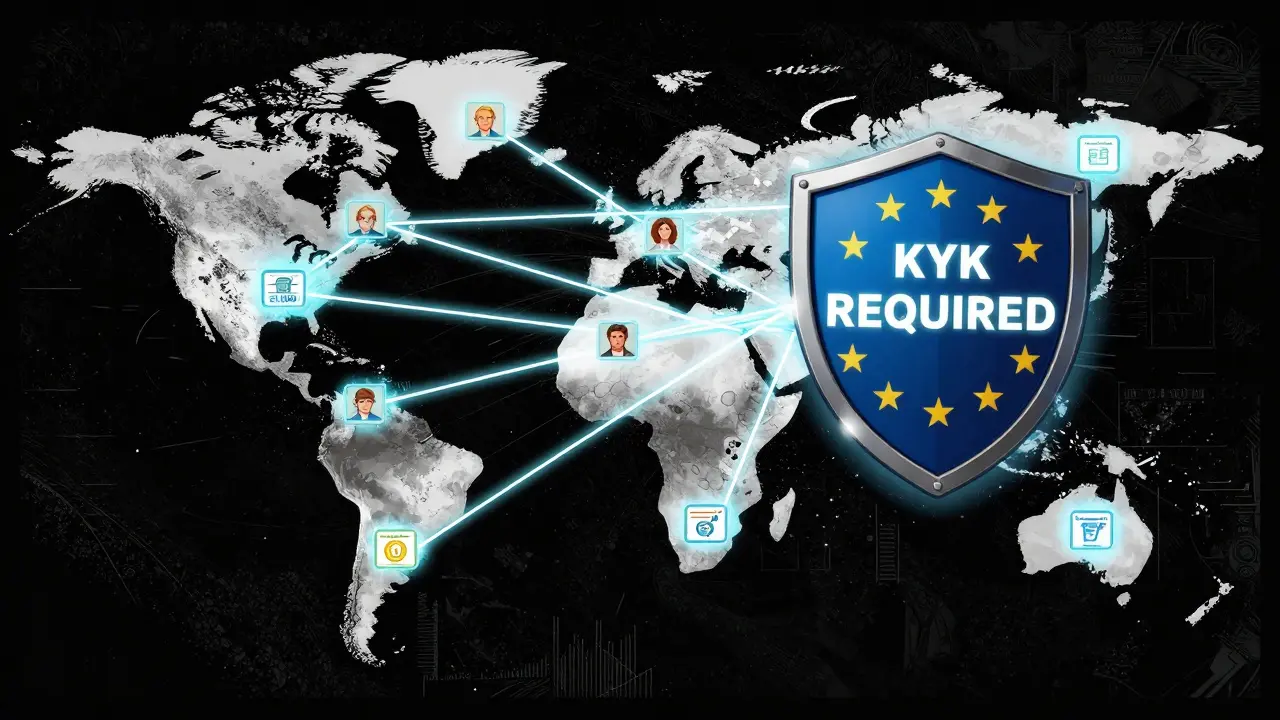
Other Rules That Add Up
MiCA doesn’t work alone. It’s part of a web:- DORA (Digital Operational Resilience Act): From January 17, 2025, you must run regular cyber stress tests, maintain backup systems, and vet your third-party tech providers. A single hack could trigger sanctions if your security was deemed inadequate.
- CARF (Crypto-Asset Reporting Framework): By 2026, you’ll need to report user tax data to national tax authorities - similar to how banks report interest income. This isn’t optional. It’s automated.
- AML Directives: MiCA layers on top of existing EU anti-money laundering laws. That means you’re now responsible for screening against OFAC, EU sanctions lists, and other global watchlists - in real time.
What Happens If You Don’t Comply?
Fines aren’t the worst of it. The EU doesn’t just slap a number on your balance sheet. They shut you down.- First offense: A formal warning and 30-day fix window.
- Second offense: A fine up to 5% of your global annual turnover - or €5 million, whichever is higher.
- Third offense: Immediate suspension of operations across the EU. Your license is revoked. Your brand is blacklisted.
How US Rules Are Different - And Why It Matters
The U.S. took a different path. The GENIUS Act, passed in July 2025, gives stablecoin issuers a clear, step-by-step path to federal licensing. It encourages innovation. It allows experimentation. It doesn’t demand full identity tracing on every transaction. The EU? It’s about control. Stability. Sovereignty. The ECB openly says it prefers a digital euro over Bitcoin. They don’t want crypto replacing the euro - they want crypto to serve the euro. That’s why their rules are so rigid. They’re not trying to be friendly to startups. They’re trying to prevent financial chaos. This creates a problem for global businesses. If you want to serve both markets, you need two systems. One for the U.S. - flexible, innovation-friendly. One for the EU - strict, compliance-heavy. Mixing them is dangerous. You can’t use a U.S.-style KYC tool for EU customers. It won’t meet TFR standards. And if you try? You risk violating EU law.
What You Need to Do Right Now
If you’re a crypto business with EU users, here’s your checklist:- Confirm your status: Are you already licensed under MiCA? If not, are you in the 18-month transition? If you’re past that window, stop serving EU users immediately.
- Upgrade your tech: Your platform must collect, store, and transmit full sender/receiver data for all transactions over €1,000. Test this with real-world scenarios. Does it work across wallets? Does it handle token swaps?
- Verify your stablecoin reserves: If you issue stablecoins, you need audited, liquid, 1:1 backing. No IOUs. No promissory notes. Real cash or government bonds.
- Train your team: Staff must recognize red flags - unusual volume spikes, transactions from sanctioned jurisdictions, wallet clustering patterns. They must know how to file STRs.
- Map your vendors: Are your cloud providers, KYC tools, or blockchain analytics firms compliant with DORA? If not, replace them. You’re responsible for their failures.
What’s Coming Next
2026 will bring CARF implementation - tax reporting for crypto users. That’s a massive lift. You’ll need to integrate with national tax authorities, handle data localization, and ensure encryption meets EU standards. The EU is also pushing for cross-border cooperation on crypto sanctions. They’re working with the U.S., UK, and Canada to align sanctions lists and share intelligence on illicit crypto flows. This means even if you’re compliant in the EU, you could still be flagged if you’re on a U.S. watchlist. The message is clear: Crypto isn’t a wild west anymore. It’s a regulated financial system. And the EU is the strictest cop on the block.Final Reality Check
If you’re still hoping to operate in the EU without full compliance - stop. The window is closed. The regulators are watching. The tools are in place. The penalties are real. This isn’t about innovation. It’s about survival. If you want to serve EU customers, you play by their rules. No exceptions. No excuses. The alternative? You become irrelevant. Or worse - you become a target.Do EU crypto sanctions apply to non-EU companies?
Yes. If your crypto service is accessible to users in the EU - even if you’re based in New Zealand, the U.S., or Singapore - you must comply with MiCA and TFR. The EU regulates based on user location, not company headquarters. If an EU resident uses your platform, you’re under their jurisdiction.
Can I still offer anonymous crypto wallets in the EU?
No. MiCA and TFR require full identification for all users and transactions over €1,000. Anonymous wallets - including non-custodial ones - must now collect and verify identity data before allowing transfers. Any platform offering true anonymity to EU users is in violation and risks shutdown.
What happens if I use a U.S.-based crypto exchange that doesn’t comply with MiCA?
If you’re an EU resident using a non-compliant exchange, your transactions may be blocked. The exchange could be fined or banned from operating in the EU. You may lose access to your funds. The EU doesn’t protect users who choose non-compliant providers - so you’re on your own.
Are NFTs affected by MiCA?
Most NFTs are excluded - unless they function like financial instruments. If an NFT represents a share in a company, a revenue stream, or a tokenized asset with secondary market trading, it may be classified as a crypto-asset under MiCA. Simple collectible NFTs are not regulated, but anything resembling an investment is.
How do I know if my crypto provider is EU-compliant?
Check the official ESMA register of authorized CASPs. Every licensed provider must be listed there. If your provider isn’t on the list, they’re not compliant. Don’t rely on their marketing claims - verify through the EU’s official database.
Can I move my crypto to an EU-based wallet to avoid sanctions?
No. Moving funds doesn’t bypass regulation. If you’re an EU resident, your wallet provider must comply with MiCA and TFR - regardless of where the wallet is hosted. The regulation follows the user, not the asset. Even holding crypto in a non-compliant wallet exposes you to risk if you later trade or transfer it.






Been running a small crypto exchange for 3 years. MiCA hit like a freight train. We spent 6 months rebuilding our entire stack just to meet TFR. No more anonymous deposits. No more sketchy wallet integrations. It’s expensive, but honestly? Feels cleaner now. Users trust us more.
so they just killed decentralization huh
like wow what a surprise
the eu just turned crypto into a bank with extra steps
From India, we’re watching this with interest. Most of our clients use US-based exchanges because EU rules are too heavy. But I get it-when you’re dealing with billions in crypto flows, control makes sense. Just wish they’d make it easier for small players to onboard.
Let’s be real. MiCA isn’t about compliance. It’s about killing Bitcoin as a rival to the digital euro. The ECB wants control. They don’t care about users. They care about power.
If you’re a startup trying to build in crypto right now, the EU isn’t a market-it’s a minefield. But honestly? It’s better than the Wild West. I’d rather have clear rules than hope nothing blows up. The US is playing catch-up.
Regulatory arbitrage is dead. MiCA + TFR + CARF + DORA = compliance fatigue. If you’re not using a white-label KYC provider with EU-certified audit trails, you’re already late. Stop pretending you can wing it.
They’re not regulating crypto they’re erasing it
anonymity was the whole point
now it’s just another fintech app with a ledger
It is imperative to note that jurisdictional overreach, as exemplified by the extraterritorial application of MiCA, constitutes a violation of the principle of state sovereignty under customary international law. This precedent, if unchallenged, may catalyze a global fragmentation of digital financial governance.
Only real men use regulated crypto. 😎
Good. America needs to stop pretending crypto is a free-for-all. The EU is doing what the US should’ve done years ago. National security depends on financial transparency. If you can’t handle that, get out of the space.
imagine having to verify your identity just to send crypto to a friend 😭
remember when this was about freedom?
now its just… banking with more steps
From Nigeria, we laugh at the EU but also envy their structure. We have no rules here-so scammers thrive. Maybe this is what we need. Not perfect, but better than chaos. Still, the cost? Oof.
The philosophical tension here is between autonomy and order. Crypto was born from a rejection of centralized trust. MiCA re-embeds trust into the architecture-not through institutions, but through code and compliance. Is this evolution or surrender? The answer depends on whether you see regulation as oppression or as the scaffolding of legitimacy.
They’re coming for my DeFi staking rewards next
and then my NFTs
and then my wallet
and then my soul
mi ca is just a front for the deep state to track everyone
the digital euro is coming
they want to replace cash with blockchain surveillance
they already have your data
you just dont know it yet
my cousin works at a crypto startup in berlin and they just laid off half the team because they couldn’t afford the compliance team
its not just big players who are getting crushed
its the little guys too
EU thinks they’re the world’s financial police. Newsflash: most crypto users don’t live in Europe. You’re not setting a global standard. You’re just making your own prison.
Bro, in India we have zero crypto laws. People use US exchanges. EU says ‘you must verify’-fine. But what if your user is from Nigeria and uses a VPN? Do you block them? Do you become a gatekeeper? This isn’t regulation-it’s impossible enforcement.
Oh wow, so now we’re all criminals if we use crypto without a government ID? What’s next? Mandatory breathalyzer before buying Dogecoin?
Compliance isn’t optional. It’s infrastructure. Like fire codes for buildings. You don’t complain about sprinklers-you install them. MiCA is the sprinkler system for crypto. If your house burns down because you didn’t install it, you can’t blame the fire department.
they banned algorithmic stablecoins? lol
so now the only stablecoins are the ones backed by actual money?
who would’ve thought that’d be the rule
from South Africa… i’m scared but also hopeful. if this works, maybe we can build something better here. no more rug pulls. no more fake exchanges. maybe regulation is the only way to protect the people who don’t know any better.
Just do it. Get licensed. Fix your KYC. Pay the fee. Stop whining. If you want to serve EU customers, you play by their rules. It’s not that hard. You just don’t want to do the work.
Too much. Too late. Too expensive.