
Legal Status of Cryptocurrencies in China: Complete Ban and Enforcement in 2025
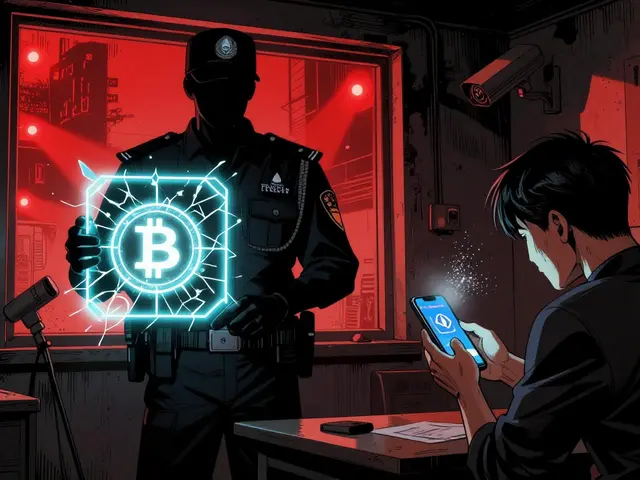
As of June 1, 2025, owning, trading, or mining any cryptocurrency in China is illegal. This isn’t a gray area. It’s a full ban backed by law, enforcement, and real consequences. If you’re in China-whether you’re a citizen, a tourist, or a foreign worker-and you hold Bitcoin, Ethereum, or any other digital token, you’re breaking the law. Not just technically, but legally. And there’s no safety net.
What’s Actually Banned?
The 2025 ban isn’t just about stopping exchanges. It’s total. Every single activity tied to private cryptocurrencies is outlawed:- Buying or selling crypto with yuan or any other currency
- Holding crypto in personal wallets-yes, even if you bought it overseas
- Mining Bitcoin or any other coin using power, hardware, or cloud services
- Providing crypto trading platforms, price data, or wallet services
- Running ICOs or token sales
- Marketing or promoting crypto to Chinese residents
- Using crypto to pay for goods or services
Even if you’re using a VPN to access Binance or Coinbase, you’re still violating Chinese law. The government doesn’t care if you think you’re just “investing.” The law treats crypto as an illegal financial instrument. And if you profit from it? That money is considered stolen property-and authorities can seize it.
Why Did China Go From Early Adopter to Total Ban?
China used to be the world’s biggest crypto market. In 2017, it accounted for over 70% of global Bitcoin mining. But that changed fast. The government didn’t fear crypto because it was too volatile. They feared it because it was uncontrollable.Decentralized money means no central bank. No oversight. No tracking. For a state that wants to monitor every financial transaction, that’s unacceptable. Cryptocurrencies threatened the People’s Bank of China’s control over capital flows, tax collection, and financial stability. So they moved to eliminate the threat entirely.
The crackdown started in 2017 with ICO bans. Then came the 2021 ban on crypto exchanges and mining. But it wasn’t enough. People still found ways to trade. Miners moved to remote provinces. So in 2025, they pulled the plug completely. No more loopholes. No more exceptions. The goal? Replace private crypto with the digital yuan-e-CNY.
The Digital Yuan Is the Real Winner
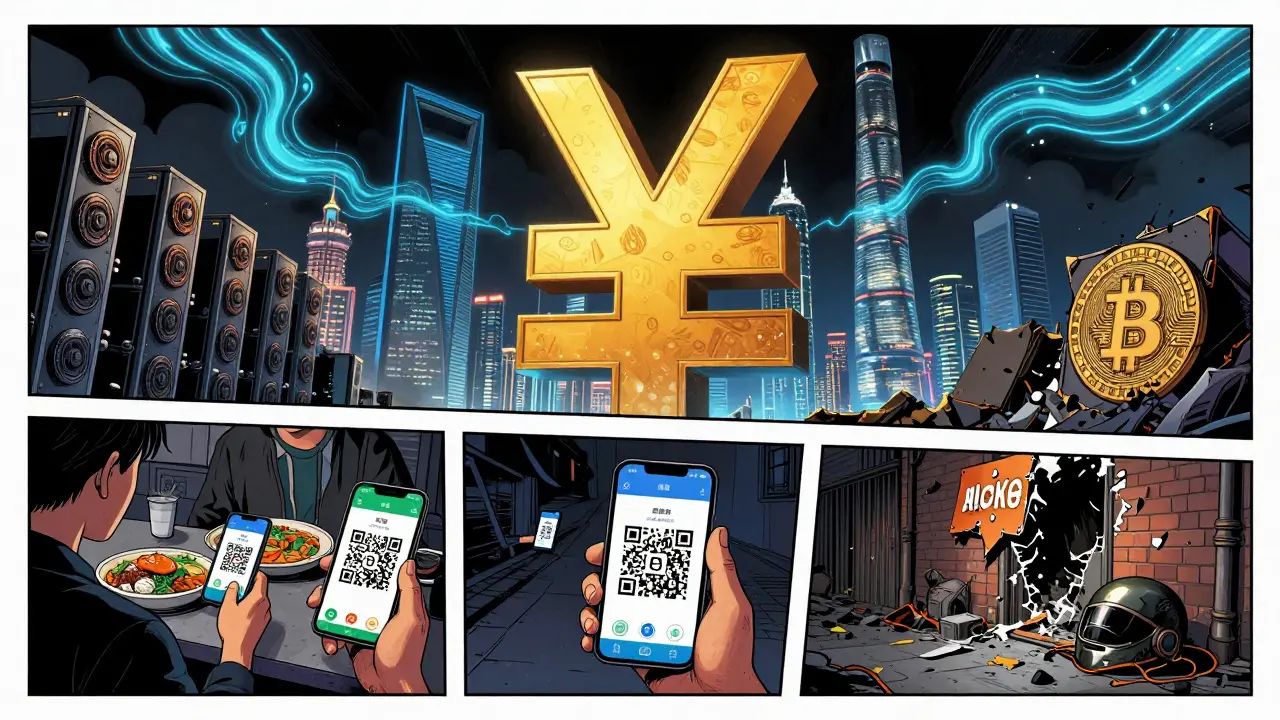
China isn’t anti-tech. It’s anti-decentralization. The government still funds blockchain research, smart contracts, and supply chain tracking. But only if the state controls the ledger.The e-CNY is China’s answer to Bitcoin. It’s digital money-but every transaction is tracked, recorded, and can be frozen by authorities. You can’t send e-CNY anonymously. You can’t use it overseas without approval. You can’t bypass capital controls. It’s money, but with a leash.
Since 2020, the central bank has rolled out e-CNY in over 200 cities. Millions of people now use digital wallets for groceries, public transport, and even government subsidies. The message is clear: If you want digital money in China, use ours. Not theirs.
What Happens If You Get Caught?
There’s no jail time for simply holding Bitcoin. But that’s where the leniency ends.If you’re caught trading, mining, or promoting crypto, you face:
- Fines up to 5 times the value of your crypto holdings
- Freezing of bank accounts linked to crypto activity
- Confiscation of mining rigs, servers, and hardware
- Blacklisting from financial services
- Criminal charges if authorities classify your activity as “illegal fundraising” or “financial fraud”
Chinese courts have consistently ruled against crypto investors who try to sue for losses. In 2023, a man in Guangdong tried to recover $120,000 lost in a crypto scam. The court dismissed his case outright, saying: “The contract for cryptocurrency trading is invalid under Chinese law.”
Foreigners aren’t exempt. Tourists, expats, and business travelers are subject to the same rules. If you’re caught with crypto on your phone or in a hardware wallet, authorities can seize it. No warnings. No appeals.
What About Hong Kong?
Hong Kong is the exception that proves the rule. While mainland China bans crypto, Hong Kong passed the Stablecoin Bill in May 2025, creating a legal framework for regulated stablecoin issuers. Major exchanges like Kraken and Coinbase now operate licensed offices there.But this isn’t a loophole for mainlanders. Hong Kong’s rules don’t apply in Shenzhen, Shanghai, or Chengdu. And any company trying to market crypto services to mainland China-even from Hong Kong-must get approval from Beijing. That approval doesn’t exist. So while Hong Kong offers a legal crypto hub, it’s isolated from the mainland.

Can You Still Use Crypto in China?
Technically, yes-but not legally, and not safely.Some people still use peer-to-peer (P2P) platforms or offline cash trades. But these are high-risk. Sellers disappear. Buyers report you. Payments get frozen. And if you’re caught, you’re on your own.
There’s no legal recourse. No consumer protection. No insurance. No way to recover funds if you’re scammed. The law won’t help you. In fact, the law will punish you.
Even using crypto to send money abroad is dangerous. China’s capital controls are strict. If you transfer $10,000 in Bitcoin to a friend overseas, authorities can trace the transaction through blockchain analysis tools and freeze your bank account.
What’s the Future?
Don’t expect a reversal. The ban isn’t temporary. It’s strategic.China’s leadership sees crypto as a threat to monetary sovereignty. The digital yuan is their tool to dominate the future of money-not just domestically, but globally. By eliminating private alternatives, they ensure that every digital transaction flows through their system.
There’s no sign of softening. No leaked policy drafts. No official statements suggesting change. The 2025 ban is the endpoint of a 8-year plan. And it’s working.
Bitcoin mining in China? Nearly zero. Crypto exchanges? All gone. Retail trading? Almost extinct. The market didn’t just shrink-it vanished.
What Should You Do If You’re in China?
If you’re living in China and own crypto:- Do not trade. Do not buy. Do not sell.
- Do not mine. Do not run nodes.
- Do not promote crypto to others.
- Do not use crypto to pay for anything.
Keep your holdings private. Don’t tell anyone. Don’t brag. Don’t post about it online. The government monitors social media, WeChat groups, and forums for crypto keywords. Even discussing crypto in a private group can get you flagged.
If you’re planning to move to China, leave your crypto at home. Don’t bring hardware wallets. Don’t download apps. Don’t even think about using it. The risk isn’t worth it.
The only legal digital money in China is the digital yuan. Everything else is a liability.