
Loopring Exchange Review: A Deep Dive into the zkRollup DEX
Trading on Ethereum usually feels like paying a luxury tax every time you move your money. Between the high gas fees and the slow confirmation times, it is enough to make any trader stick to centralized exchanges. But there is a middle ground: Loopring Exchange is a decentralized exchange (DEX) protocol and Ethereum Layer-2 scaling solution that lets you trade without a middleman. Launched in 2017, it aims to give you the security of the Ethereum blockchain without the headache of paying $50 for a simple swap.
How Loopring Actually Works
Most people are used to decentralized exchanges like Uniswap, which use Automated Market Makers (AMMs). Loopring does things differently. It uses an order book model. This means it behaves more like a traditional exchange where buyers and sellers set specific prices, leading to much better price discovery and tighter spreads.
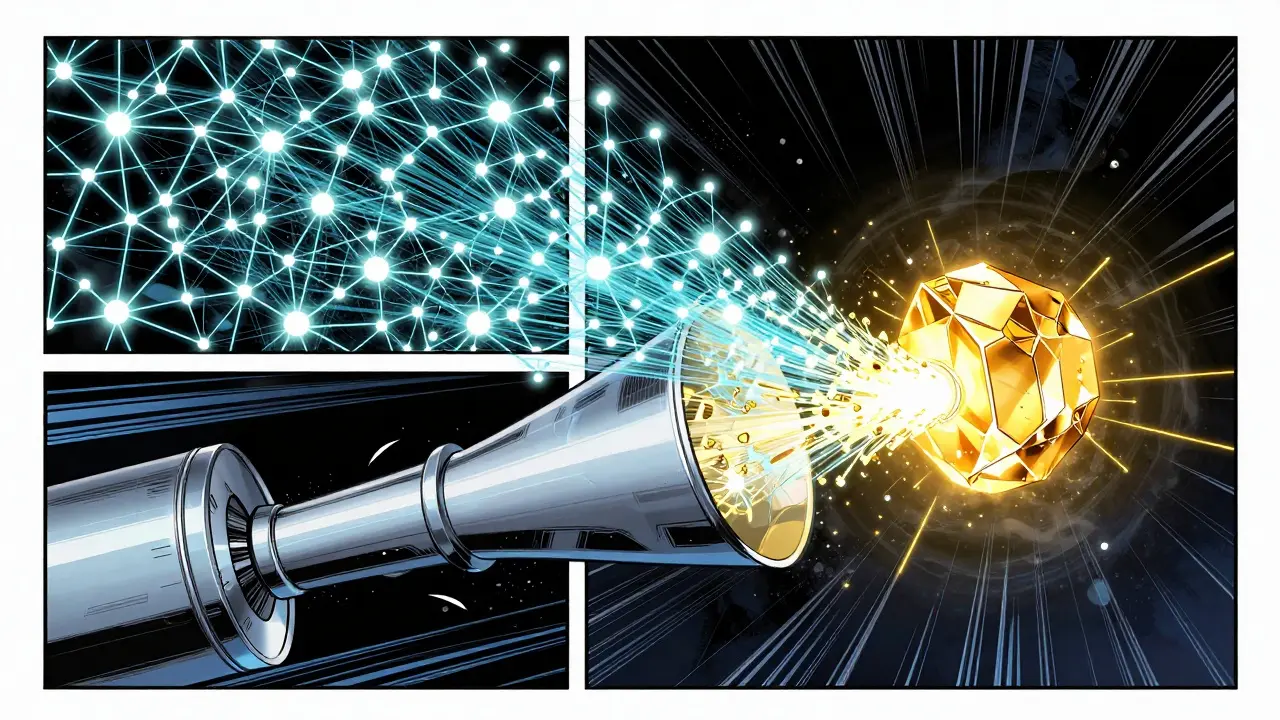
The magic happens behind the scenes with Zero-Knowledge Rollups (or zkRollups). Instead of recording every single tiny trade on the main Ethereum chain, Loopring bundles thousands of transactions into a single proof. It stores the data off-chain using Merkle trees and only sends a validity proof back to the main net. This is why your trades feel instant and cost almost nothing compared to Layer-1 transactions.
To make this happen, Loopring uses "ring orders." These are atomic swaps that can handle up to 16 trades at once. Because it is a non-custodial protocol, you never hand over your private keys. You stay in control of your assets, but the heavy lifting is done off-chain to keep things fast.
The Cost of Trading: Fees and Trade-offs
If you are hunting for the lowest fees, Loopring is a strong contender. The platform is incredibly friendly to liquidity providers. If you are a "maker" (someone who adds an order to the book), you pay zero fees. If you are a "taker" (someone who fills an existing order), the fee is just 0.10%. To put that in perspective, many other DEXs charge over 0.20% for similar actions.
However, there is a catch. While trading is cheap, getting your money back to the main Ethereum network is where it hurts. The ETH withdrawal fee is 0.002 ETH. Depending on the current price of Ethereum, this can be a significant chunk of change for someone trading small amounts. It is one of the highest withdrawal fees in the sector, dwarfing competitors like Joyso or EtherDelta.
| Fee Type | Loopring | Industry Average |
|---|---|---|
| Maker Fee | 0% | ~0.178% |
| Taker Fee | 0.10% | ~0.218% |
| ETH Withdrawal | 0.002 ETH | ~0.0007 ETH |
The Role of the LRC Token
You can't talk about the platform without mentioning LRC. The Loopring Coin (LRC) is the native utility token that powers the ecosystem. It is used for staking and governance, allowing token holders to have a say in how the protocol evolves.
From a market perspective, LRC has been a bit of a rollercoaster. As of late 2025, it trades around $0.09. While it has a decent market cap and a circulating supply of over 1.3 billion tokens, its price often swings based on the general sentiment toward Layer-2 scaling solutions. If you are holding LRC, you are essentially betting on the wider adoption of zkRollup technology and the continued growth of the Ethereum ecosystem.
Who Is This Exchange For?
Loopring isn't for everyone. If you just want to swap two random tokens once a year, a simple AMM might be easier. But if you are a frequent trader who wants the security of a cold wallet but the speed of a centralized exchange, this is your spot.
There are a few hurdles to keep in mind:
- Asset Limitation: You are limited to Ethereum-based assets (ERC-20). If you want to trade Bitcoin or Solana, you'll have to look elsewhere.
- Learning Curve: You need to understand the difference between Layer-1 and Layer-2. You'll need to "top up" your Loopring wallet to move funds into the L2 environment before you can trade gas-free.
- Technical Setup: Managing a non-custodial wallet requires a basic grasp of seed phrases and wallet security. If you lose your keys, there is no "Forgot Password" button.

Pros and Cons at a Glance
To help you decide if this fits your strategy, here is a breakdown of the experience.
The Good Stuff:
- Zero fees for makers is a huge win for active traders.
- High throughput means no more waiting minutes for a transaction to clear.
- Non-custodial nature means you aren't trusting a CEO with your life savings.
- The order book provides much more accurate pricing than liquidity pools.
The Not-So-Good Stuff:
- The withdrawal fee is a genuine pain point for smaller accounts.
- No support for non-Ethereum chains.
- The interface and documentation can be intimidating for absolute beginners.
Staying Competitive in a Crowded Market
Loopring exists in a world where Polygon, Arbitrum, and Optimism are all fighting for the same users. Its unique advantage is the combination of a DEX and a scaling solution in one package. While others provide the "road" (the Layer-2 network), Loopring provides both the road and the "marketplace" (the exchange) built directly on top of it.
The long-term success of the platform depends on whether it can attract users who are tired of the "slippage" found in AMMs. By sticking to the order book model, Loopring appeals to a more sophisticated crowd-traders who care about price precision and efficiency.
Is Loopring Exchange safe?
Yes, because it is non-custodial. Your funds remain in your own wallet, and the platform uses zero-knowledge proofs to verify transactions on the Ethereum blockchain. This removes the risk of an exchange "exit scam" or internal theft of funds.
What is the difference between Loopring and Uniswap?
The main difference is the trading mechanism. Uniswap uses an Automated Market Maker (AMM) where prices are set by a mathematical formula based on pool reserves. Loopring uses an order book, where users set their own buy and sell prices, similar to a traditional stock exchange.
Why are the withdrawal fees so high?
Withdrawals require a transaction on the Ethereum Layer-1 blockchain to move funds out of the Layer-2 environment. Because the main Ethereum network charges gas fees, Loopring has to charge a fee to cover the cost of finalizing that transaction on-chain.
Can I trade Bitcoin on Loopring?
No, Loopring is an Ethereum-based scaling solution. It only supports assets that exist on the Ethereum network or are wrapped versions of other coins that are compatible with ERC-20 standards.
How do I start using Loopring?
You need an Ethereum-compatible wallet. You'll then need to move your assets into the Loopring Layer-2 ecosystem by topping up your wallet. Once your funds are on L2, you can place orders on the book with minimal fees.




Seems like a solid option for active traders.
The transition to zkRollups is a necessary step for Ethereum's scalability. Using an order book instead of an AMM does indeed reduce the slippage issues common in smaller pools.
Oh my god, the horror of that withdrawal fee! It's practically a ransom for your own money! Why must we suffer through these digital growing pains while we strive for a decentralized utopia where the small fish aren't eaten by the system's overhead? It's just tragic!
Imagine still using L1 in 2025. Some people just love paying the luxury tax 🙄
The sheer audacity of calling this a 'deep dive' when it barely scratches the surface of the mathematical elegance of zero-knowledge proofs is almost comical. A truly pedestrian overview for those who find basic arithmetic challenging.
The non-custodial aspect is certainly the most commendable feature of this protocol.
Everyone's obsessing over zkRollups like it's the second coming of the internet. It's just another way to shift the bottleneck from the chain to the sequencer. Revolutionary my foot.
I believe we will see these withdrawal fees drop as the technology matures and more efficient bridges are implemented.
Control of private keys is the only true form of ownership in a digital age. Without it, we are merely renting our assets from a corporation.
You guys totally got this! Just remember to double-check those seed phrases before you dive in 🚀✨ Keep grinding and stay safe out there! 💪
The maker fee being 0% is a really nice touch for liquidity.
Actually, for those new to this, you should look into the 'ring' mechanism!! It's what allows those atomic swaps to be so efficient!!! Just be mindful of the L1 gas when topping up!!!
wait so the zk-proofs basically compress the state changes?? that's wild. i keep gettin confused about how the L2 state root hits the L1 contract exactly... prob just a la-layer 2 thingy lol
I tried this and my wallet just froze. Totally lost my mind. This L2 stuff is too much jargon. Just tell me where my money is! I need a fast fix now!
Order books are simply superior to AMM pools. 😌
Thanks for the breakdown, looks like a cool place to park some ETH for trading.
I've noticed that the liquidity on Loopring can be thinner for some pairs compared to Uniswap. It's a trade-off for the better pricing on high-volume assets.
just a tip for beginners start with a small amount to get the hang of the top up process before moving big funds
It is interesting how we trust these 'mathematical proofs' more than we trust our own intuition. We've replaced the banker with a line of code and called it freedom, which is a bit ironic if you think about it.
Too much reading for a simple exchange. Just use a CEX and stop pretending this is the future.
I had a bit of a struggle with the wallet setup at first, but once you get the hang of the seed phrases its actually pretty intuitve. Just be careful not to share those keys lol
Oh wow, a 'deep dive' that tells us it's non-custodial. Groundbreaking discovery. I'm sure the devs are shaking in their boots.
Dont worry about the learning curve too much everyone starts somewhere just take your time with the documentation and youll be trading like a pro in no time