
Metaverse Cryptocurrency and Tokens: How Virtual Economies Work in 2026
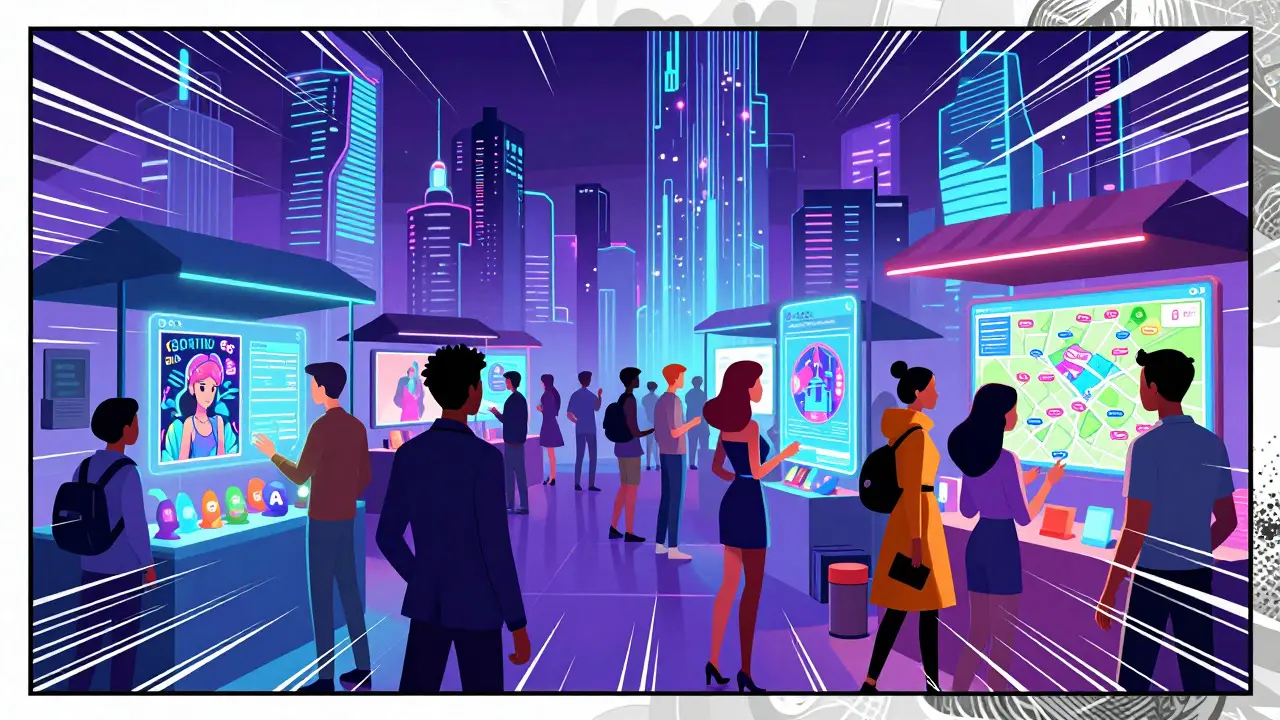
Imagine buying a plot of land that doesn't exist on any map. You pay for it with digital coins, build a virtual gallery on it, and rent it out to other users who visit from across the globe. This isn't science fiction anymore; it is the daily reality for millions of participants in the metaverse. But how does money move in these digital spaces? The answer lies in metaverse cryptocurrencies and tokens.
As we navigate through 2026, the line between physical assets and digital ownership continues to blur. Metaverse tokens are no longer just speculative bets on a futuristic concept. They have evolved into functional currencies that power entire virtual economies. Whether you are an artist selling digital art, a gamer trading rare items, or an investor looking at virtual real estate, understanding these tokens is essential. Let's break down what they are, how they work, and which ones actually matter right now.
What Are Metaverse Cryptocurrencies?
At their core, metaverse cryptocurrencies are digital assets designed specifically for use within decentralized virtual worlds. Unlike Bitcoin, which aims to be digital gold, or Ethereum, which serves as a base layer for smart contracts, metaverse tokens have a very specific job: facilitating transactions inside a particular virtual ecosystem.
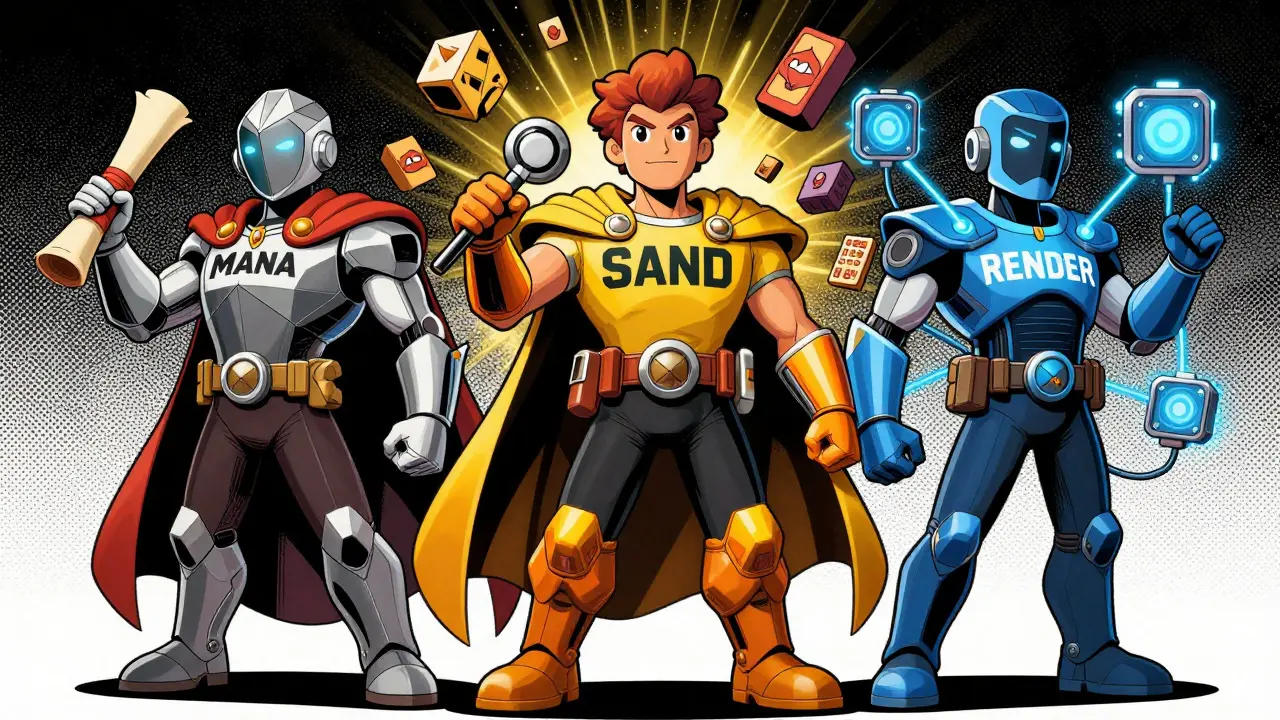
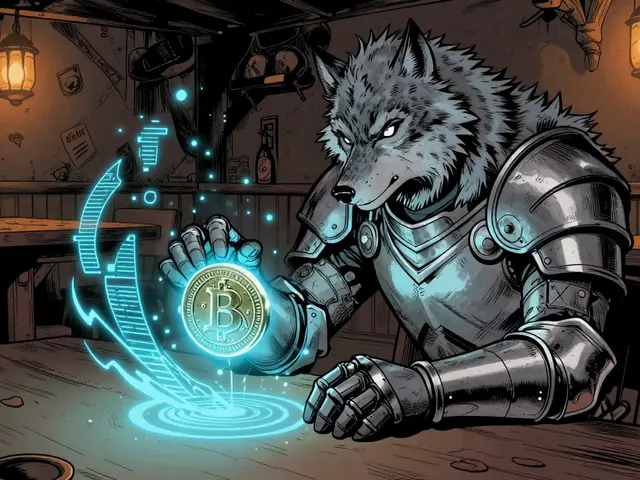
Think of them as the cash registers, property deeds, and voting ballots combined into one digital token. When you walk into a Decentraland store, you don't swipe a Visa card. You spend MANA. When you want to render high-quality 3D graphics for your virtual project using distributed computing power, you might pay in RENDER. These tokens create the financial backbone that allows user-generated content to have real-world value.
The sector has grown significantly. As of mid-2025, the total market capitalization for metaverse-related assets hovered around $19.94 billion. While this represents only about 0.5% of the broader crypto market, it includes over 100 distinct projects. This growth signals that investors and users see genuine utility in these digital environments, moving beyond hype toward actual usage.
Key Players: MANA, SAND, and APE
Not all metaverse tokens are created equal. Some serve as governance tools, others as currency, and some as access keys. Here is a look at the major players shaping the landscape in 2026.
| Token Name | Primary Use Case | Blockchain Base | Key Feature |
|---|---|---|---|
| Decentraland (MANA) | Virtual Real Estate & Governance | Ethereum (ERC-20) | Pioneer of blockchain-based land ownership via NFTs |
| The Sandbox (SAND) | Game Creation & Asset Trading | Ethereum/Polygon | User-friendly tools for building games without coding |
| Render (RENDER) | Distributed GPU Computing | Solana/Ethereum | Rewards artists for sharing unused GPU power |
| ApeCoin (APE) | Otherside Ecosystem Access | Ethereum | Governance and transactions in Yuga Labs' metaverse |
Decentraland remains the grandfather of this space. Launched in 2017, it established the model where virtual land parcels are minted as Non-Fungible Tokens (NFTs). This means when you buy land in Decentraland, you truly own it on the blockchain. You can sell it, lease it, or build whatever you want there. The MANA token is used to buy this land and vote on platform decisions. Despite market fluctuations, its status as the first mover gives it enduring relevance.
The Sandbox takes a different approach by focusing on creation. It provides robust tools that allow anyone, even those without programming skills, to build interactive experiences. The SAND token fuels this economy, enabling creators to monetize their games and assets. Its partnership with major brands has helped bridge the gap between mainstream entertainment and Web3 gaming.
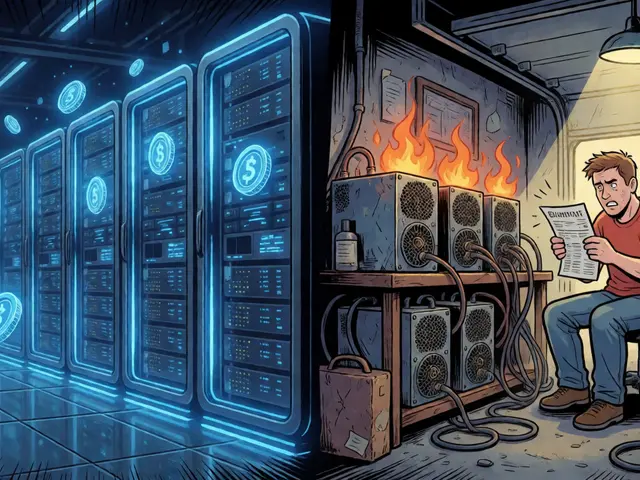
Then there is Render Network, which solves a critical technical problem. Creating high-fidelity 3D content requires massive computing power. Render connects artists who need rendering power with users who have idle GPUs. The RENDER token facilitates this exchange. It’s less about owning virtual land and more about powering the infrastructure that makes the metaverse look good.
How Do These Tokens Actually Make Money?
If you are new to this, you might wonder how a digital coin can hold value. The answer is utility. In traditional economics, money has value because governments back it. In the metaverse, value comes from what the token can do.
There are three main ways these tokens generate economic activity:
- Virtual Real Estate: Just like physical land, scarcity drives price. Prime locations in popular virtual worlds command high prices. Owners can lease their plots to advertisers or event organizers, earning passive income in tokens.
- Creator Economy: Artists and developers create items-clothing, weapons, buildings-and sell them as NFTs. Buyers use native tokens to purchase these items. The creator gets paid directly, cutting out middlemen.
- Governance and Staking: Many platforms are Decentralized Autonomous Organizations (DAOs). Holding tokens often gives you voting rights on how the platform evolves. Additionally, staking tokens (locking them up) can earn rewards, incentivizing long-term commitment to the network.
For example, a designer might create a unique avatar outfit in The Sandbox. They list it for sale for 50 SAND. A player buys it to wear in-game. The designer keeps the profit. This cycle creates a self-sustaining economy where value flows between users rather than being extracted solely by the platform company.
Technical Reality: Blockchain and Interoperability
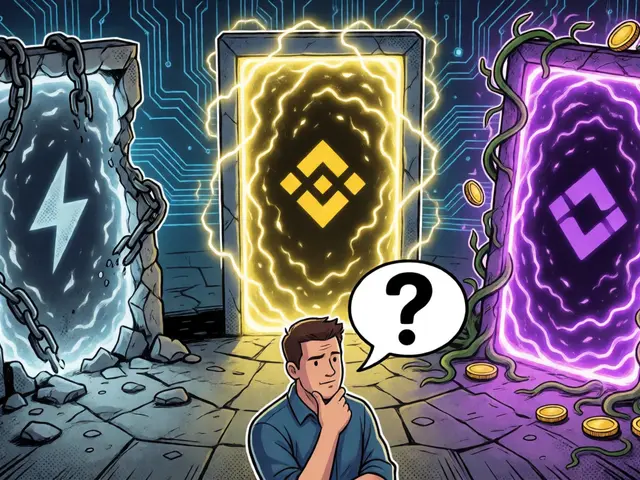
Most metaverse tokens operate on the Ethereum blockchain, following the ERC-20 standard. This ensures compatibility with wallets like MetaMask and exchanges like Coinbase or Binance. However, Ethereum’s high transaction fees during peak times have been a significant hurdle.
To solve this, many projects are adopting Layer-2 scaling solutions or migrating to faster chains like Polygon or Solana. For instance, Render recently transitioned to Solana to reduce costs and increase speed for its computational tasks. This shift is crucial for mass adoption. If buying a virtual coffee costs $5 in gas fees, people will stop doing it. The industry is actively working to bring those costs down to fractions of a cent.
Interoperability is another major focus. Ideally, you should be able to take your avatar or assets from one metaverse to another. Currently, this is limited. Most tokens are siloed within their respective ecosystems. Your MANA doesn't buy land in The Sandbox. However, cross-chain bridges and universal identity protocols are being developed to change this, promising a more connected future.
Risks and Challenges in 2026
It is not all smooth sailing. The metaverse crypto sector faces several headwinds that potential users and investors must understand.
Volatility is the biggest concern. Token prices can swing wildly based on broader crypto market trends, news cycles, or even social media sentiment. A project might gain 20% in a week and lose half its value the next. This makes it risky for casual users who just want to play games without watching charts.
Regulatory Uncertainty looms large. Governments worldwide are still figuring out how to classify these assets. Are they securities? Commodities? Currency? The lack of clear rules can lead to sudden changes in tax obligations or trading restrictions. Users need to stay informed about regulations in their specific jurisdictions.
Technical Complexity remains a barrier. Managing private keys, securing wallets, and avoiding phishing scams require a level of digital literacy that not everyone possesses. One mistake, like sending funds to the wrong address, can mean permanent loss of assets. User interfaces are improving, but the underlying technology is still complex.
Getting Started: A Practical Guide
If you want to dip your toes into the metaverse economy, here is a straightforward path to get started safely.
- Choose a Reputable Exchange: Start with a well-known platform like Coinbase, Binance, or Kraken. These offer liquidity and security features for beginners.
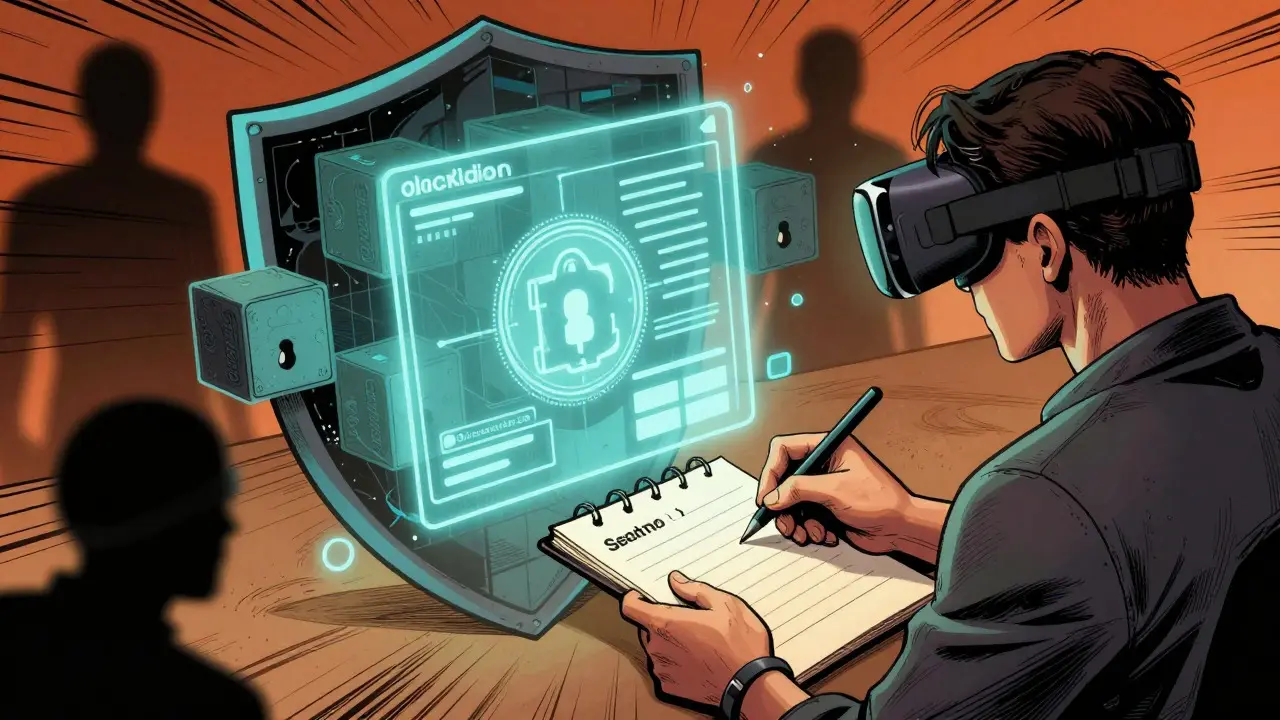
- Set Up a Wallet: Download a non-custodial wallet like MetaMask or Phantom. This gives you control over your assets. Write down your seed phrase on paper and store it securely. Never share it online.
- Buy Base Currency: Purchase ETH or SOL depending on which chain the token you want uses. Then swap it for the specific metaverse token (like MANA or SAND) on a decentralized exchange (DEX) or directly on the centralized exchange.
- Start Small: Don't invest more than you can afford to lose. Buy a small amount of a token or a low-cost NFT to learn how the interface works.
- Engage with the Community: Join Discord servers and Telegram groups for the projects you are interested in. Listen to updates, ask questions, and gauge community sentiment before making larger moves.
Future Outlook: Beyond Speculation
Looking ahead to late 2026 and beyond, the narrative is shifting from "get rich quick" to "build useful things." Analysts predict that successful projects will be those that integrate seamlessly with real-world industries. Imagine attending a concert in the metaverse where tickets are NFTs, merchandise is bought with tokens, and the experience is powered by distributed rendering networks.
The integration of Artificial Intelligence (AI) is also accelerating. AI-driven avatars, dynamic world generation, and personalized content are becoming standard. Projects that combine AI efficiency with blockchain ownership are likely to lead the next wave of adoption.
While the market cap may fluctuate, the underlying technology is maturing. As VR hardware becomes cheaper and more comfortable, and as blockchain transactions become invisible and instant, the friction of entering these worlds will disappear. The tokens powering these economies will evolve from speculative assets to essential utilities for a new digital frontier.
Is it safe to invest in metaverse cryptocurrencies?
Investing in metaverse cryptocurrencies carries higher risk than traditional stocks due to extreme volatility and regulatory uncertainty. While the technology has promise, many projects may fail. Only invest money you can afford to lose, diversify your portfolio, and do thorough research on each project's utility and team before committing funds.
Do I need a VR headset to use metaverse tokens?
No, you do not strictly need a VR headset. Most metaverse platforms can be accessed via a standard web browser on a computer or mobile device. While VR offers a more immersive experience, trading tokens, buying land, and managing assets can all be done on a 2D screen. VR is optional for enhanced interaction, not mandatory for participation.
What is the difference between MANA and SAND?
MANA is the native token of Decentraland, focused heavily on virtual real estate ownership and social experiences. SAND is the token for The Sandbox, which emphasizes game creation and user-generated content. Both run on Ethereum but serve different ecosystems with distinct tools, communities, and partnerships. Choose based on whether you prefer investing in land/social spaces or game development assets.
Can I earn passive income with metaverse tokens?
Yes, through mechanisms like staking and leasing. Staking involves locking your tokens in a protocol to support network security, earning rewards in return. Leasing involves renting out virtual land or assets you own to other users for a fee paid in tokens. Both methods require initial investment and carry risks related to token price depreciation.
Are metaverse tokens regulated?
Regulation varies by country. In many jurisdictions, they are treated as commodities or unregistered securities, meaning rules are still evolving. Tax authorities generally treat them as property, requiring capital gains taxes on profits. Always consult a local tax professional and stay updated on financial regulations in your region to ensure compliance.

man this stuff is so cool i cant wait to buy land in the metaverse and become a digital landlord!!! its gonna be huge guys trust me
why does everyone keep talking about this garbage nobody wants to live in a fake world you are all wasting your time and money on pixels that dont even exist its pathetic honestly
This entire concept is an American plot to drain our resources!!! They want us to spend our hard earned dollars on virtual dirt while the real world burns!!! Wake up people!!! The elites are laughing at us!!!
Hey there! Just wanted to say that it is totally okay if you don't get it yet. Technology moves fast, but maybe take a breath and look at the potential for creativity? It can be really empowering for artists who have no physical space to show their work.
You people are so naive. You think buying a jpeg of land makes you special? It just shows how empty your lives are. I bet you spend more time looking at screens than looking at your children's faces. Sad.
The grammar in this article is passable, but the underlying premise is fundamentally flawed. To suggest that speculative assets hold intrinsic value is intellectually dishonest. Furthermore, the environmental impact of these blockchains is often glossed over by enthusiasts who prioritize profit over planetary health. One must ask: at what cost do we digitize our existence?
I find the intersection of rendering power and tokenomics fascinating. It’s like a decentralized Uber for GPUs. If you have idle compute, you monetize it. It’s a clever hack around the scarcity of high-end hardware. The real question is whether the latency will ever drop low enough for seamless multi-user experiences without lagging out.
its not about the tech its about control they want to track every move you make in the virtual world the tokens are just trackers for the deep state blockchain is a surveillance tool disguised as freedom wake up sheeple
nah man 😴 just tired of hearing about crypto. everything is a scam 📉
There is something profoundly poetic about owning nothing and calling it freedom. We are building castles in the air, quite literally. But perhaps that is where humanity belongs now, untethered from the heavy gravity of physical constraints. What do you think?
Look, I’ve been exploring these spaces for years and it’s wild to see how far we’ve come. It’s not just about money; it’s about community. I’ve made friends from Brazil to Japan just hanging out in virtual cafes. The culture is vibrant and growing!
I just sit back and watch the chaos unfold. People screaming about land prices while the server crashes. It’s like watching ants build a hill. Cute, but ultimately insignificant.
the paradigm shift is happening faster than most realize but few understand the ontological implications of digital ownership are you truly owning or just leasing access to a memory address its deep stuff
It is imperative that we scrutinize these entities with extreme prejudice. The volatility is not a bug; it is a feature designed to extract wealth from the proletariat. Do not be fooled by the shiny graphics. This is a Ponzi scheme wrapped in VR goggles.
One might consider the economic models presented here as rudimentary attempts at simulating market dynamics. However, the lack of tangible backing raises questions about long-term sustainability. Is it merely a bubble waiting to burst?
Actually, let me correct a common misconception. MANA isn't just for land; it's also used for governance voting which gives holders a say in the DAO. Many people overlook this aspect because they are too focused on the price chart. Knowledge is power. 😉
only the elite will survive this transition the rest of you will be left with worthless tokens while the government prints more fiat to bail out the banks its rigged from the start
Honestly, I feel so drained just reading all these opinions. Why can't we just enjoy the art? You're all so negative. Let people have fun if they want to. It's not hurting anyone unless you count your own ego.
I think both sides have valid points. The technology is promising, but the risks are real. Maybe we should approach it with caution rather than blind optimism or cynicism. Balance is key.
I hear your frustrations. It’s overwhelming to keep up with all the changes. But remember to take care of yourself first. If it stresses you out, step away. Your mental health matters more than any virtual asset.
You know what I think? I think you’re all missing the point entirely. It’s not about the money or the tech. It’s about escapism. We are running away from a broken reality into a simulated one because the truth hurts too much. And sure, let’s pretend we’re investors when we’re really just dreamers trying to forget our rent is due.
i mean its interesting but i prob wont buy anything typos everywhere though
Great insights shared here. It is important to stay informed and not rush into investments. Always do your own research and ensure you understand the risks before committing any funds. Stay safe out there!
from my perspective in india we are seeing lots of adoption in gaming sectors especially with mobile first approaches its exciting to see how global trends adapt to local contexts hope it brings good opportunities for creators here 🌸