PancakeSwap v3 Review: Fees, Features, and Safety on BSC in 2026
Trading crypto used to mean paying Ethereum gas fees that sometimes cost more than the trade itself. That reality shifted dramatically with the rise of PancakeSwap, a decentralized exchange (DEX) built primarily on Binance Smart Chain (BSC) that offers low-cost, high-speed trading without giving up control of your private keys. As we move through 2026, PancakeSwap v3 has cemented its status as the dominant force on BSC, handling billions in volume and offering features that rival centralized exchanges. But is it still the best choice for your portfolio?
This review cuts through the hype to look at what actually matters: how much you pay in fees, how safe your funds are, and whether the new v3 liquidity model works for both traders and providers. We’ll also touch on the recent expansion beyond BSC, including the Solana integration, to see if PancakeSwap can truly compete across chains.
Quick Summary / Key Takeaways
- Lowest Fees on BSC: Standard swaps cost just 0.25%, while perpetual futures offer maker fees as low as 0.02%.
- v3 Concentrated Liquidity: Allows providers to earn significantly higher yields by targeting specific price ranges, though it requires active management.
- Multi-Chain Growth: Beyond BSC, PancakeSwap now operates on Ethereum, Arbitrum, Base, and notably Solana (launched July 2025).
- No KYC Required: You keep full custody of assets; no identity verification is needed to trade.
- Security Track Record: Audited by Certik, Peckshield, and SlowMist with multi-signature wallet controls for treasury and upgrades.
What Is PancakeSwap v3? The Core Mechanics
To understand why v3 matters, you first need to grasp how automated market makers (AMMs) work. Traditional AMMs, like Uniswap v2 or early PancakeSwap, spread liquidity evenly across all possible prices. If you’re providing liquidity for BNB/USDT, your capital sits idle at prices where no one is trading.
PancakeSwap v3 introduces concentrated liquidity. This means you choose a specific price range-for example, between $580 and $620 for BNB. Your capital is only deployed within that band. For traders, this means tighter spreads and less slippage. For liquidity providers (LPs), it means your money works harder, generating more fee income per dollar invested.
However, there’s a catch. If the price moves outside your chosen range, you stop earning fees until you rebalance. This makes v3 powerful but requires more attention than the "set and forget" approach of earlier versions. It’s not just a passive income stream anymore; it’s an active strategy.
Fees and Costs: Where You Save Money
Cost is king in decentralized finance. Here’s how PancakeSwap stacks up against the competition in 2026:
| Platform | Spot Swap Fee | Futures Maker Fee | Avg. Gas Cost (USD) |
|---|---|---|---|
| PancakeSwap (BSC) | 0.25% | 0.02% | $0.10 - $0.50 |
| Uniswap (Ethereum L1) | 0.30% | N/A | $5.00 - $20.00+ |
| SushiSwap (Arbitrum) | 0.30% | Varies | $0.10 - $1.00 |
The 0.25% swap fee on PancakeSwap is standard for many DEXs, but the real savings come from gas. On Ethereum mainnet, a single swap can cost dollars during peak times. On BSC, it’s often pennies. For high-frequency traders or those moving smaller amounts, this difference is massive.
If you trade perpetual futures, PancakeSwap becomes even more attractive. With maker fees at 0.02%, you’re paying less than most centralized exchanges like Binance or Bybit. Taker fees sit at 0.07%, which is still competitive. These rates apply across spot and derivatives markets, making it a one-stop shop for diverse strategies.
Security and Trust: Is Your Money Safe?
In DeFi, security isn’t a feature-it’s the foundation. PancakeSwap has faced scrutiny over the years, but its current posture is robust. The protocol’s code is open-source, meaning anyone can audit it. More importantly, it has undergone multiple independent audits by top-tier firms like Certik, Peckshield, and SlowMist.
The platform uses multi-signature wallets for administrative actions. This means no single developer can drain the contract or change parameters unilaterally. Upgrades require consensus among multiple signers, reducing the risk of insider attacks.
That said, remember this rule: you are your own bank. If you connect your wallet to a phishing site disguised as PancakeSwap, no amount of auditing will save your funds. Always verify URLs, use hardware wallets for large holdings, and never share your seed phrase. The platform itself is secure, but user error remains the biggest threat.
User Experience: From Wallet Connection to First Trade
Getting started is straightforward if you already have a Web3 wallet. Supported options include MetaMask, Trust Wallet, and the native Binance Smart Wallet. Once connected, the interface feels familiar if you’ve used other DEXs.
Here’s a quick walkthrough:
- Connect Wallet: Click the icon in the top right and select your provider.
- Select Token Pair: Choose from over 3,000 pairs, including major ones like WBNB/USDT and emerging tokens.
- Set Slippage Tolerance: Default is usually fine, but volatile tokens may require higher tolerance (e.g., 5%).
- Execute Swap: Confirm the transaction in your wallet. Approval may be needed for first-time token interactions.
The learning curve for basic swapping is about 1-2 weeks for beginners. Advanced features like yield farming and concentrated liquidity provision take longer to master. Documentation is comprehensive, but don’t expect hand-holding. There’s no customer support chat because there’s no central company to call. Community forums and Telegram channels are your primary resources.
Liquidity Provider Strategies: Earning Beyond Trading
If you’re not just trading, you might want to provide liquidity. PancakeSwap v3 offers two main paths:
- Standard Pools (v2): Lower risk, lower return. Your liquidity spans all prices. Good for stablecoin pairs or long-term holders who don’t want to monitor positions.
- Concentrated Liquidity (v3): Higher risk, higher reward. You pick a price range. Yields can be 5-10x higher than v2, but impermanent loss hits harder if the price exits your range.
For example, providing liquidity for BONK/PYUSD on Solana via PancakeSwap v3 can yield up to 84% of trading fees to LPs. That’s attractive, but only if you’re comfortable adjusting your position daily. Many users start with small amounts to test the waters before committing significant capital.
Cross-Chain Expansion: Beyond BSC
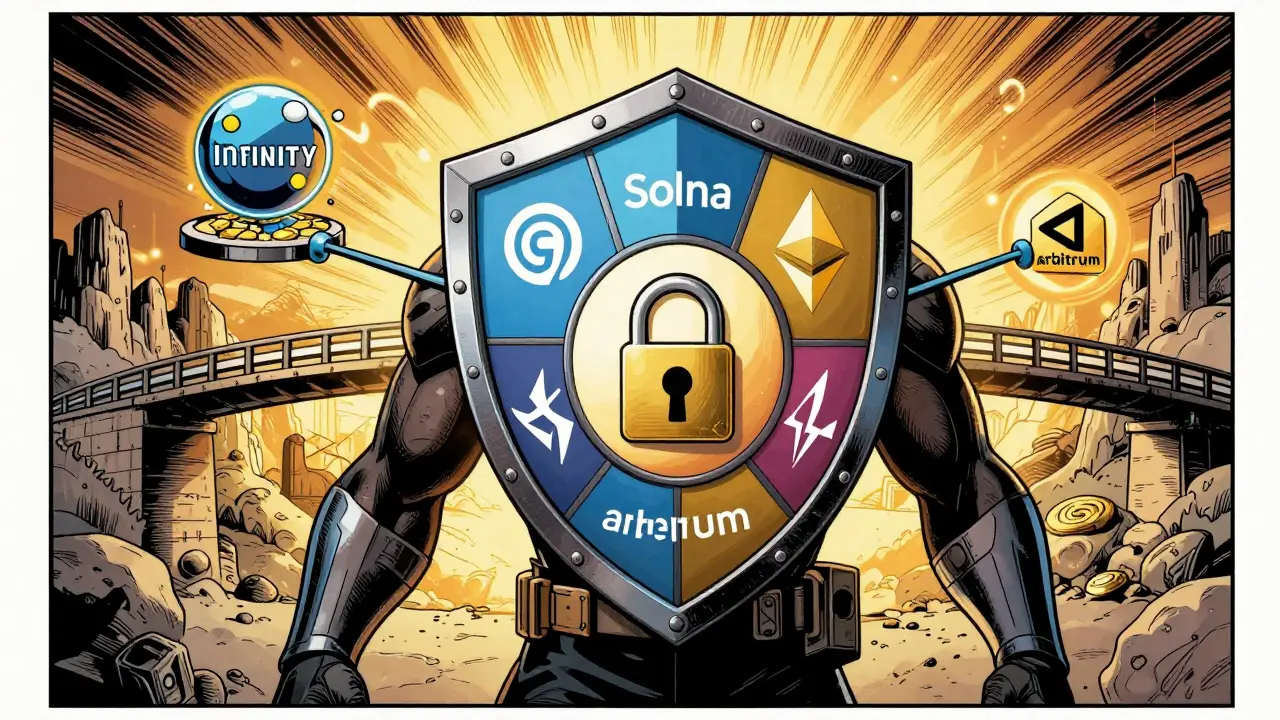
PancakeSwap isn’t stuck on BSC anymore. In 2025, the team launched PancakeSwap Infinity, an infrastructure upgrade that enabled seamless cross-chain operations. Today, you can trade on Ethereum, Polygon zkEVM, zkSync Era, Linea, Base, Arbitrum One, Aptos, and Solana.
The Solana launch in July 2025 was a game-changer. By leveraging Solana’s high throughput, PancakeSwap offers near-instant finality and negligible fees. This expands the addressable market beyond BSC natives, attracting users from the broader crypto ecosystem.
However, liquidity is still fragmented. While BSC remains the deepest pool, newer chains like Aptos have thinner order books. Stick to major pairs on these networks to avoid excessive slippage.
Pros and Cons: A Balanced View
No platform is perfect. Here’s what stands out:
Pros:- Extremely low transaction costs on BSC.
- No KYC required-full privacy and self-custody.
- Rich feature set: spot, futures, staking, NFTs, predictions.
- Strong security audits and transparent governance.
- Active development with regular upgrades (Infinity, v3).
- Impermanent loss risk in concentrated liquidity pools.
- Smaller altcoins may have low liquidity on non-BSC chains.
- No fiat on-ramp directly integrated (requires external bridges).
- Complexity for absolute beginners unfamiliar with Web3.
Who Should Use PancakeSwap v3?
If you’re a retail trader looking to minimize fees and maintain control of your assets, PancakeSwap is hard to beat. It’s ideal for:
- High-frequency traders who benefit from low slippage and fast execution.
- DeFi enthusiasts interested in yield farming and liquidity provision.
- Privacy-focused users who reject KYC requirements.
- Multi-chain investors wanting access to Solana, Arbitrum, and Base ecosystems.
It’s less suitable for:
- Beginners uncomfortable with wallets who prefer centralized exchanges like Coinbase.
- Institutional players requiring regulatory compliance and fiat rails.
- Passive investors unwilling to manage concentrated liquidity positions.
Final Thoughts: Is PancakeSwap Worth It in 2026?
PancakeSwap has evolved from a simple fork into a sophisticated DeFi powerhouse. Its dominance on BSC is undeniable, with 64% of the network’s protocol revenue flowing through it. The addition of v3 concentrated liquidity and cross-chain support keeps it relevant in a crowded market.
You won’t find better fees for BSC trading, and the security track record is solid. Just remember: do your own research. Start small, understand the risks of impermanent loss, and always double-check contract addresses. In DeFi, vigilance is your best insurance.
Is PancakeSwap safe to use in 2026?
Yes, PancakeSwap is considered safe due to multiple audits by Certik, Peckshield, and SlowMist, along with multi-signature wallet controls. However, users must protect their own private keys and beware of phishing sites.
What is the minimum trade amount on PancakeSwap?
The minimum trade amount starts at approximately $1 USD equivalent, depending on the token pair and slippage settings.
Does PancakeSwap require KYC verification?
No, PancakeSwap is a non-custodial decentralized exchange and does not require any Know Your Customer (KYC) or Anti-Money Laundering (AML) verification.
How do I withdraw my earnings from PancakeSwap?
Since you hold your own funds in your Web3 wallet, you simply transfer them out using your wallet interface to another address or exchange. No withdrawal process is needed on the platform itself.
Can I use PancakeSwap on mobile devices?
Yes, PancakeSwap is fully responsive and works well on mobile browsers. You can also use dedicated wallets like Trust Wallet or MetaMask Mobile to interact with the dApp seamlessly.
What blockchains does PancakeSwap support besides BSC?
As of 2026, PancakeSwap supports Ethereum, Polygon zkEVM, zkSync Era, Linea, Base, Arbitrum One, Aptos, and Solana, enabling true cross-chain trading.
Are there tax implications for using PancakeSwap?
Yes, every swap, yield farm reward, or NFT sale may be a taxable event depending on your local jurisdiction. Consult a tax professional familiar with cryptocurrency regulations in your country.
How does PancakeSwap compare to Uniswap?
PancakeSwap offers lower fees and faster transactions on BSC, while Uniswap dominates Ethereum with deeper liquidity for large trades. Both support v3 concentrated liquidity, but PancakeSwap includes additional features like prediction markets and games.
What happens if I lose my wallet password?
If you lose your wallet password or seed phrase, your funds are permanently inaccessible. PancakeSwap cannot recover them. Always back up your credentials securely offline.
Is PancakeSwap regulated by financial authorities?
No, as a decentralized protocol, PancakeSwap operates without direct regulation. Users assume full responsibility for compliance with local laws regarding DeFi participation.