FATF Privacy Coins: What They Are, Why They're Targeted, and What It Means for You
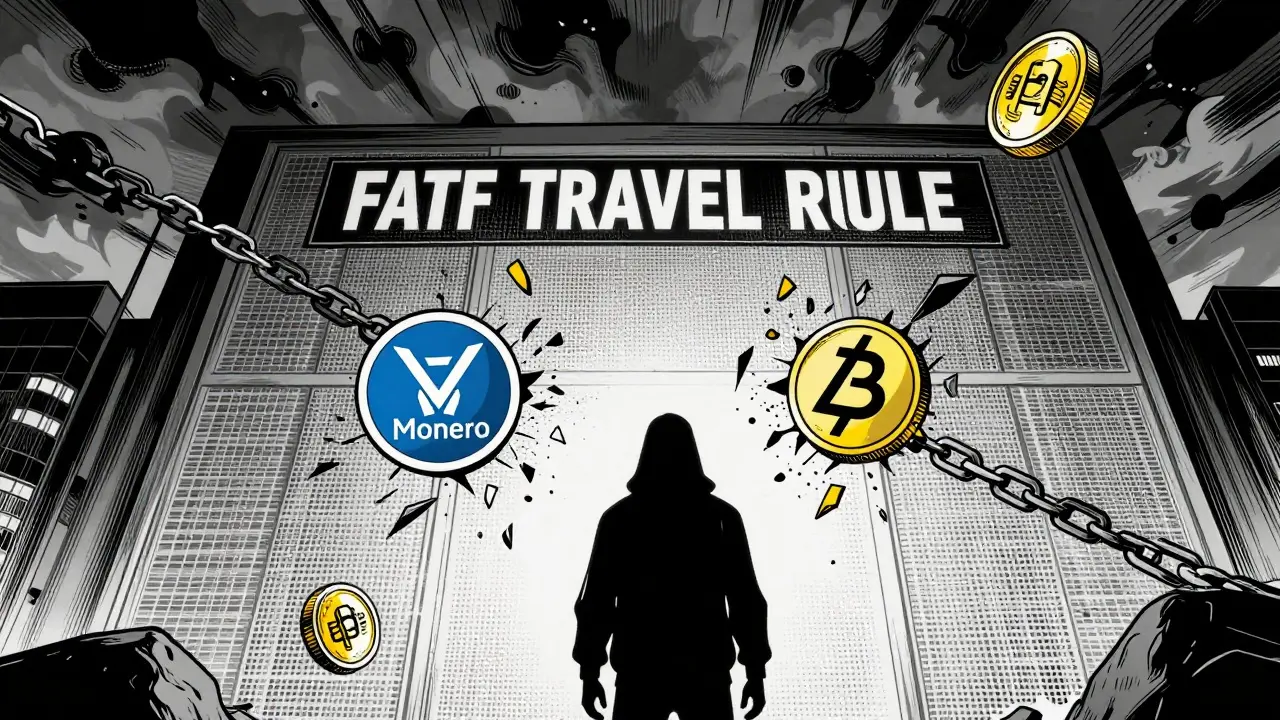
When you hear FATF privacy coins, cryptocurrencies designed to hide transaction details from public blockchains, often targeted by global financial regulators. Also known as anonymous coins, they include Monero, Zcash, and Dash—tools built to protect financial privacy, not just for criminals, but for anyone who doesn’t want their spending habits tracked. The Financial Action Task Force (FATF), a global body that sets anti-money laundering rules, says these coins make it too easy for hackers, ransomware gangs, and drug traffickers to move money without a trace. That’s why they’ve pushed exchanges to block or restrict them. But here’s the twist: most users of privacy coins aren’t breaking the law. They’re just protecting their data—from advertisers, governments, or even nosy neighbors.
Privacy coins aren’t magic. They use advanced math like zero-knowledge proofs and ring signatures to hide sender, receiver, and amount. That’s the same tech that makes secure messaging apps like Signal work. But unlike Signal, these coins live on public ledgers that were never meant to be private. So when regulators see a coin that can’t be traced, they panic. They don’t distinguish between a person hiding from a corrupt regime and someone laundering drug cash. The result? Exchanges like Upbit and TradeOgre got shut down or seized assets because they supported these coins. Canada’s $40 million raid on TradeOgre didn’t just target one exchange—it sent a message: if you enable privacy, you’re a target.
Meanwhile, real users suffer. You can’t trade Monero on Binance anymore. Zcash is delisted from major platforms. Even if you’re just trying to buy groceries with crypto without your bank knowing, you’re forced into less private options. And while FATF claims this keeps the system clean, it doesn’t stop bad actors—they just move to unregulated DEXs or peer-to-peer networks. The real losers? Ordinary people who value financial privacy as a right, not a crime. The posts below show you exactly how this plays out: from exchange crackdowns to fake airdrops that prey on confusion around privacy coins, to the rise of alternatives like zk-SNARKs that try to walk the line between privacy and compliance. You’ll see what’s real, what’s a scam, and how to protect yourself in a world where your transactions are under a microscope.