Market Depth Explained: What It Is and How It Shapes Crypto Trading
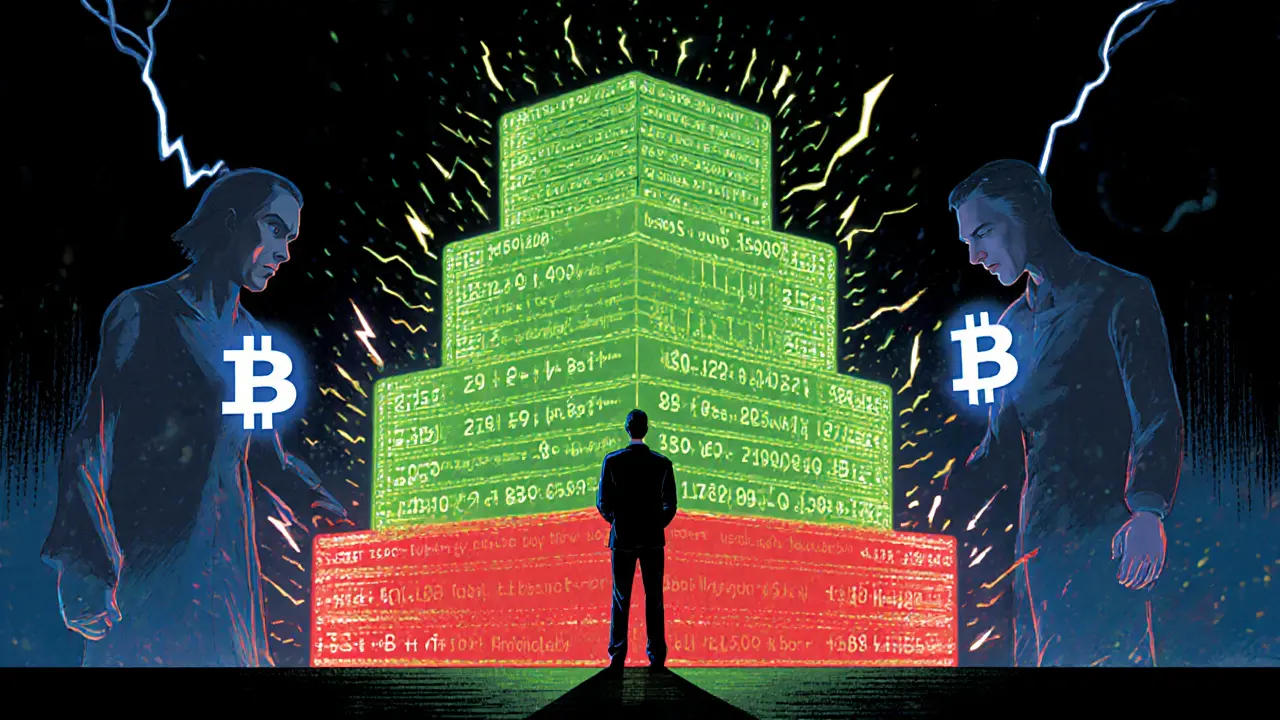
When you look at a crypto price chart, you're only seeing half the story. Market depth, the real-time view of buy and sell orders stacked at different price levels. Also known as order book depth, it shows you who’s actually willing to trade and at what price—before any trade even happens. Most traders focus on price moves, but the real edge comes from understanding what’s behind those moves. A coin can spike on a single large buy order, but if there’s no follow-through buying deeper in the order book, that move is just noise. Market depth tells you if the trend has legs—or if it’s about to collapse.
Think of it like a crowded marketplace. If you walk in and see ten people offering to sell apples at $1 each, but only one person wants to buy at $1.05, you know prices are likely to drop. That’s market depth in action. In crypto, this plays out in the order book, a live list of all pending buy and sell orders for a specific trading pair. Also known as limit order book, it’s the foundation of every decentralized and centralized exchange. The wider the gap between the highest bid and lowest ask, the wider the bid-ask spread, the difference between the best price buyers are willing to pay and the best price sellers are asking for. Also known as spread, it’s a direct measure of liquidity. High liquidity means tight spreads and smooth trades. Low liquidity means slippage, fake price spikes, and traps for unsuspecting traders.
Market depth isn’t just for pros. If you’re buying Bitcoin on Binance or swapping tokens on Uniswap, you’re affected by it. A sudden price jump might look like a breakout—but if the order book shows only a few hundred dollars of buy orders stacked above, that’s a trap. On the flip side, a slow, steady climb with thick buy orders building up? That’s real demand. You can’t see this on a 1-minute chart. You need to look at the order book. And that’s why the posts below dive into real cases: from TradeOgre’s shutdown (where hidden liquidity vanished overnight) to how DeFi protocols like Balancer v2 manage liquidity pools differently than centralized exchanges. You’ll find breakdowns of scam exchanges that fake volume, airdrops that manipulate order flow, and why low-cap tokens like RUG or BOHR have zero market depth—and why that makes them dangerous.
Understanding market depth doesn’t make you a trader overnight. But it stops you from being the one who buys the top of a fake rally. It turns guesswork into strategy. What you’re about to read isn’t theory—it’s what actually happens behind the scenes on every exchange, every day. And if you’re trading crypto in 2025, you need to see it before you click buy.