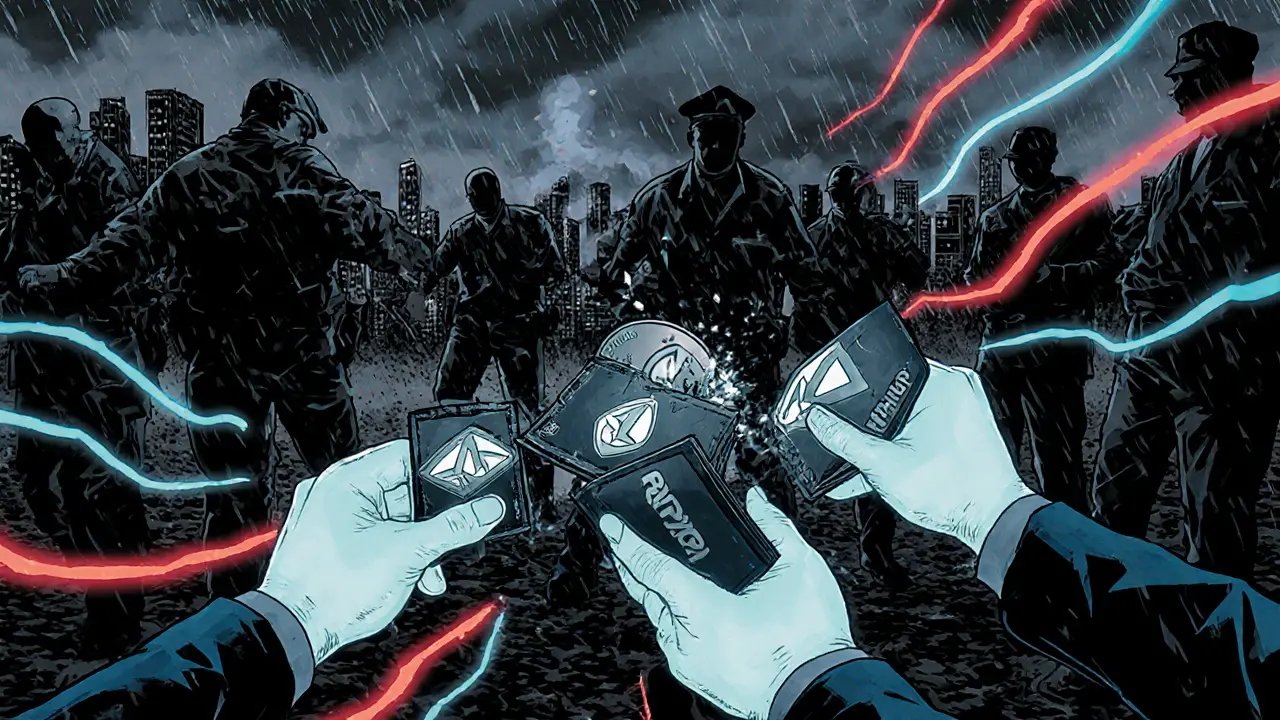
Monero Seizure: What Happened and Why It Matters for Privacy Coins
When law enforcement seized Monero, a privacy-focused cryptocurrency designed to hide transaction details. Also known as XVG, it's one of the few coins that makes tracking funds nearly impossible by default. It wasn’t just another crypto bust—it was a direct challenge to the core idea of financial privacy on the blockchain. Unlike Bitcoin, where every transaction is public, Monero uses ring signatures, stealth addresses, and confidential transactions to ensure no one can see who sent what, or to whom. That’s why it became a favorite for those who value anonymity—and why governments and exchanges started treating it like a red flag.
Monero seizures aren’t random. They usually happen when funds are traced back to darknet markets, ransomware payments, or scams. But here’s the catch: just because Monero was used in a crime doesn’t mean the coin itself is illegal. The same way cash can be used for drugs or charity, the technology doesn’t dictate intent. What’s more, Monero isn’t the only privacy coin under scrutiny—Zcash and Dash have faced similar pressure. But Monero stands out because it enforces privacy by default. No opt-in, no settings to tweak. If you use it, your transactions are hidden. That’s why exchanges like Binance and Kraken have delisted it, and why some wallets refuse to support it. The real question isn’t whether Monero enables crime—it’s whether society should punish a tool just because bad actors misuse it.
What you’ll find in the posts below isn’t a list of Monero seizures. It’s a deeper look at what happens when privacy meets regulation. You’ll see how zero-knowledge proofs are changing the game, how crypto exchanges get caught in the middle, and why some coins vanish overnight with no warning. These aren’t just stories about money—they’re about control, freedom, and what kind of internet we’re building. Some of these posts cover scams that pretend to be Monero-related. Others explain how blockchain analysis firms try to crack privacy coins. And some show how users still find ways to use Monero safely—even when the world is watching. This isn’t about taking sides. It’s about understanding what’s really going on.