
The Future of Blockchain Supply Chain Management: Traceability, Trust & Efficiency
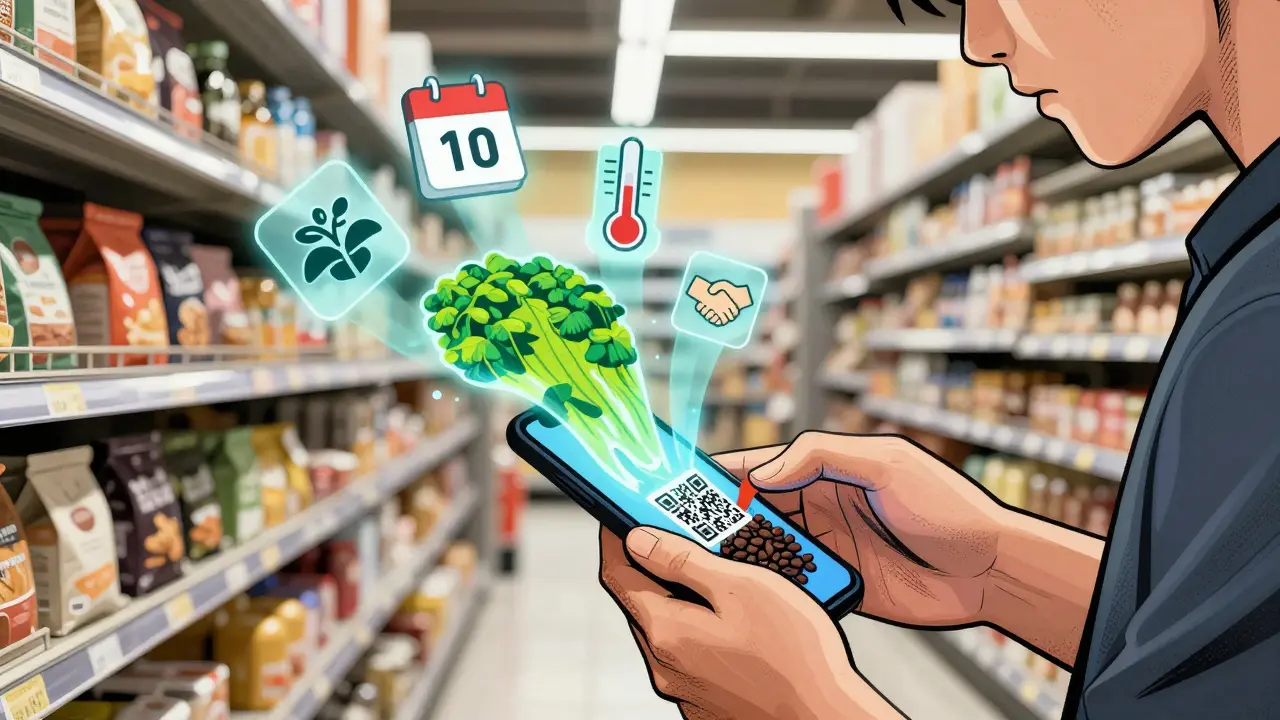
Imagine buying a bag of coffee beans. You scan a QR code, and instantly see the farm where they were grown, the exact date they were harvested, the temperature during shipping, and proof that the farmer was paid fairly. No guesswork. No middlemen hiding margins. Just pure, unchangeable truth. This isn't science fiction anymore. It is the reality of blockchain supply chain management, which is using distributed ledger technology to create transparent, immutable records of product movement from origin to consumer. For decades, global supply chains have been black boxes. Data lives in silos-spreadsheets on one server, emails on another, paper receipts in a drawer somewhere. When something goes wrong, like a food contamination scare or a counterfeit drug entering the market, finding the source takes weeks, if not months. By 2025, over 30% of global agricultural supply chains are projected to use blockchain for traceability. We are moving away from trusting paper trails to trusting code.
Why Traditional Systems Fail and Blockchain Succeeds
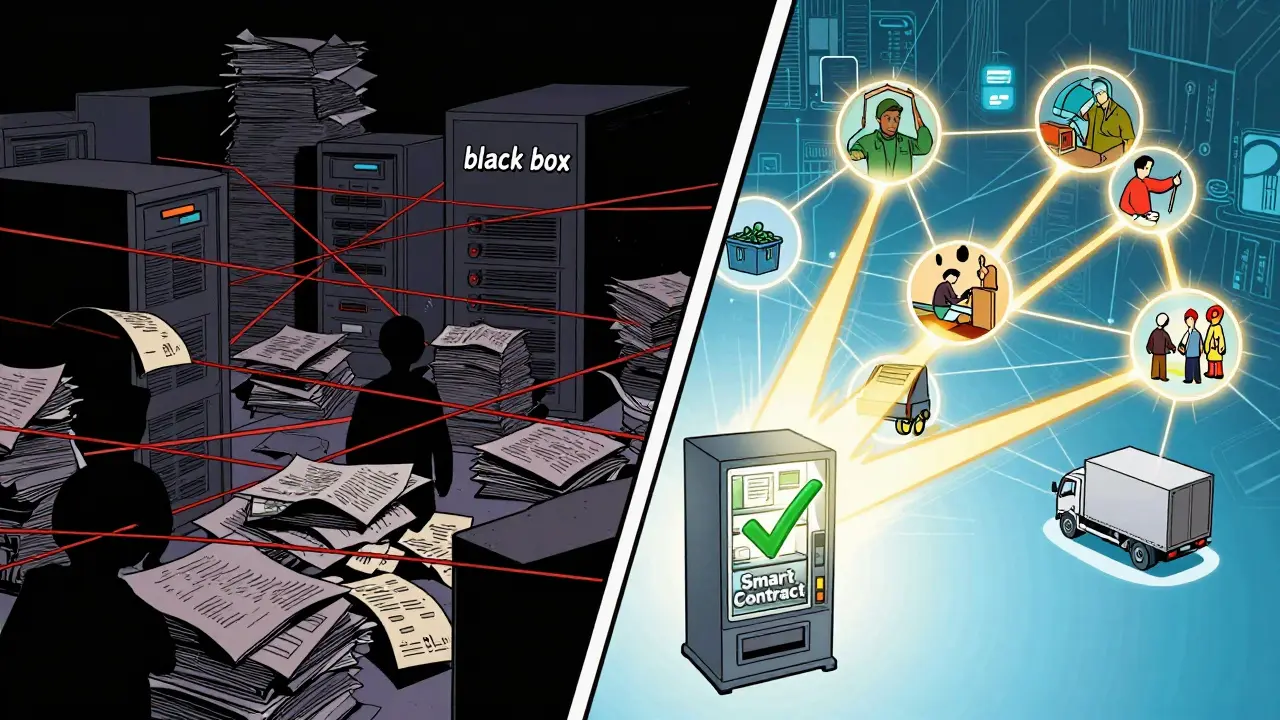
The old way of managing supply chains relies on centralized databases. One company owns the data. If that company makes a mistake, lies about inventory, or gets hacked, the entire chain suffers. There is no single source of truth. Everyone has their own version of reality.
Distributed Ledger Technology (DLT) is a decentralized database shared across multiple nodes that ensures data integrity through consensus mechanisms. In a blockchain network, every participant-from the raw material supplier to the final retailer-has access to the same ledger. When a transaction occurs, it is recorded and validated by the network. Once written, it cannot be changed or deleted without everyone knowing.
This creates immutability. If a shipment of electronics is delayed, the record shows exactly when and why. If organic vegetables are labeled as such but weren't grown organically, the blockchain won't lie because the certification data was hashed onto the chain at the source. According to industry analysis, this shift results in a projected 70% increase in traceability capabilities compared to traditional systems. You stop guessing and start knowing.
Smart Contracts: The Engine of Automation
Data recording is only half the battle. The real magic happens with automation. Enter Smart Contracts are self-executing contracts with the terms of the agreement directly written into code that automatically trigger actions when conditions are met.
Think of a smart contract as a vending machine. You put in money (condition), and you get a snack (action). No cashier needed. In supply chains, these contracts automate logistics, payments, and compliance.
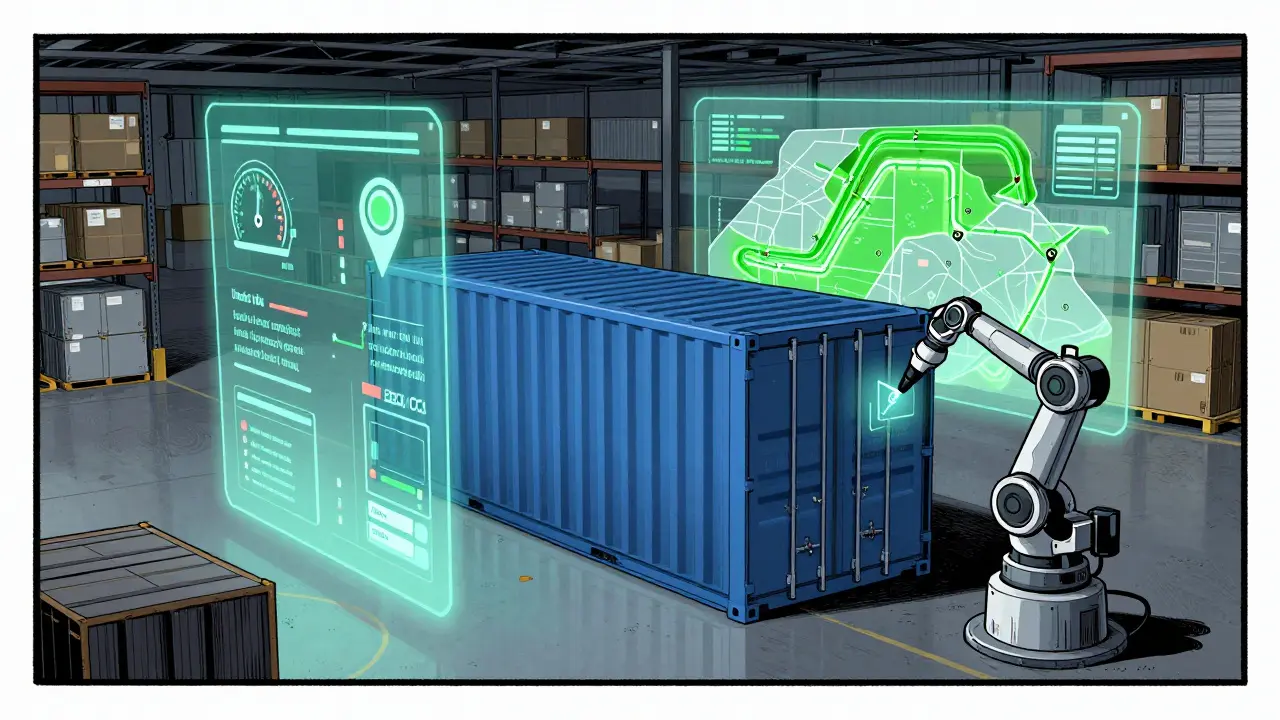
- Automated Payments: When a container arrives at the port and IoT sensors confirm the temperature stayed within safe limits, the smart contract automatically releases payment to the carrier. No invoices, no waiting 30 days for approval.
- Compliance Verification: If a pharmaceutical shipment exceeds a certain temperature threshold, the contract can flag the batch as unsafe before it even reaches the warehouse, preventing dangerous products from hitting shelves.
- Inventory Replenishment: When stock levels drop below a set point, an order is automatically placed with the supplier.
Analysts project that smart contract-driven workflows will improve supply chain efficiency by 60%. Why? Because they remove human error, reduce administrative overhead, and eliminate the friction of manual reconciliation. You spend less time chasing signatures and more time moving goods.
Real-Time Traceability and Food Safety
Food safety is perhaps the most critical application of this technology. In the past, tracing the source of contaminated lettuce could take seven days. That means millions of pounds of potentially unsafe food sitting in warehouses and stores, costing billions and risking public health.
With blockchain, that timeline shrinks to seconds. IBM’s blockchain solutions have demonstrated this clearly. By integrating IoT sensors that track temperature, humidity, and location, every step of the journey is logged. If E. coli is detected in a specific batch, retailers can pinpoint the exact farm and harvest date instantly. Recall response speed improves by 80%.
This isn't just about speed; it's about trust. Consumers today want to know where their food comes from. They care about sustainability, fair trade, and organic practices. Blockchain provides the proof. Automated checking of certifications reduces fraud by 75%, ensuring that when you buy "fair trade" coffee, the farmer actually received the premium price.
Empowering Farmers and Reducing Fraud
One of the biggest shifts we are seeing is direct farmer participation. Traditionally, farmers relied on intermediaries to report data. Those intermediaries might inflate prices, delay payments, or alter quality reports. Now, farmers are entering data directly into blockchain systems.
They log planting schedules, pesticide usage, and harvesting times via mobile apps. This direct input model eliminates intermediary data corruption. It also provides transparent pricing mechanisms. When consumers see the journey of the product, they are often willing to pay a fairer price, which trickles back down to the producer. Projects show this could increase smallholder farmer income by 20%.
Furthermore, verification of certifications becomes seamless. Instead of paying auditors thousands of dollars to visit farms annually, continuous digital verification happens on-chain. This lowers costs for certification bodies and increases confidence for buyers.
Integration with AI and IoT: The Connected Supply Chain
Blockchain doesn't work in isolation. It needs data. That’s where the Internet of Things (IoT) and Artificial Intelligence (AI) come in. These technologies form a powerful trio.
| Technology | Role in Supply Chain | Benefit |
|---|---|---|
| IoT Sensors | Captures physical data (temp, location, shock) | Provides real-time, accurate input for the ledger |
| Blockchain | Stores and secures the data immutably | Ensures trust and prevents tampering |
| Artificial Intelligence | Analyzes historical and real-time data | Predicts disruptions and optimizes routes |
Companies implementing AI-enhanced blockchain systems report a 15% cost reduction and a 25% increase in operational accuracy. AI can predict demand spikes or potential delays based on weather patterns and traffic data. Blockchain then executes the necessary adjustments via smart contracts. For example, if AI predicts a port strike, it might reroute shipments automatically, with the new logistics details recorded on the blockchain for all partners to see.
Sustainability and Green Logistics
Sustainability is no longer optional; it is a core business strategy. Blockchain plays a crucial role here by verifying eco-friendly practices. Companies need to prove they are reducing carbon emissions, using renewable energy, and incorporating recyclable materials.
By tracking the entire lifecycle of a product, businesses can calculate their true carbon footprint. Did the truck run on electric power? Was the packaging recycled? Blockchain records these facts. This data helps companies comply with increasingly strict environmental regulations and appeals to eco-conscious consumers. The shift toward decentralized, on-demand supply chains is also supported by this tech, enabling localized production hubs that respond to regional demand quickly, reducing transportation distances and associated emissions.
Challenges to Adoption
It’s not all smooth sailing. Implementing blockchain requires significant technical infrastructure development and stakeholder coordination. You can’t just install software; you need your suppliers, carriers, and retailers to join the network.
Here are the main hurdles:
- Integration Time: Full system integration typically takes 6-12 months. You have to connect legacy ERP systems with the new blockchain platform.
- Learning Curve: Staff need training in distributed ledger technology and smart contract logic. It’s a new skill set.
- Standardization: Different industries use different standards. Getting everyone to agree on data formats is difficult.
- Cost: Initial investment is high. However, long-term savings from reduced fraud and increased efficiency often offset this.
What to Expect by 2030
Looking ahead, blockchain will move beyond hype to solve fundamental infrastructure problems. Scalability, compliance, data integrity, and identity management will become seamless. We will see autonomous supply chains where robots, AI, and blockchain interact with minimal human intervention.
Geopolitical tensions are driving supplier diversification. Companies need visibility into secondary and tertiary suppliers to mitigate risk. Blockchain provides that depth. Labor management will also integrate, allowing for better workforce tracking, skills verification, and performance monitoring.
The future of supply chain management is transparent, automated, and trustworthy. It is a shift from reactive problem-solving to proactive optimization. For businesses, the question is no longer "if" they should adopt blockchain, but "how fast" they can implement it to stay competitive.
How does blockchain improve supply chain transparency?
Blockchain creates a shared, immutable ledger where every transaction and movement is recorded. All participants in the supply chain can view the same data in real-time. This eliminates information silos and prevents any single party from altering records, ensuring complete visibility from raw material sourcing to final delivery.
What are smart contracts in supply chain management?
Smart contracts are self-executing agreements coded on the blockchain. They automatically trigger actions, such as payments or alerts, when predefined conditions are met. For example, if a shipment arrives on time and passes quality checks, the smart contract automatically releases payment to the supplier without manual intervention.
Can blockchain prevent counterfeiting in pharmaceuticals?
Yes. Each pharmaceutical product can be assigned a unique digital ID on the blockchain. Every time the product changes hands, the record is updated. Pharmacists and consumers can verify the authenticity of the drug by scanning its ID, ensuring it hasn't been tampered with or replaced by a counterfeit version.
How long does it take to implement blockchain in a supply chain?
Implementation typically takes 6-12 months, depending on the complexity of the supply chain and the number of stakeholders involved. This period includes integrating existing ERP systems, training staff, and coordinating with partners to ensure everyone uses compatible platforms.
What is the role of IoT in blockchain supply chains?
IoT sensors collect physical data such as temperature, humidity, and location. This data is fed directly into the blockchain, providing real-time, verifiable evidence of how products are handled. This combination ensures that the digital record accurately reflects the physical state of the goods throughout the journey.
Does blockchain reduce costs in supply chain operations?
Yes, although initial setup costs are high. Long-term savings come from reduced administrative overhead, faster payments, fewer errors, and lower fraud rates. Companies using AI-enhanced blockchain systems report up to a 15% cost reduction due to increased efficiency and automation.


Finally someone is talking about this without the usual crypto-bro hype. The traceability aspect is a game changer for consumer trust. We need to push harder for adoption in agriculture.
This whole blockchain thing is just another way for big tech to spy on our supply chains. I don't trust foreign ledgers with American data. Keep it local and keep it simple.
You are all missing the point entirely. Blockchain doesn't solve the garbage in garbage out problem. If a farmer lies about organic status before hashing it, the chain just proves they lied efficiently. It's not magic, it's just expensive accounting.
I've seen similar systems working in Japan for luxury goods. It really changes how people value authenticity. The cultural shift towards transparency is fascinating to watch unfold globally :)
The epistemological implications of immutable ledgers on supply chain ontology are profound yet under-discussed. Most proponents fail to grasp that decentralization merely distributes the burden of verification rather than eliminating the necessity of trusted nodes. Your reliance on IoT sensors as oracles introduces significant vulnerability vectors that compromise the very integrity you seek to establish. One must consider the socio-economic stratification resulting from such technological monopolies.
Ugh, why do we need more tech? Just make farmers follow the rules already. This sounds like a headache waiting to happen.
It's important to remember that technology serves people. When used wisely, these tools can empower small producers. Let's focus on ethical implementation.
Does this mean I can track my coffee from bean to cup? 🤔 I'd love to know exactly who picked my beans. It feels so personal when you connect with the source! ☕✨
Let's be real here. Big corporations will use this to squeeze margins even tighter. They'll claim 'efficiency' while paying workers less. Don't fall for the corporate propaganda. We need labor rights, not better tracking software.
While the theoretical benefits of distributed ledger technology in enhancing supply chain transparency are undoubtedly compelling, one must carefully consider the extensive logistical challenges associated with integrating such sophisticated digital infrastructure into existing operational frameworks, particularly within regions where internet connectivity remains inconsistent and digital literacy among primary producers is still developing, which inevitably raises questions about the equitable distribution of both costs and benefits across the entire global supply network.
The potential for automation is huge. Imagine never dealing with invoice disputes again. It’s a liberating thought for logistics managers everywhere.
Hey guys, check out how smart contracts are revolutionizing payments! No more waiting 30 days for approval. That’s freedom! :) Let’s get excited about the future!
It seems like everyone has an opinion. But honestly, if it reduces fraud by 75%, isn't that worth the learning curve? We should support innovation, right?
The philosophical shift from trusting institutions to trusting code is terrifyingly beautiful. We are dismantling centuries of hierarchical control structures with lines of Python. What happens to human judgment when algorithms decide safety thresholds?
In many cultures trust is built through relationships not databases. This tech might work in the west but elsewhere it could feel cold and impersonal. We need to respect different ways of doing business
Look, I get the skepticism. But have you tried explaining to a client that their shipment was lost due to a clerical error? Blockchain fixes that. Stop fighting progress and start adapting. The world is moving fast.
What about the environmental cost of running these nodes? Is the efficiency gain worth the energy consumption? I wonder if there's a balance we haven't found yet.
Another day, another buzzword salad. 'Immutable truth'? Please. It's just a database with extra steps. Meanwhile, US manufacturing is dying because we rely on overseas suppliers who don't care about our standards. Fix the trade deficit first.
The grand illusion of digital purity! You think a hash protects you from the rotting core of capitalism? The blockchain is a shiny cage for your data, a velvet glove hiding an iron fist of corporate surveillance. Wake up, sheeple, before your coffee beans start judging you.
Actually, modern blockchains are quite energy efficient compared to PoW systems. And the AI integration mentioned is key for predictive logistics. It’s not just about recording history, it’s about shaping the future. Great read! 👍
For those new to this, think of it as a shared notebook that no one can erase. Simple concept, powerful result. Hope this helps clarify things.