What is RECON (RECON) Crypto Coin? Solana-Based RWA Platform Explained
You’ve probably seen the ticker RECON is a cryptocurrency token powering a Real World Asset investment platform built on the Solana blockchain. But what exactly is it? Is it just another meme coin hoping for a viral moment, or does it have actual utility? If you are looking at the charts right now, you might be confused. One site says it’s worth pennies; another says it’s worth fractions of a penny. That volatility is a clue. RECON isn’t trying to be Bitcoin. It’s trying to solve a specific problem: getting regular people access to expensive investments like real estate and bonds.
This guide breaks down what RECON actually does, why it runs on Solana, and whether the "Real World Asset" (RWA) hype is enough to back up its price. We’ll look at the numbers, the risks, and what you need to know before buying in May 2026.
The Core Concept: Democratizing Institutional Investing
At its heart, RECON operates as a decentralized investment platform focused on tokenizing intangible and physical assets. Traditionally, if you wanted to invest in commercial real estate, high-yield corporate bonds, or even profit shares from entertainment projects, you needed two things: serious cash and "accredited investor" status. That means proving you have millions in net worth. Most of us don’t qualify.
RECON attempts to remove that barrier. By using blockchain technology, the platform splits these large assets into smaller digital tokens. You can buy a fraction of a building or a bond instead of the whole thing. This process is called tokenization is the conversion of rights to an asset into a digital token on a blockchain. The goal is simple: make institutional-grade investments accessible to retail investors globally. Instead of needing $100,000 to enter a deal, you might only need $50.
The platform focuses on three main asset classes:
- Real Estate: Ownership stakes in properties.
- Bonds: Fixed-income instruments that pay interest.
- Entertainment: Revenue shares from media or creative projects.
This diversification is key. Unlike many crypto projects that rely solely on speculation, RECON claims to generate value from underlying real-world performance. If the property appreciates or the bond pays interest, that value should theoretically flow back to the token holders.
Why Solana? The Infrastructure Behind RECON
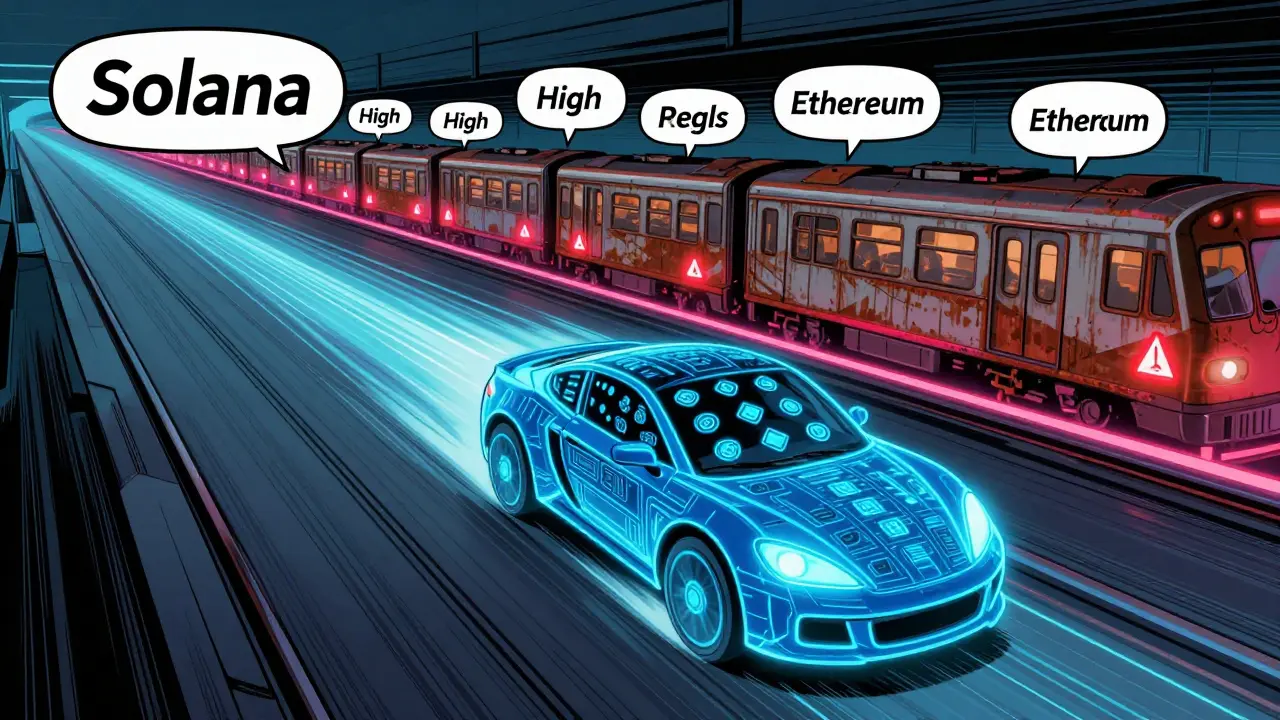
Every crypto project needs a home-a blockchain where it lives and transacts. RECON was built exclusively on Solana is a high-performance blockchain known for fast transaction speeds and low fees. This choice is not random. For a platform dealing with frequent asset transfers and small-ticket investments, speed and cost matter immensely.
If RECON were on Ethereum, every time someone bought a $10 slice of a bond, they might pay $5 in gas fees. That doesn’t work. Solana processes thousands of transactions per second with costs often less than a cent. This makes micro-investments viable. You can move your RECON tokens or trade fractional assets without eating into your profits with network fees.
Solana also offers robust smart contract capabilities. These self-executing contracts handle the logic of the investment-automating payouts, verifying ownership, and ensuring transparency. However, relying on Solana also ties RECON’s fate to the health of the Solana network. If Solana experiences downtime or congestion, RECON’s operations could be affected too.
Price Volatility and Market Data Confusion
Here is where things get messy. As of late May 2026, tracking the exact price of RECON is difficult because there is no single source of truth. This is common for micro-cap coins with limited liquidity.
| Source | Price (USD) | 24h Volume | Trend |
|---|---|---|---|
| CoinCarp | $0.017 | $47,202 | +8.55% |
| Binance Directory | $0.01172 | $84,419 | -0.64% |
| Crypto.com SG | $0.00045 | $43,543 | +0.25% |
| LiveCoinWatch | $0.00027 | N/A | -40.36% |
Look at those numbers. One aggregator lists it at nearly two cents, while another shows it at less than half a cent. Why the difference? It usually comes down to which exchanges are being tracked. Some data sources might include older trades or illiquid pairs that skew the average. Others might only track the most active pools.
This fragmentation is a major red flag for new investors. It means liquidity is thin. If you try to sell a large amount of RECON, you might crash the price on the exchange you’re using because there aren’t enough buyers waiting. The all-time high recorded by some trackers is around $0.00048, suggesting that the higher prices seen recently might be anomalies or reflect different trading pairs.
Tokenomics: Supply and Circulation
To understand the potential upside (or downside), you need to look at the supply. RECON has a maximum supply of 100 billion tokens. That is a huge number. In crypto, high supply usually means the individual token price will stay low unless the total market cap grows massively.
However, the circulating supply-the number of tokens actually available to trade-is unclear. Some sources report zero circulating supply, while others suggest figures around 999 million tokens. This lack of transparency is concerning. If 99% of the tokens are held by the team or early investors and locked up, the risk of a massive dump later is high. Always check the official documentation for vesting schedules. If the team can unlock billions of tokens next month, the price could plummet regardless of how good the platform is.
Currently, RECON ranks between #2751 and #3045 by market capitalization. This places it firmly in the "micro-cap" category. These coins are high-risk, high-reward bets. They can go to zero quickly, but they can also multiply if they gain traction. There are currently no perpetual contracts or ETFs for RECON, meaning you can’t hedge your position or short it easily. You are betting purely on the price going up.

Risks and Due Diligence Checklist
Before you buy any RECON tokens, you need to run through a mental checklist. This is not financial advice, but it is practical risk management.
- Liquidity Risk: Can you actually sell? With daily volumes under $100k across all exchanges, exiting a large position will be painful. Slippage will eat your profits.
- Regulatory Uncertainty: Tokenized real estate and bonds are heavily regulated. Governments are still figuring out how to treat these assets. If regulators crack down on RWA platforms, RECON could face legal hurdles.
- Smart Contract Security: Has the code been audited? Early-stage projects often skip thorough audits to save money. A bug in the contract could allow hackers to drain funds. Look for audit reports from reputable firms like CertiK or Hacken.
- Team Transparency: Who is behind RECON? Are their identities public? Anonymous teams are a higher risk. Check their LinkedIn profiles and past experience in finance or tech.
- Data Reliability: Don’t trust one price chart. Compare multiple sources. If the price differs wildly between Binance and LiveCoinWatch, assume the lower price is closer to reality until proven otherwise.
Community and Future Outlook
For a project this size, community is everything. RECON maintains a presence on Twitter (@reconrwa is the official social media handle for the RECON project.) and Telegram. These channels are where updates about new asset listings, partnerships, and technical developments happen.
The broader trend favors RWAs. Major banks and venture capital firms are pouring money into tokenization infrastructure. If RECON can secure partnerships with real estate developers or bond issuers, it could differentiate itself from the thousands of other Solana tokens. But right now, it is competing in a crowded space. Projects like Ondo Finance and Centrifuge are already established players in the RWA sector. RECON needs to prove why it is better or faster than them.
In summary, RECON is an ambitious attempt to bring real-world investing to the blockchain via Solana. The concept is solid, but the execution is still in its infancy. The price volatility and data inconsistencies signal a risky, early-stage environment. Do your own research, start small, and never invest more than you can afford to lose.
Is RECON coin a scam?
There is no definitive evidence labeling RECON as a scam, but it carries high risks typical of micro-cap cryptocurrencies. The extreme price discrepancies across data aggregators and lack of transparent circulating supply data require caution. Always verify the team's identity and look for third-party security audits before investing.
Which blockchain does RECON use?
RECON operates exclusively on the Solana blockchain. This allows for fast transaction speeds and low fees, which are essential for a platform facilitating frequent micro-transactions in real-world assets.
What is the maximum supply of RECON tokens?
The maximum supply of RECON tokens is 100 billion. However, the circulating supply is unclear and varies significantly between data sources, ranging from reported zeros to approximately 999 million tokens.
How do I buy RECON crypto?
RECON is traded on select exchanges such as Biconomy and LBank. You typically need a wallet compatible with the Solana network (like Phantom or Solflare) to hold the tokens. Be aware of low liquidity, which may result in high slippage when buying or selling.
What are Real World Assets (RWA) in crypto?
Real World Assets (RWA) refer to physical or traditional financial assets-such as real estate, bonds, or commodities-that are represented as digital tokens on a blockchain. This process, called tokenization, aims to increase liquidity and accessibility for these traditionally illiquid assets.
Why is the RECON price different on different websites?
Price differences arise due to market fragmentation and low liquidity. Different aggregators track different exchanges and trading pairs. Some may include stale data or illiquid markets, leading to significant variations in the displayed price. Always check multiple sources for accuracy.