DOEX Crypto Exchange Review: Safety, Fees, and Better Alternatives in 2026
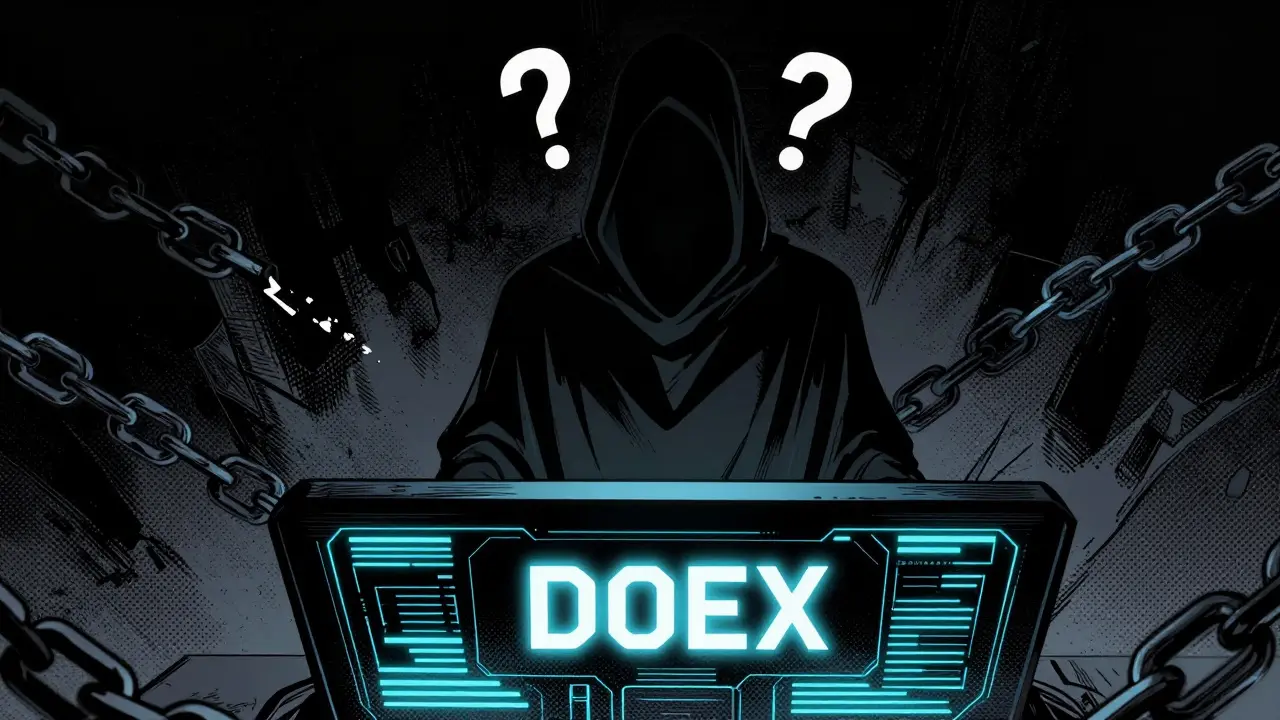
You’ve probably seen ads for DOEX popping up on social media or search results. It promises easy trading, low fees, and a sleek interface. But here’s the hard truth that most marketing emails won’t tell you: there is almost no reliable public information about this platform. In an industry where trust is everything, silence is dangerous.
I’ve spent years analyzing crypto platforms from my desk in Wellington, and I’ve learned one rule: if you can’t find out who runs it, where it’s registered, or how they secure your money, you shouldn’t put your money there. This review isn’t just about listing features; it’s about helping you decide if DOEX is worth the risk compared to established giants like Binance or Coinbase.
The Transparency Problem: Who Is Behind DOEX?
When you sign up with a major bank, you know its headquarters, its CEO, and its regulatory licenses. With DOEX, none of that exists. The platform operates as a centralized exchange, meaning they hold your private keys and manage your funds. Yet, their website lacks basic corporate details.
- Founding Date: Unknown.
- Headquarters: Not disclosed.
- Leadership Team: No public profiles of founders or executives.
- Regulatory Status: Not listed with major bodies like the UK’s Financial Conduct Authority (FCA), the US Securities and Exchange Commission (SEC), or Singapore’s Monetary Authority (MAS).
This lack of transparency is a massive red flag. Experts like Andreas Antonopoulos have repeatedly warned that exchanges without clear security practices and corporate accountability pose significant risks to user funds. If the platform disappears tomorrow, who do you call? Without a physical address or legal entity, you likely have no recourse.
Security Measures: What Are They Hiding?
Security isn’t just a feature; it’s the foundation of any crypto exchange. Major platforms publish regular audits, insurance details, and cold storage policies. For example, Coinbase holds over $90 billion in customer assets under custody insurance and undergoes rigorous third-party audits.
DOEX offers none of this. There are no published SOC 2 compliance reports, no penetration testing results from firms like CipherTrace or Chainalysis, and no mention of insurance coverage for user funds.
Consider the collapse of FTX in late 2022. Despite being a top-tier exchange, it failed catastrophically due to poor financial management and lack of transparency. Smaller exchanges like DOEX, which lack even the basic infrastructure of FTX, are disproportionately vulnerable. Security firm Slowmist tracked over 300 security incidents across exchanges in 2023, with smaller, less-regulated platforms making up a large portion of hacking victims. Why? Because they don’t have the budget or expertise to defend against sophisticated attacks.
User Experience and Community Sentiment
If a service is good, people talk about it. If it’s bad, they complain. For DOEX, the internet is eerily quiet.
On Reddit’s r/CryptoCurrency, which has over 5 million members, mentions of DOEX are virtually non-existent. Compare that to hundreds of daily discussions about Binance or Coinbase. On Trustpilot, a primary source for consumer reviews, DOEX has negligible volume. Meanwhile, competitors like Kraken boast over 15,000 reviews.
The few scattered comments found on niche forums suggest mixed experiences. Some users report basic functionality for simple buys and sells. Others cite delayed verification processes, unresponsive customer support, and slow withdrawal times. However, the sample size is too small to draw statistical conclusions. The absence of a strong community presence suggests either very low adoption or active suppression of negative feedback.
Fees and Trading Features: The Hidden Costs
Without official documentation, calculating the true cost of trading on DOEX is impossible. Established exchanges are transparent about their pricing models.
| Exchange | Trading Fees (Maker/Taker) | Advanced Features | Transparency |
|---|---|---|---|
| Binance | 0.1% (reducible to 0.02%) | Futures, Options, Staking, P2P | High (Public volume data) |
| Coinbase | 0.5% (reducible to 0.05%) | Staking, Earn, Institutional Custody | Very High (Publicly traded) |
| Kraken | 0.16% - 0.26% | Margin Trading, Futures, OTC Desk | High (Regular audits) |
| DOEX | Undisclosed | Basic Spot Trading Only | None |
Notice the pattern? Top exchanges compete on lower fees and better tools. DOEX offers only basic spot trading with market and limit orders. There are no API capabilities for algorithmic traders, no advanced charting tools, and no mobile app sophistication comparable to industry leaders. If you’re a casual investor buying small amounts, hidden fees might eat into your profits silently. If you’re an active trader, the lack of depth and liquidity will result in slippage, costing you more than the advertised fee ever could.
Regulatory Landscape in 2026
The regulatory environment for cryptocurrency has tightened significantly by 2026. The European Union’s Markets in Crypto-Assets (MiCA) regulation, fully effective since January 2025, requires all exchanges serving EU customers to obtain specific licenses and maintain strict compliance standards. The US continues to develop federal frameworks that further marginalize unregistered entities.
DOEX does not appear on any major regulatory registers. This means:
- No Consumer Protection: If the exchange fails, you are an unsecured creditor.
- Tax Reporting Issues: You may struggle to get accurate transaction history for tax purposes.
- Legal Risk: Operating in a gray area can lead to sudden shutdowns or frozen assets if regulators crack down.
Compliant exchanges like Coinbase (registered with FinCEN) and Kraken (holding New York BitLicense) invest millions in legal compliance. DOEX appears to be operating outside these frameworks, which is a major warning sign for long-term viability.
Better Alternatives for Your Crypto Needs
Why take the risk with DOEX when safer, more feature-rich options exist? Here’s what you should consider based on your needs:
- For Beginners: Coinbase offers a user-friendly interface, high security, and full regulatory compliance in the US and Europe. It’s slightly more expensive but worth the peace of mind.
- For Active Traders: Binance provides the deepest liquidity, lowest fees, and widest range of coins. Just ensure you comply with local regulations regarding its use.
- For Security-Conscious Users: Kraken has never been hacked and publishes regular proof-of-reserves. Their customer support is also highly rated.
These platforms have survived multiple market crashes, regulatory inquiries, and cyberattacks. They have proven track records. DOEX has none of that.
Final Verdict: Proceed with Extreme Caution
Based on the available evidence, I cannot recommend DOEX for holding significant assets or for serious trading. The lack of transparency, absent regulatory status, missing security documentation, and minimal community presence create a high-risk profile. In the crypto world, anonymity is not a selling point; it’s a liability.
If you must experiment with DOEX, treat it as disposable income. Never store long-term holdings on the platform. Use a hardware wallet like Ledger or Trezor for any assets you intend to keep. For everyday trading and investing, stick to regulated, audited, and well-established exchanges. Your financial security is worth more than the allure of a new, unknown platform.
Is DOEX a legitimate cryptocurrency exchange?
While DOEX operates as a functional trading platform, its legitimacy is questionable due to a lack of transparency. It does not disclose its leadership team, headquarters, or regulatory licenses. This absence of verifiable information makes it difficult to confirm its legal standing or operational integrity compared to regulated exchanges like Coinbase or Kraken.
Are my funds safe on DOEX?
There is no public evidence that DOEX employs robust security measures such as cold storage, multi-signature wallets, or insurance coverage. Unlike major exchanges that publish security audits and proof-of-reserves, DOEX provides no such documentation. This places user funds at higher risk of theft, loss, or insolvency.
What are the fees for trading on DOEX?
DOEX does not publish a clear fee schedule. While major exchanges like Binance charge around 0.1% per trade, DOEX’s costs are undisclosed. This lack of transparency means users may face hidden spreads, withdrawal fees, or other charges that are not clearly communicated upfront.
Is DOEX regulated in the US or Europe?
No. DOEX does not appear on regulatory registers maintained by the US SEC, FinCEN, or the UK’s FCA. It also lacks licensing from European authorities under the MiCA regulation. Operating without these licenses means users have little to no legal protection if disputes arise.
Can I withdraw my money easily from DOEX?
User reports suggest inconsistent withdrawal experiences, with some citing delays and poor customer support responsiveness. Without a transparent operational structure, there is no guarantee of timely withdrawals, especially during periods of high market volatility.
What are the best alternatives to DOEX in 2026?
For safety and reliability, consider Coinbase, Binance, or Kraken. These platforms offer regulatory compliance, transparent fee structures, advanced security features, and large user communities. They provide a much safer environment for both beginners and experienced traders.
Why is there so little information about DOEX online?
The scarcity of information is likely due to DOEX being a smaller, possibly unregulated entity with limited marketing reach or intentional opacity. In the crypto industry, reputable exchanges actively share information to build trust. Silence often indicates a lack of resources or a desire to avoid scrutiny.
Does DOEX have a mobile app?
While DOEX may offer a web-based interface, there is no verified, widely-used mobile application with positive reviews on major app stores. Most users rely on browser access, which lacks the convenience and security features of dedicated apps from larger exchanges.