How to Secure Your Cryptocurrency Wallet: The Ultimate Guide for 2026
Imagine waking up one morning, checking your phone, and seeing that your entire life savings has vanished. No bank error, no frozen account-just gone. This isn't a movie plot; it’s the reality for thousands of people who fall victim to cryptocurrency wallet security failures. In the first quarter of 2025 alone, thieves stole $1.2 billion in digital assets, with nearly 80% of those losses tied directly to compromised wallets. If you hold Bitcoin, Ethereum, or any other token, understanding how to protect your keys is not optional-it’s survival.
You don’t need to be a coding wizard to stay safe, but you do need to change how you think about money. Unlike your bank account, there is no customer service line to call if you get hacked. The blockchain doesn’t care if you were tricked. It only cares if the math checks out. So, let’s cut through the noise and look at exactly how to lock down your digital assets in 2026.
The Core Problem: Private Keys Are Everything
To secure your wallet, you first have to understand what you’re actually securing. A cryptocurrency wallet does not store coins like a purse stores cash. Instead, it holds your private keys. Think of these keys as the ultimate password. Whoever holds the private key controls the funds on the blockchain. If someone else gets that key, they own your money. Period.
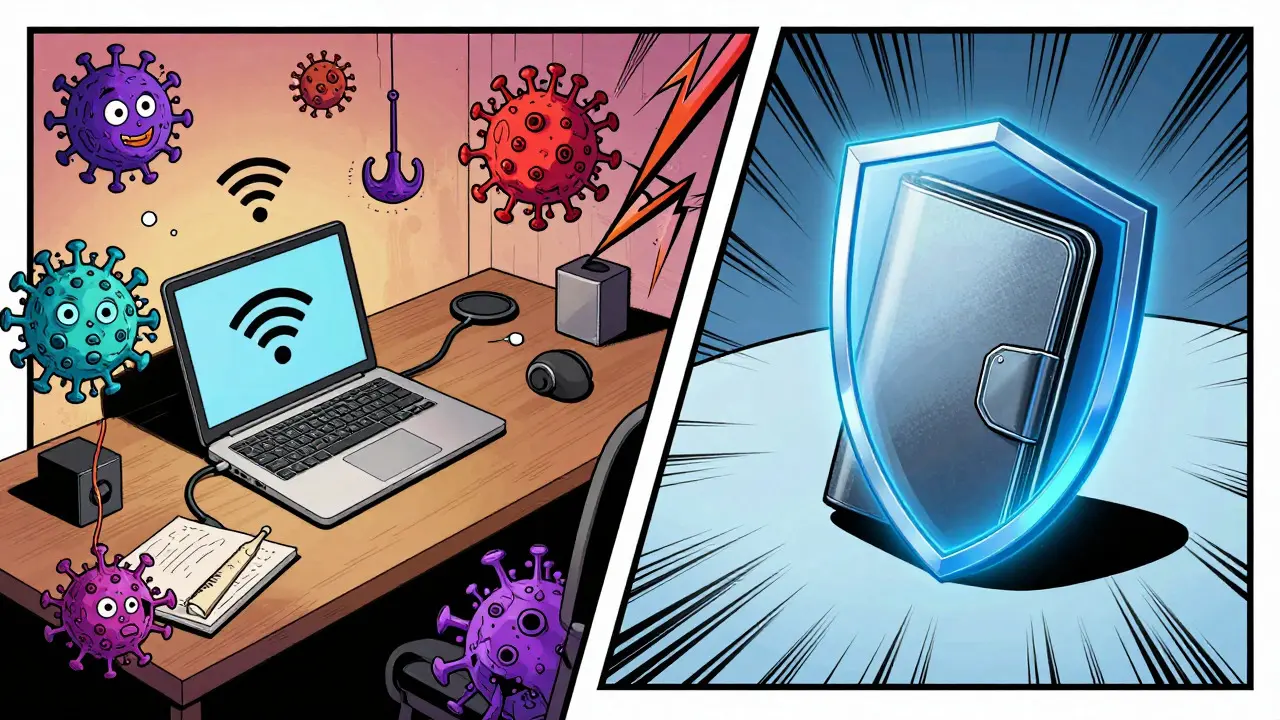
The danger lies in how easily these keys can be exposed. When you use a software wallet (often called a "hot wallet") on your computer or phone, that device is connected to the internet. That connection is a doorway. Malware, phishing scams, and remote hackers are constantly knocking. According to research from Imperial College London, poorly secured hot wallets face a compromise risk of 1 in 20. Compare that to properly implemented cold storage, which drops that risk to less than 1 in 10,000. The gap is massive.
Your goal is simple: keep your private keys away from the internet whenever possible. This principle is the foundation of every security strategy we’ll discuss below.
Cold Storage vs. Hot Wallets: Choosing Your Defense
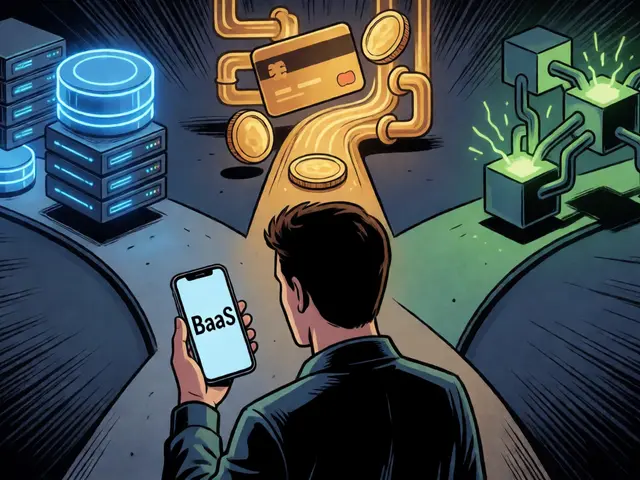
Not all wallets are created equal. You need to match the type of wallet to the amount of money you’re holding. Here is the breakdown:
| Wallet Type | Connectivity | Security Level | Best Use Case |
|---|---|---|---|
| Hot Wallet (Software) | Online | Low to Medium | Daily spending, small amounts |
| Hardware Wallet (Cold) | Offline (Air-gapped) | High | Long-term savings, large holdings |
| Multi-Sig Wallet | Varies | Very High | Institutional grade, shared control |
Hot Wallets: These are apps like MetaMask or Trust Wallet. They are convenient. You click, you send. But because they live on devices connected to Wi-Fi or cellular networks, they are vulnerable to malware. If your laptop catches a virus while you’re browsing the web, that virus might scan for wallet files. Keep only what you need for daily transactions here-maybe 5% of your total portfolio.
Hardware Wallets: Devices like the Ledger Nano S Plus or Trezor act as physical vaults. They store your private keys on a chip that never touches the internet. When you want to send money, you plug the device in, approve the transaction on its tiny screen, and sign it offline. This reduces the risk of compromise by over 99%. Yes, it adds 3-5 seconds to your transaction time, but that delay buys you peace of mind.
A critical warning: Always buy hardware wallets directly from the manufacturer. In early 2025, investigators found that 12% of counterfeit Ledger devices sold on third-party marketplaces had pre-installed malware designed to steal seed phrases during setup. Don’t save $10 and lose $10,000.
The Seed Phrase: Your Digital Life Insurance
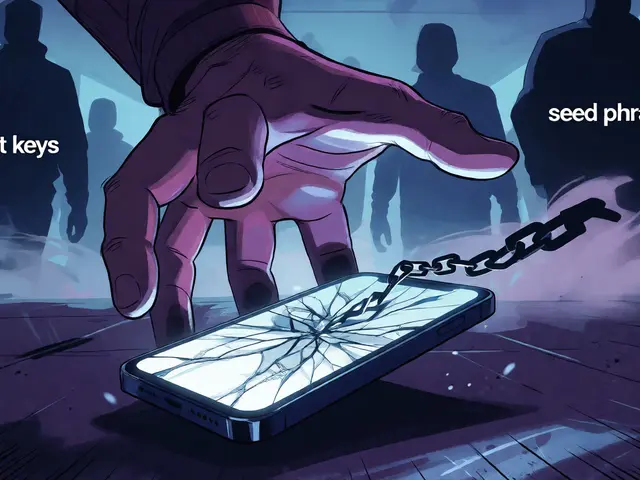
If you lose your hardware wallet, you aren’t necessarily broke. But if you lose your seed phrase (also known as a recovery phrase), you are. This is a list of 12 or 24 random words generated when you set up your wallet. It is the master key to your entire fortune.
Here is where most people fail. They write it down on a piece of paper and leave it on their desk. Or worse, they take a photo of it and save it to Google Drive or iCloud. Big mistake. Chainalysis reports that 20% of all lost cryptocurrency is due to destroyed or lost seed phrases. Another major chunk is stolen because users stored them digitally.
Follow these rules for your seed phrase:
- No Screens: Never type your seed phrase into a computer, phone, or website. Ever.
- No Cloud: Do not upload photos of it to cloud storage. Hackers target email accounts specifically to find these backups.
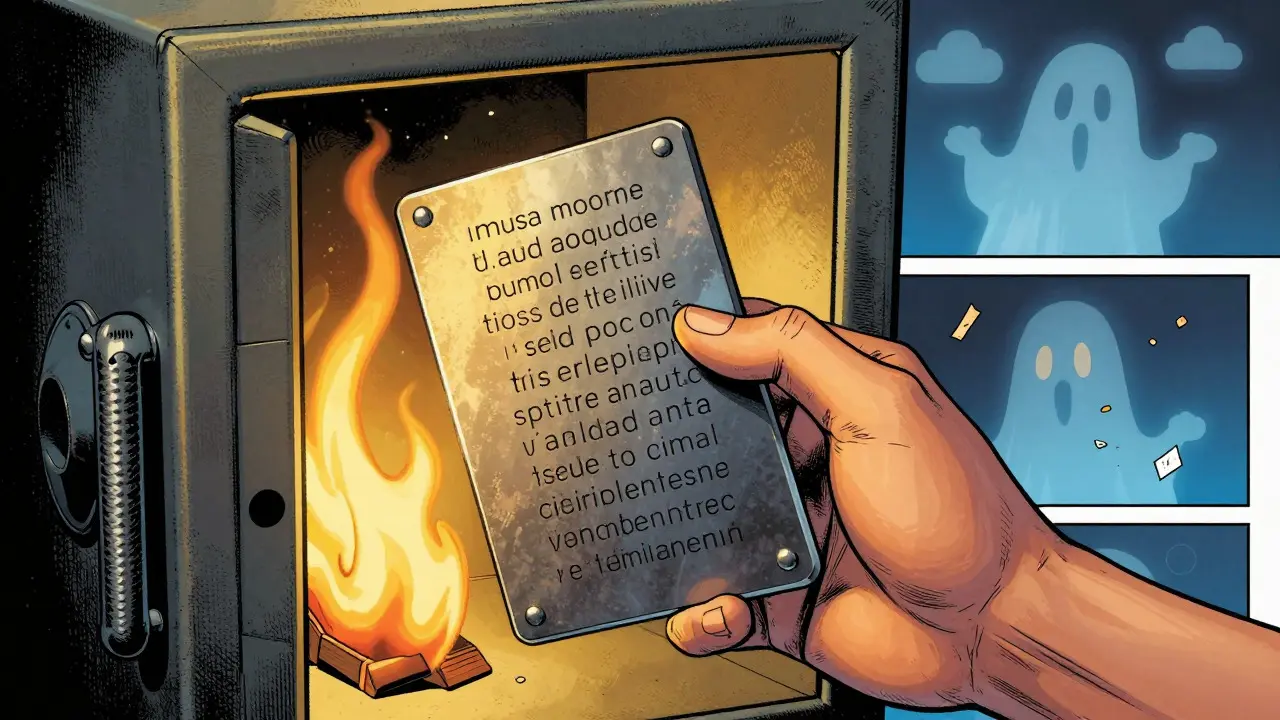
- Physical Durability: Paper burns and rots. Consider using a metal backup solution (like Cryptosteel) that can survive fire and water damage.
- Multiple Locations: Store copies in different secure locations, such as a home safe and a safety deposit box. This prevents a single disaster (like a house fire) from wiping out your access.
Treat this list of words like a deed to your house. If you lose it, the bank won’t help you. The blockchain won’t help you. You are on your own.
Advanced Protection: Multi-Signature and MPC
If you are holding significant wealth, relying on a single device-even a hardware wallet-is risky. What if the device is stolen? What if it fails? This is where Multi-Signature (Multi-Sig) wallets come in.
A multi-sig wallet requires more than one key to authorize a transaction. For example, a "2-of-3" setup means you have three keys, but you only need two to move funds. You might keep one key on a hardware wallet, one on a separate USB drive in a safe, and one with a trusted family member. To steal your money, a hacker would need to break into two separate, physically isolated locations simultaneously. The odds drop dramatically.
Another emerging technology is Multi-Party Computation (MPC). Instead of generating a single private key, MPC splits the key into shards held by different parties or devices. No single shard reveals the full key. This eliminates the single point of failure entirely. While it adds slightly higher gas fees (15-25%) and a few extra seconds to transaction times, the security boost is substantial. For high-net-worth individuals, this is becoming the standard.
Hygiene Habits: Staying Safe Online
Even the best hardware wallet can’t stop you from clicking a fake link. Human error is the biggest vulnerability. Here is how to tighten your daily habits:
- Kill SMS Two-Factor Authentication (2FA): SMS is insecure. Hackers can intercept texts via SIM-swapping attacks. Switch to an authenticator app like Google Authenticator or Authy. This reduces account takeover risk by 96%.
- Use a Dedicated Email: Create a specific email address used only for crypto exchanges and wallets. Use a strong, unique password for it. If this email gets breached, your crypto alerts go dark, giving hackers time to move funds.
- Verify Addresses Manually: Scammers often paste malicious links that look identical to legitimate ones. Before sending funds, copy the recipient address, open a new tab, and paste it into a block explorer (like Etherscan) to verify it matches what you expect. Check the first and last four characters carefully.
- Revoke Token Approvals: When you interact with DeFi apps, you often give them permission to spend your tokens. Many users forget to revoke these permissions. Use tools like Revoke.cash regularly to check for outdated approvals. The average wallet has 17 outstanding approvals, each a potential backdoor.
- Avoid Public Wi-Fi: Kaspersky reported a 47% increase in crypto attacks originating from public Wi-Fi networks in 2025. When making transactions, switch to mobile data or a trusted private network.
What Happens If You Get Hacked?
Let’s say the worst happens. You clicked a phishing link, or your laptop got infected. Speed is your only friend.
First, create a brand new wallet with a fresh seed phrase. Move any remaining funds from the compromised wallet to the new one immediately. Do not try to "clean" the old wallet; assume it is burned. Second, check your transaction history. If funds are already gone, trace them on the blockchain. While recovery is rare, some services specialize in tracking illicit flows to exchanges where assets can potentially be frozen.
Remember, the blockchain is transparent. Every movement is recorded. Thieves have to eventually cash out to make their stolen crypto useful. That exit point is where law enforcement and forensic firms intervene.
Summary Checklist for 2026
Before you sleep tonight, run through this quick audit:
- [ ] Are my long-term holdings in a hardware wallet?
- [ ] Is my seed phrase written on metal and stored in a fireproof safe?
- [ ] Have I replaced SMS 2FA with an authenticator app on all exchange accounts?
- [ ] Did I buy my hardware wallet directly from the official manufacturer?
- [ ] Have I revoked unused token approvals in the last month?
Securing your cryptocurrency isn’t about paranoia. It’s about taking responsibility. In a financial system without banks, you are the bank. Act like one.
Is a hardware wallet 100% secure?
No security measure is 100% foolproof, but hardware wallets are extremely secure. They isolate private keys from the internet, reducing the risk of remote hacking by over 99%. However, you can still lose funds if you buy a counterfeit device, fall for a phishing scam that tricks you into revealing your seed phrase, or physically lose the device and its backup.
Can I recover my crypto if I lose my seed phrase?
Generally, no. The seed phrase is the mathematical key to your funds. Without it, the blockchain has no way to prove ownership. There are no customer support teams to reset it. This is why creating multiple physical backups in secure locations is critical.
What is the difference between a hot wallet and a cold wallet?
A hot wallet is connected to the internet (like a mobile app), making it convenient but vulnerable to online attacks. A cold wallet (like a hardware device) stores keys offline, offering much higher security but slightly less convenience for frequent transactions.
Should I use SMS for two-factor authentication?
No. SMS is vulnerable to SIM-swapping attacks where hackers convince your carrier to transfer your phone number to their SIM card. Use an authenticator app (like Google Authenticator) or a hardware security key instead, which reduces takeover risk significantly.
How much crypto should I keep in a hot wallet?
Experts recommend keeping only 5-10% of your total portfolio in a hot wallet for daily use. The remaining 90-95% should be stored in cold storage or multi-signature setups to minimize exposure to online threats.