
Instant Finality in Blockchain: Speed, Security, and Trade-offs Explained
Imagine buying a coffee. You hand over cash, the barista nods, and you walk away with your drink. The transaction is done. It’s irreversible. Now imagine sending money on Bitcoin. You click send, but you can’t spend that money again until six blocks pass-roughly an hour. That waiting period isn’t just annoying; it’s a structural limitation of how most blockchains work today.
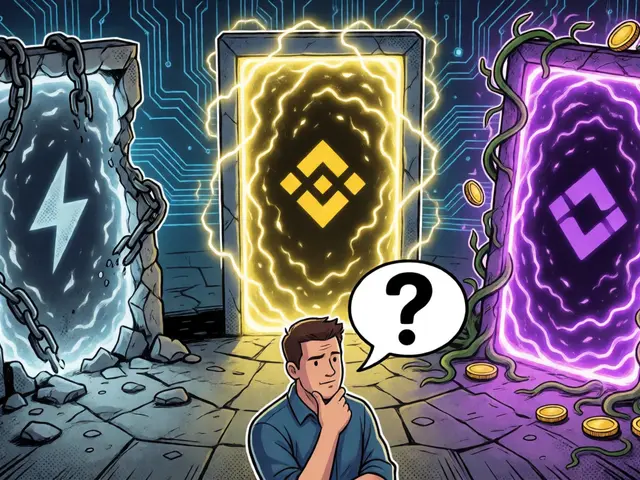
This is where instant finality changes the game. In blockchain terms, instant finality means a transaction is permanent and irreversible the moment it is confirmed by the network. There is no "waiting for more confirmations" to feel safe. Once the validators agree, the deal is sealed in stone. This concept is shifting from a niche technical feature to a requirement for real-world financial applications, high-frequency trading, and seamless user experiences.
What Is Instant Finality?
To understand instant finality, you first need to understand what it replaces: probabilistic finality. Most early blockchains, like Bitcoin and the original Ethereum, use probabilistic finality. When a transaction is included in a block, it’s not guaranteed to be permanent. It’s just likely. As more blocks are added on top of that one, the probability of the transaction being reversed drops exponentially. But it never hits zero. You’re essentially betting that no one will out-mine the rest of the network to rewrite history.
Instant finality is a consensus property where transactions achieve absolute, irreversible confirmation immediately upon validation, eliminating the need for multiple block confirmations. It relies on deterministic outcomes rather than statistical probabilities.
Think of probabilistic finality like writing with pencil. You can erase it, but it gets harder the longer you wait. Instant finality is like writing with permanent ink. Once the pen leaves the paper, it’s there forever. For users, this removes anxiety. For developers, it simplifies logic. If a transaction is final, you don’t need to build complex reversion mechanisms into your smart contracts or payment gateways.
How It Works: The Role of BFT Consensus
Instant finality doesn’t happen by magic. It requires a different type of agreement among the computers (nodes) running the network. Traditional Proof-of-Work (PoW) systems rely on miners solving puzzles. Whoever solves it first adds the block. But if two miners solve it at the same time, the chain splits. One branch eventually dies. This creates uncertainty.
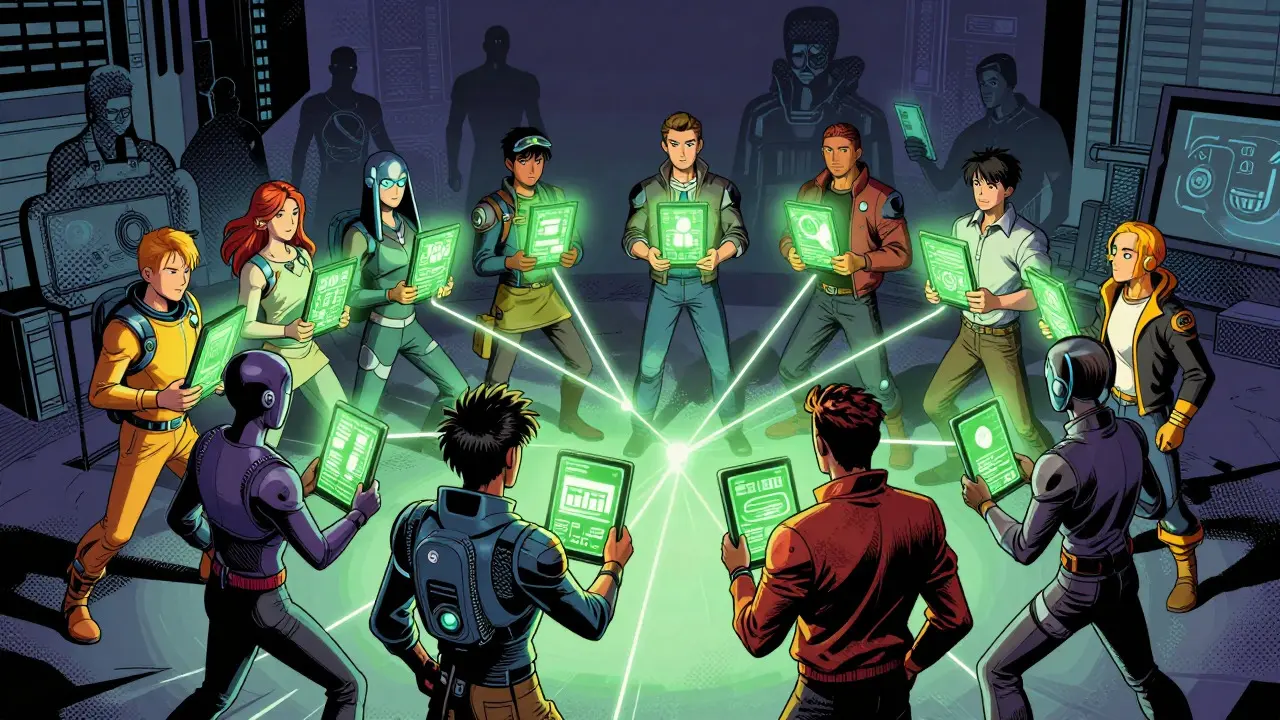
Instant finality systems typically use Byzantine Fault Tolerant (BFT) consensus protocols. In a BFT system, validators communicate directly with each other to reach a majority vote before committing a block. They don’t just add a block and hope for the best; they actively negotiate until a supermajority agrees on the exact state of the ledger.
The key constraint here is safety versus liveness. BFT protocols prioritize safety. They ensure that once a decision is made, it cannot be changed. To do this quickly, they usually require a smaller, known set of validators compared to the thousands of anonymous miners in Bitcoin. These validators often stake cryptocurrency as collateral. If they act maliciously or fail to participate, they lose their stake. This economic incentive keeps the network honest and fast.
Speed Benchmarks: Who Is Fastest?
Not all instant finality systems are created equal. The speed at which finality is achieved varies significantly based on the underlying architecture. Here is how some major networks compare as of 2026:
| Network | Consensus Type | Finality Time | Mechanism Notes |
|---|---|---|---|
| Sei Network | BFT / Twin-Turbo | < 400 milliseconds | Optimized specifically for trading; fastest recorded instant finality. |
| Avalanche | Snowball Consensus | Sub-second (< 1s) | Uses sampling to reach consensus rapidly without full communication. |
| Solana | PoH + Tower BFT | 2-5 seconds | High throughput, but finality takes a few seconds due to leader rotation. |
| Near Protocol | Nightshade Sharding | ~2 seconds | Consistent performance despite sharding complexity. |
| Cosmos (Tendermint) | Tendermint BFT | ~6 seconds | Standard for many app-chains; balances speed and decentralization. |
| Bitcoin | Proof-of-Work | ~60 minutes | Probabilistic finality; 6 confirmations considered safe for merchants. |
Notice the difference. Sei Network achieves finality in under half a second. This is critical for high-frequency trading where milliseconds matter. Bitcoin, by contrast, requires an hour for comparable security. While Bitcoin’s slowness contributes to its extreme decentralization and security against massive attacks, it makes it impractical for everyday retail payments or rapid DeFi interactions.
Why Instant Finality Matters for DeFi
Decentralized Finance (DeFi) has evolved beyond simple token swaps. Today’s applications involve complex multi-step transactions. You might want to swap Token A for Token B, then lend Token B, and finally provide liquidity with the interest earned. If any step fails, the whole process needs to revert cleanly.
With probabilistic finality, these atomic operations are risky. If the network reorganizes (reorgs) after the first step but before the last, you could end up with partial execution and lost funds. Instant finality eliminates this risk. Because the transaction is immutable upon confirmation, developers can build sophisticated financial instruments that behave like traditional banking ledgers but remain decentralized.
Furthermore, instant finality prevents double-spending attacks in real-time. In a probabilistic system, a merchant might accept a payment, but if the buyer controls enough hash power, they could reverse it later. With instant finality, once the validator set agrees, the double-spend is mathematically impossible unless more than one-third of the validators collude-a much higher barrier given the staking penalties involved.
The Trade-off: Decentralization vs. Speed
If instant finality is so great, why hasn’t everyone switched? The answer lies in the trilemma: scalability, security, and decentralization. You can only pick two.
Instant finality systems often sacrifice some degree of decentralization to achieve speed. BFT protocols work best with a limited number of validators. Why? Because every validator needs to communicate with every other validator to reach consensus. If you have 10,000 validators (like Bitcoin miners), the communication overhead becomes unmanageable. The network would stall. Therefore, instant finality chains typically operate with hundreds or low thousands of validators.
Critics argue this makes the network more vulnerable to collusion. If a small group controls the majority of stakes, they can censor transactions or manipulate the ledger. Proponents counter that economic slashing conditions (losing your stake for bad behavior) and reputation systems mitigate this risk. Additionally, many modern chains are experimenting with larger validator sets using advanced cryptographic techniques like threshold signatures to maintain speed while increasing participation.
Future Outlook: Hybrid Models and Layer 2s
The industry is moving toward a hybrid approach. Base layers like Bitcoin and Ethereum may retain their probabilistic models for maximum security and decentralization. However, Layer 2 solutions built on top of them are adopting instant finality mechanisms. For example, optimistic rollups assume validity but allow challenges, while zk-rollups prove validity instantly. Both aim to give users the feel of instant finality while anchoring security to the slower base layer.
Newer chains are launching with instant finality as their default. As enterprise adoption grows, businesses will demand the certainty of immediate settlement. You won’t see a supply chain company waiting an hour to verify a shipment payment. The market pressure is pushing the entire ecosystem toward faster, deterministic outcomes.
Is instant finality safer than probabilistic finality?
Safety depends on the threat model. Instant finality provides immediate irreversibility, protecting against short-term reorgs and double-spends. Probabilistic finality offers long-term security through massive computational cost. For most user transactions, instant finality is safer because it removes uncertainty. For storing vast amounts of value over decades, probabilistic systems like Bitcoin are often preferred due to their broader decentralization.
Can Bitcoin achieve instant finality?
Not natively. Bitcoin’s Proof-of-Work design inherently relies on probabilistic finality. However, Layer 2 solutions like the Lightning Network can offer near-instant finality for off-chain transactions, though closing channels still requires on-chain settlement which remains probabilistic.
What is the role of validators in instant finality?
Validators are responsible for proposing blocks and voting on their validity. In BFT systems, they must reach a supermajority consensus (usually 2/3+) before a block is finalized. They stake assets as collateral, which is slashed if they act maliciously or fail to participate, ensuring network integrity.
Why does Sei Network claim sub-400ms finality?
Sei uses a specialized consensus mechanism called Twin-Turbo, optimized for trading. It reduces the communication steps required between validators and processes transactions in parallel, allowing it to finalize blocks faster than general-purpose blockchains.
Does instant finality mean higher fees?
Not necessarily. Fees depend on network congestion and gas pricing models. Many instant finality chains are designed for high throughput, which can keep fees low even during peak usage. However, the operational costs for validators might differ from PoW mining costs.