OFAC Sanctions and Iranian Crypto Access: The 2026 Reality
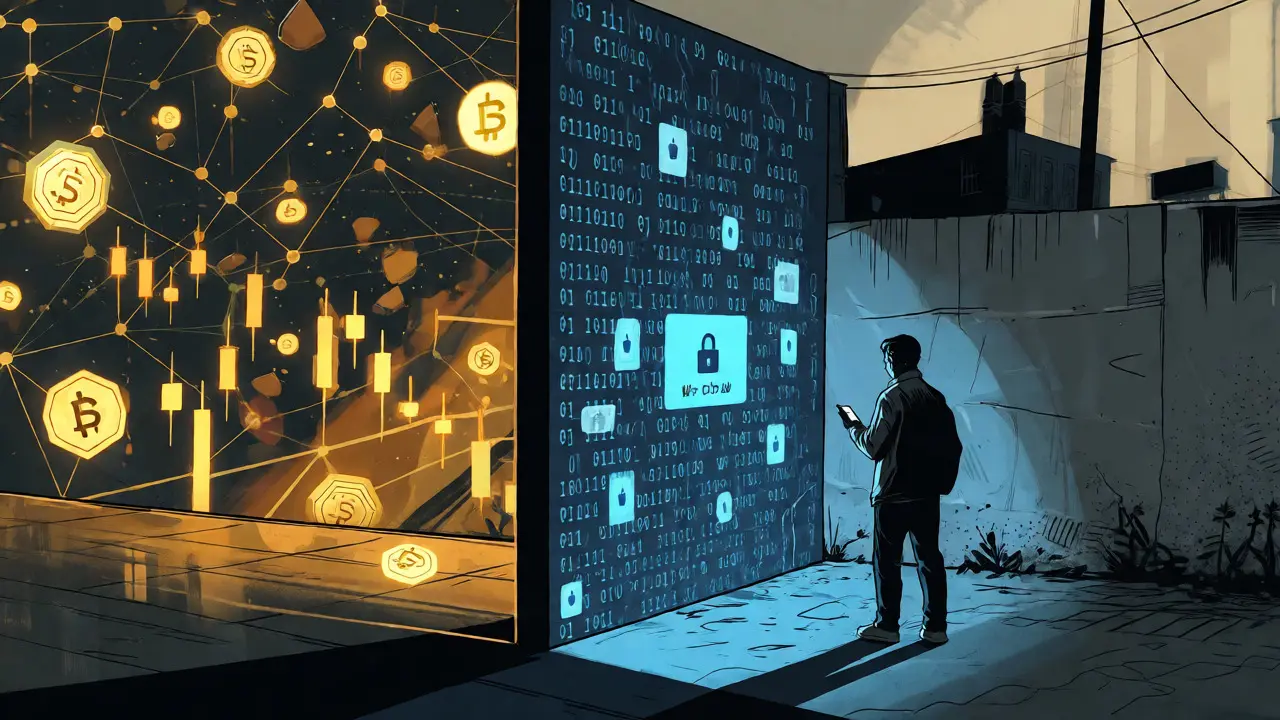
Imagine trying to buy a coffee with a credit card that works everywhere except your own neighborhood. That is the daily reality for many Iranian users navigating the global cryptocurrency market in 2026. While blockchain technology promises borderless finance, the Office of Foreign Assets Control (OFAC) has built a digital wall around Iran’s financial ecosystem. This isn't just about politics; it's a technical cat-and-mouse game where wallet addresses are tracked like license plates on stolen cars. If you are an investor, a developer, or just curious about why your Iranian friend can’t trade on Binance, understanding this dynamic is crucial.
The Evolution of OFAC’s Digital Watchlist
For years, sanctions were vague lists of names and companies. But since 2015, OFAC has shifted gears. They realized that traditional banking blocks weren't enough when money started flowing through code. The turning point came in November 2018. That month, the Treasury Department did something unprecedented: they published specific Bitcoin addresses linked to sanctioned individuals involved in the SamSam ransomware attacks. These weren't just names; they were cryptographic strings like 1BvBMSEYstWetqTFn5Au4m4GFg7xJaNVN2. Suddenly, every exchange had to screen these exact alphanumeric codes. It signaled that OFAC wasn't just guessing anymore-they were leveraging the transparency of the blockchain against itself.
This shift changed how compliance teams work. Before, checking a name was easy. Now, exchanges must monitor millions of transactions per second, comparing sender and receiver addresses against a growing database of sanctioned wallets. For Iranian users, this means their digital footprint is permanently visible. Even if they move funds through multiple hops, sophisticated analytics tools can often trace the lineage back to a designated address.
The $600 Million Shadow Network
Sanctions evasion isn't just about small-time traders dodging fees. In September 2025, OFAC dismantled a massive shadow banking network worth $600 million. This wasn't a few guys in basements; it was a sophisticated web involving entities in Hong Kong, the UAE, and China. The core mission? Laundering over $100 million in oil proceeds for Iran’s military apparatus, specifically the Islamic Revolutionary Guard Corps-Qods Force (IRGC-QF).
How did they do it? By mixing old-school front companies with new-school crypto rails. Companies like Shenzhen Jiasibo Technology Co. supplied dual-use military goods, while Alpha Trading Co. in Hong Kong acted as both a procurement agent and a financial hub. Then, Blue Sky General Trading LLC in Dubai funneled the money, using the emirate’s commercial status to shield the ultimate beneficiaries. Cryptocurrency was the glue holding this together, allowing value to jump across borders without touching the SWIFT banking system.
| Entity Name | Location | Primary Role | Crypto Function |
|---|---|---|---|
| Shenzhen Jiasibo Technology Co. | China | Dual-use goods supplier | Value transfer via mislabeled invoices |
| Alpha Trading Co. | Hong Kong | Procurement & Financial Hub | On-ramp/off-ramp coordination |
| Blue Sky General Trading LLC | UAE (Dubai) | Financial intermediary | Fund funneling and shielding |
| Arash Estaki Alivand | Iran-linked | Individual facilitator | Wallet management (ETH/TRON) |
Exchange Compliance: The Cost of Doing Business
If you think ignoring sanctions is free, ask ShapeShift AG. In September 2025, the former crypto-pioneer agreed to pay $750,000 to settle potential civil liability. Their mistake? Allowing users from Cuba, Iran, Sudan, and Syria to exchange approximately $12.5 million in digital assets between 2019 and 2021. ShapeShift operated as a counterparty for 79 different digital assets, processing roughly 20,000 transactions daily. They failed to implement adequate geo-blocking and screening protocols.
This settlement sent a shockwave through the industry. It established a precedent: ignorance is not a defense. Exchanges now know that failing to screen for Iranian IP addresses or sanctioned wallet interactions carries significant financial risk. Major platforms have responded by implementing aggressive geo-fencing. If your traffic originates from Tehran, you likely won't even see the trading interface. You’ll get a generic "service unavailable" message, leaving you wondering if the site is down or if you’re blocked.
The Whack-a-Mole Game: Successor Exchanges
When OFAC strikes, the ecosystem adapts. A prime example occurred in March 2025. After U.S. law enforcement targeted Garantex, officers immediately created a new platform called Grinex. This wasn't a coincidence; it was a calculated move to continue serving sanctioned customers. Promotional materials for Grinex explicitly stated it was formed in response to the asset freezes affecting Garantex.
Customers transferred their deposits to Grinex, regaining access through the A7A5 token, a ruble-backed digital asset issued by a Kyrgyzstani firm. This cycle-sanction, shutdown, rebrand, resume-is exhausting for regulators but lucrative for evaders. It highlights a fundamental weakness in centralized enforcement: as long as there is demand for anonymous access, someone will build a platform to meet it, often in jurisdictions with loose regulatory oversight.
Technical Enforcement: Tracking Wallet Addresses
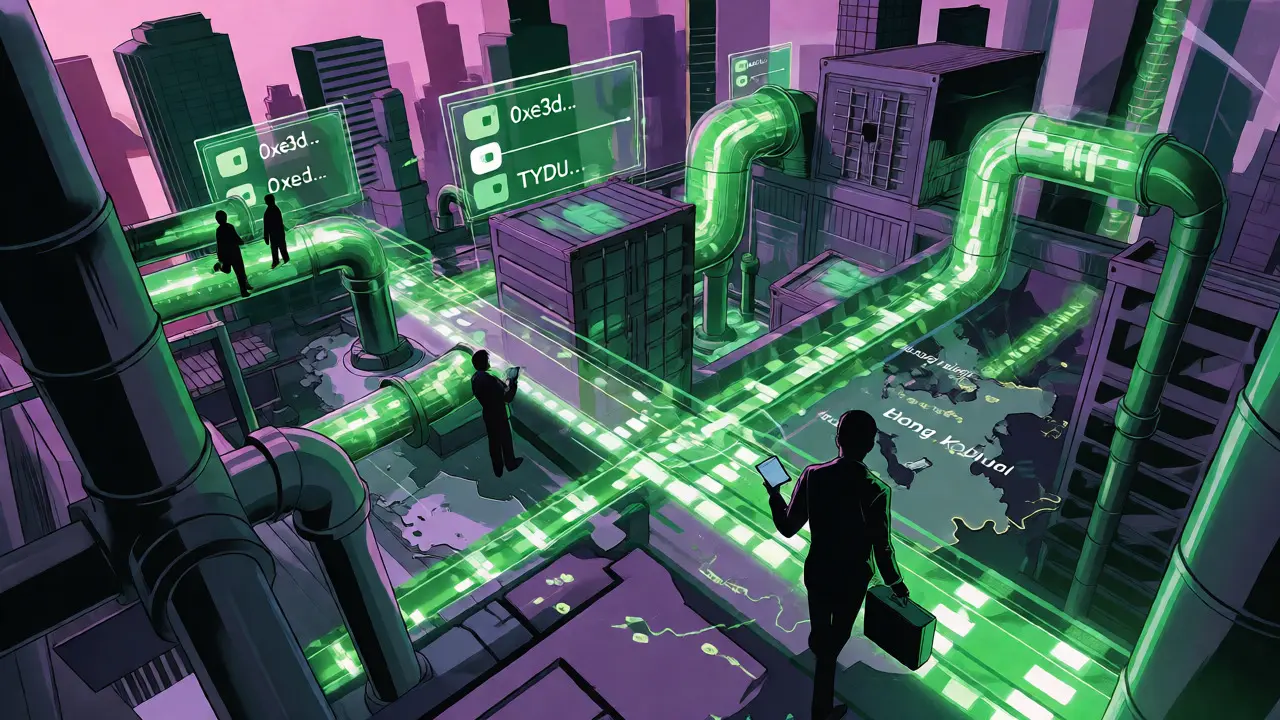
OFAC doesn't just sanction people; they sanction code. In the September 2025 action against Arash Estaki Alivand, the Treasury designated five specific cryptocurrency addresses. Two were Ethereum addresses, such as 0xe3d35f68383732649669aa990832e017340dbca5, and three were Tron addresses, including TYDUutYN4YLKUPeT7TG27Yyqw6kNVLq9QZ.
Why does this matter? Because most mainstream exchanges integrate directly with OFAC’s Specially Designated Nationals (SDN) list. When a user attempts to withdraw USDT (Tether) to one of these addresses, the transaction is automatically flagged and blocked. This creates a permanent record. Unlike cash, which disappears into a pocket, a sanctioned wallet address remains tagged forever. Any future interaction with that address raises red flags for compliance algorithms, making it increasingly difficult for Iranian users to exit to fiat currency through major channels.

Life Outside the Mainstream: P2P and Privacy Coins
So, where do Iranian users go when Coinbase and Kraken lock them out? They migrate to the shadows. Peer-to-peer (P2P) trading platforms have seen a surge in usage. Here, buyers and sellers negotiate directly, often using local bank transfers or gift cards to settle trades. The platform acts merely as an escrow service, reducing the need for direct KYC checks on every single transaction.
Additionally, privacy-focused cryptocurrencies like Monero (XMR) remain popular. Unlike Bitcoin, where the entire history is public, Monero obscures the sender, receiver, and amount. This makes tracing significantly harder for OFAC analysts. However, this comes at a cost. Liquidity is lower, spreads are wider, and finding a trustworthy counterparty takes more time. You’re trading convenience and speed for anonymity.
The Future of Sanctions Enforcement
We are entering an era where artificial intelligence plays a central role in compliance. Blockchain analytics firms are deploying machine learning models to detect patterns indicative of sanctions evasion. Instead of just matching addresses, these systems analyze transaction velocity, clustering behavior, and counterparty reputation. If a wallet suddenly receives large volumes of stablecoins from known Iranian mixers and then disperses them to hundreds of fresh addresses, the AI flags it as high-risk.
For the average user, this means the net is tightening. Decentralized Finance (DeFi) protocols, once thought to be immune to regulation, are facing pressure. Front-end interfaces for DEXs (Decentralized Exchanges) are increasingly blocking sanctioned IPs. While the underlying smart contracts on Ethereum or Solana cannot technically stop a transaction, the user experience is being gated. If you can’t load the website, you can’t trade, regardless of what the blockchain says.
Practical Implications for Investors and Users
If you interact with Iranian counterparties, due diligence is non-negotiable. Always check if a wallet address appears on the OFAC SDN list before sending funds. Use tools provided by Chainalysis or Elliptic, which offer real-time API access to these lists. For businesses, integrating automated screening into your withdrawal process is essential to avoid fines similar to ShapeShift’s.
For Iranian residents, the strategy is diversification. Relying on a single exchange is risky because bans can happen overnight. Maintaining funds in self-custody wallets, using hardware devices, and having multiple P2P contacts provides resilience. Remember, the goal isn't just to hold crypto; it's to maintain access to liquidity when you need to convert back to local currency.
Can I send crypto to an Iranian wallet address?
Technically, yes. The blockchain does not recognize national borders. However, if the receiving address is listed on the OFAC SDN list, most major exchanges will block the outgoing transaction. If you use a personal wallet, the transaction will complete, but you may face scrutiny from your own bank if you later try to off-ramp those funds.
What happens if my exchange account is frozen due to sanctions?
Your funds are typically held in limbo. You cannot withdraw them until you provide proof that you are not a sanctioned entity. This process can take months. In some cases, exchanges may require legal documentation proving residency outside of restricted zones or demonstrating that the source of funds was unrelated to sanctioned activities.
Are decentralized exchanges (DEXs) safe from OFAC sanctions?
The smart contracts themselves are censorship-resistant, meaning no one can stop the code from executing. However, the front-end websites that connect your wallet to the contract can block your IP address. Furthermore, if you interact with a sanctioned liquidity pool or token contract, you might inadvertently violate terms of service or trigger compliance alerts on your connected wallet provider.
Which cryptocurrencies are most affected by Iranian sanctions?
Stablecoins like Tether (USDT) and USD Coin (USDC) are heavily monitored because issuers can freeze tokens at the protocol level. Bitcoin and Ethereum are also tracked closely due to their transparent ledgers. Privacy coins like Monero are less easily traced but suffer from lower liquidity and higher volatility, making them less ideal for large-scale settlements.
How do sanctions affect Iranian miners?
Mining rewards are generally paid to a wallet address. If that address is clean, the miner receives the funds. However, selling those rewards becomes difficult. Miners often struggle to find exchanges willing to onboard them due to compliance risks. Many resort to bartering electricity for goods or using smaller, less regulated markets, which reduces their overall profitability compared to global peers.