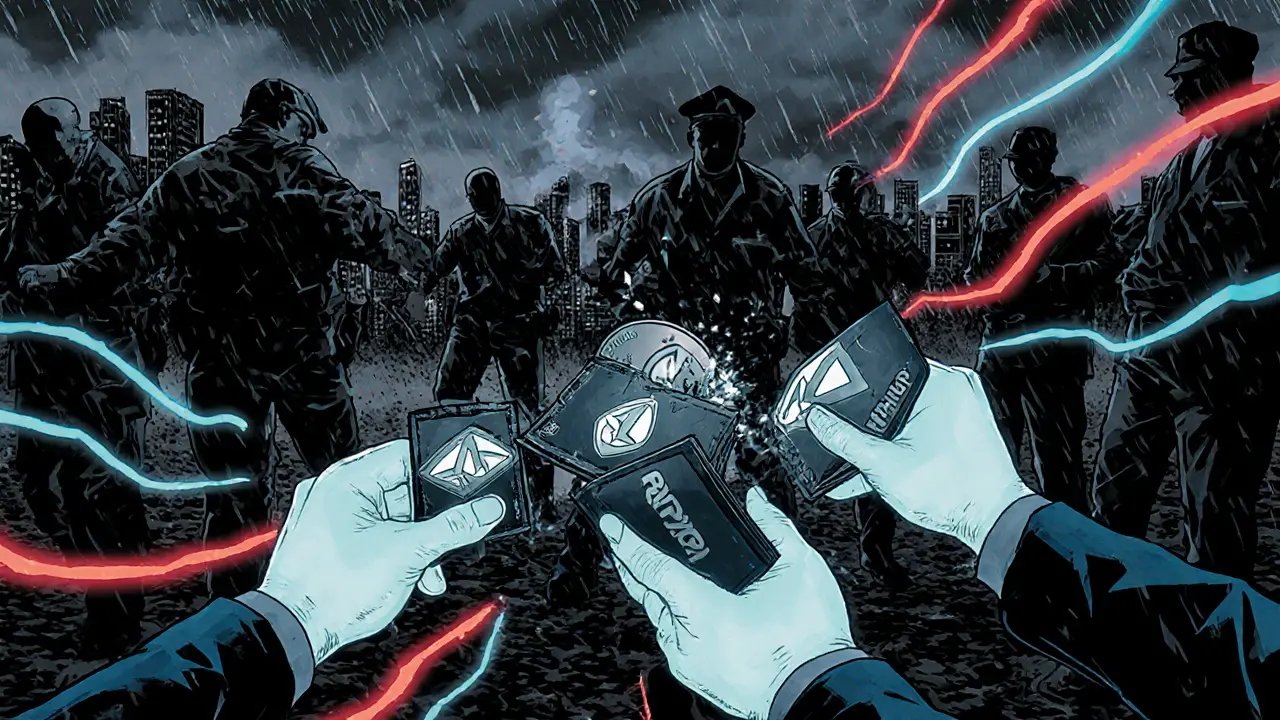
RCMP Crypto Raid: What Happened and How It Changed Crypto Enforcement
When the RCMP crypto raid, a major law enforcement operation by Canada's Royal Canadian Mounted Police targeting cryptocurrency-related activities made headlines in 2023, it wasn’t just another seizure. It was a turning point. For the first time, Canadian authorities didn’t just go after a shady exchange—they dug into wallets, traced blockchain transactions, and froze assets linked to suspected money laundering and fraud. This wasn’t a drill. It sent shockwaves through every crypto user in Canada who thought they were anonymous.
The raid targeted a group using crypto to move funds tied to illegal marketplaces and unregistered platforms. What made it stand out? The RCMP didn’t rely on tips alone. They used on-chain analysis tools to follow digital trails that led from wallet to wallet, even across borders. This showed that blockchain investigation, the practice of tracking cryptocurrency movements using public ledger data to uncover illicit activity had matured. It’s no longer science fiction. It’s standard procedure. And it’s not just Canada. The U.S. Treasury, Europol, and Australia’s AFP have all ramped up similar efforts. But the RCMP raid was the first in Canada to go this public, this aggressive, and this technically precise.
What did they find? Cash, hardware wallets, and a trail of transactions pointing to a network that used decentralized exchanges to avoid KYC checks. They seized over $12 million in crypto assets—mostly Bitcoin and Ethereum—along with laptops and server logs. The message was clear: if you’re using crypto to hide money, the trail doesn’t disappear. Even if you think you’re using a privacy coin or mixing service, forensic tools can still piece together the puzzle. This is why crypto enforcement, the systematic use of legal and technical tools by authorities to combat illegal cryptocurrency activity is now a global priority. It’s not about cracking down on innovation. It’s about stopping criminals who abuse the system.
And it’s changed how people behave. After the raid, Canadian crypto users started asking tougher questions: Is this exchange regulated? Do they report to FINTRAC? Are my funds really mine? Platforms that ignored compliance saw traffic drop. Those that added KYC and AML checks saw trust grow. The Canadian crypto regulation, the legal framework governing cryptocurrency exchanges and transactions in Canada, enforced by FINTRAC and the RCMP didn’t change overnight—but the enforcement did. And that’s what matters.
You’ll find posts here that break down the tools used in the raid, the exchanges that got flagged, and how similar cases unfolded elsewhere. Some cover the tech behind tracing crypto. Others warn you about platforms that still operate in the gray zone. This isn’t a list of scams—it’s a map of what happens when law enforcement catches up to crypto. Read them. Know what’s real. Know what’s risky. And don’t let ignorance be your biggest vulnerability.