
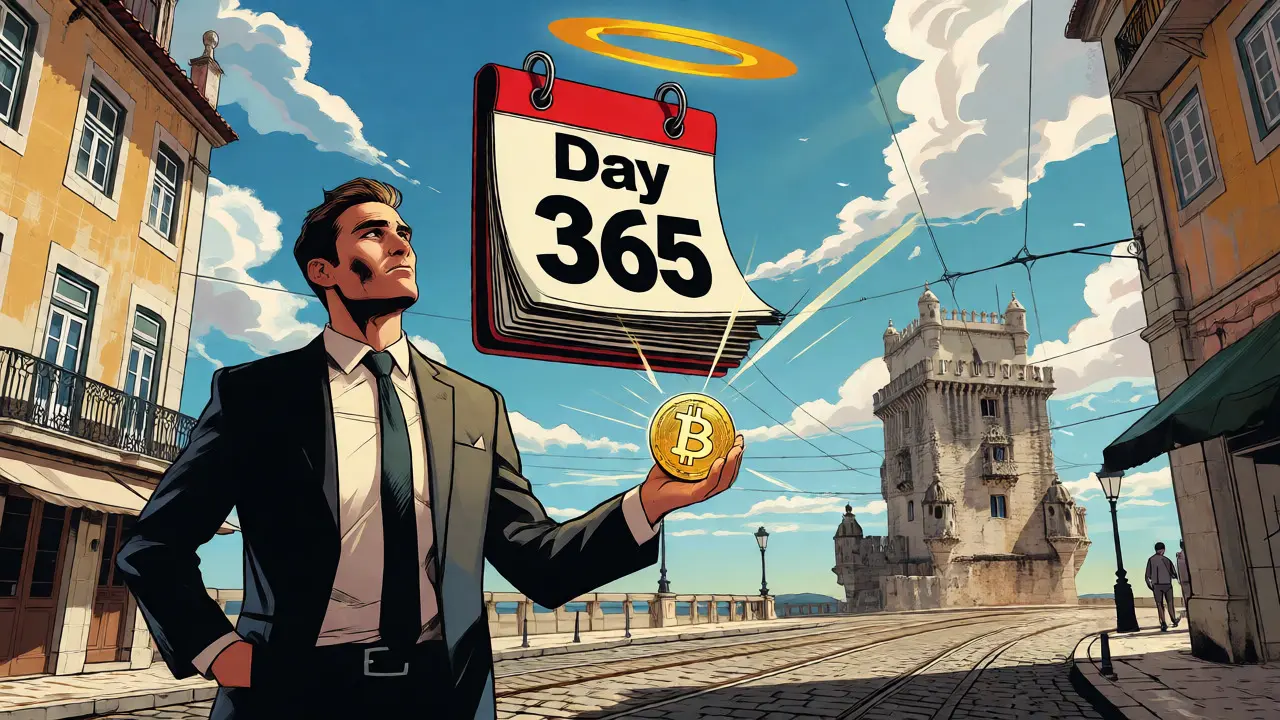
Tax-Free Long-Term Crypto Gains in Portugal: The 365-Day Rule
Did you know that selling Bitcoin after a year of holding it can legally result in zero tax liability in one of Europe's most popular jurisdictions? For years, Portugal was the undisputed haven for crypto investors, offering a blanket exemption on all gains. That changed in 2023, but not in the way many feared. While the government introduced taxation, they preserved a crucial loophole for patient investors: long-term capital gains from cryptocurrency held for more than 365 days remain completely tax-free. This distinction has reshaped how digital asset holders approach their portfolios in the Iberian Peninsula.
If you are planning to move to Portugal or already live there, understanding this rule is non-negotiable. It’s not just about saving money; it’s about structuring your trades to align with Portuguese law. The country shifted from a "no tax" model to a nuanced system that rewards long-term holding while taxing active trading. This article breaks down exactly how the 365-day rule works, what counts as taxable income, and how you can navigate the new landscape without getting caught out by unexpected bills.
The Big Shift: From Zero Tax to Targeted Exemption
Before 2023, Portugal was famous for its lack of specific crypto regulations, effectively making it a tax-free zone for individual investors. You could buy, sell, and trade daily, and keep 100% of your profits. The State Budget (Orçamento de Estado) for 2023 ended that era. However, the new rules didn't impose a blanket tax. Instead, they created a dual-tier system based on time.
The core principle is simple: if you hold a crypto asset for less than a year, you pay tax. If you hold it for more than a year, you don’t. This policy aims to discourage speculative day-trading while encouraging stable investment. It places Portugal in direct competition with Germany, which offers similar long-term exemptions, while leaving countries like France and Italy behind with their higher, uniform rates.
| Country | Short-Term Holding (<1 Year) | Long-Term Holding (>1 Year) | Notes |
|---|---|---|---|
| Portugal | 28% Flat Rate | 0% (Tax-Free) | Applies to private investors; excludes securities-like tokens. |
| Germany | Personal Income Tax Rate | 0% (Tax-Free) | Exemption applies if held >1 year and total gains <€600/year. |
| France | 30% Flat Tax (PFU) | 30% Flat Tax (PFU) | No benefit for long-term holding. |
| Spain | 19-28% Progressive | 19-28% Progressive | Higher rates for larger gains; no time-based exemption. |
| Italy | 26% | 26% | Applies to holdings above €2,000 threshold. |
Decoding the Three Categories of Crypto Income
To understand why some gains are taxed and others aren't, you need to look at how the Portuguese Personal Income Tax Code (PIT Code) classifies crypto activities. The tax authority doesn't view all crypto transactions equally. They split them into three distinct categories, each with different tax implications.
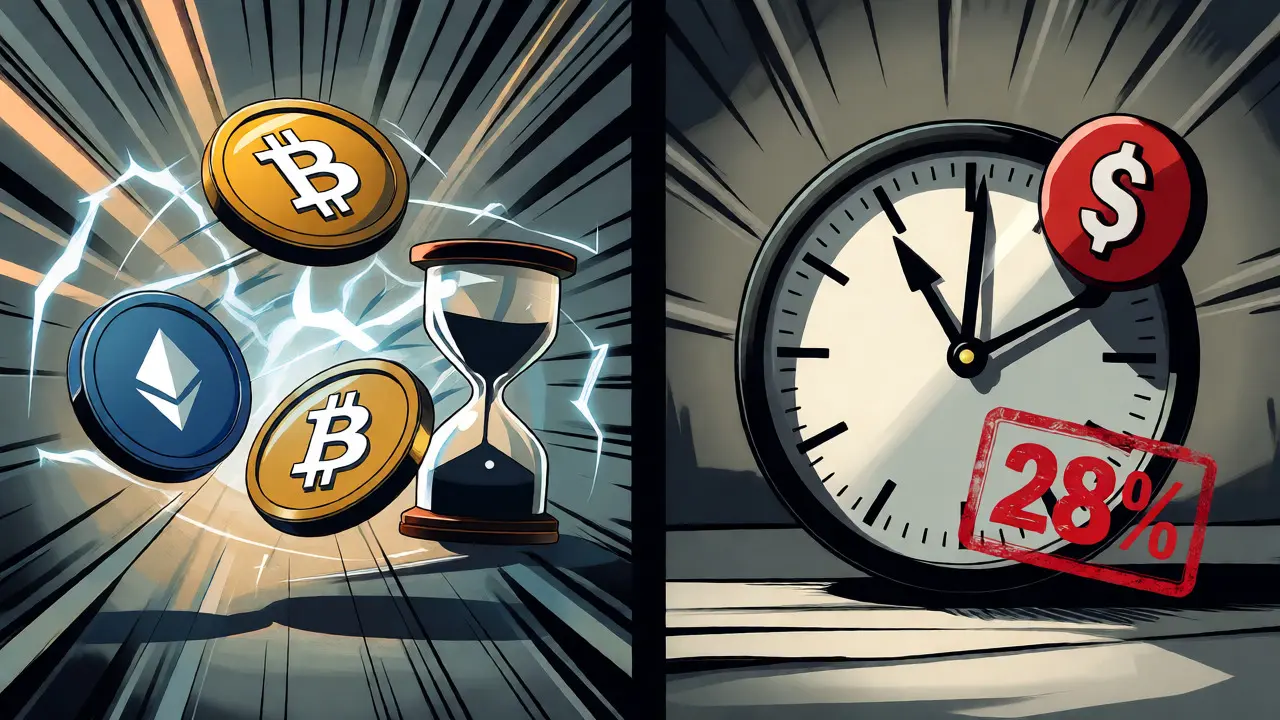
Category E (Capital Income) covers passive earnings. This includes staking rewards, lending interest, and other yield-generating activities. These are taxed at a flat rate of 28%. There is no time-based exemption here. If you earn staking rewards, you owe tax on them regardless of how long you've held the underlying asset.
Category G (Capital Gains) is where the magic happens for long-term holders. This category covers profits made from selling crypto assets. If you sell a token you bought less than 365 days ago, you pay 28% on the profit. But if you wait until day 366, the gain is exempt from personal income tax. This exemption assumes the asset is a standard cryptocurrency, not a security, and that the transaction occurred within the European Economic Area (EEA).
Category B (Self-Employment Income) applies to professional traders, miners, and validators. If the tax authorities determine you are acting as a business rather than a private investor, your income falls under progressive tax brackets ranging from 14.5% to 53%. There is no long-term exemption for Category B income. Defining yourself as a private investor versus a professional trader is critical, though the line can be blurry depending on trading frequency and volume.
The 365-Day Rule: Mechanics and Pitfalls
The 365-day rule sounds straightforward, but implementation requires precision. The clock starts ticking on the date you acquire the asset. You must prove this date with clear records. When you sell, you convert the crypto into fiat currency (like Euros) or use it to buy goods and services. This event triggers the tax assessment.
Here is where many investors get tripped up: crypto-to-crypto swaps. In Portugal, swapping one cryptocurrency for another (e.g., Bitcoin for Ethereum) is generally not considered a taxable event. The holding period continues uninterrupted. If you swap BTC for ETH, you do not reset the 365-day counter. The acquisition date of the original BTC carries over to the ETH. This allows you to rotate portfolios without triggering short-term taxes, provided you eventually cash out to fiat after the year mark.
However, caution is needed with assets classified as securities. If a token is deemed a security by regulators, the long-term exemption might not apply, or different rules may govern it. Additionally, keeping assets outside the EEA can complicate matters, potentially disqualifying them from certain exemptions or requiring specific reporting.
Staking, Mining, and DeFi Rewards
While capital gains enjoy the long-term exemption, income streams do not. Staking rewards, liquidity mining payouts, and airdrops are typically treated as Category E income. They are taxed at 28% when received. This creates a strategic consideration: should you reinvest these rewards immediately?
If you receive staking rewards and sell them instantly, you pay tax on that value. If you hold them, the future sale of those tokens will be subject to the capital gains rules. So, if you hold the reward tokens for over a year before selling, the appreciation *after* receipt is tax-free, but the initial value upon receipt was already taxed as income. This double-layer taxation requires careful tracking. Many investors choose to accept the 28% hit on rewards to maintain a clean portfolio structure, while others optimize by timing their disposals.
Compliance and Record Keeping
You cannot claim the tax-free status without proof. The Portuguese tax authority, known as Autoridade Tributária e Aduaneira (AT), requires detailed documentation. You need to log every transaction: date, time, asset type, quantity, purchase price, and sale price. Without this data, the AT may default to assuming short-term holdings or apply estimated values unfavorable to you.
Specialized software like CoinTracking or Koinly helps automate this process. These tools import data from exchanges via API, calculate holding periods, and generate reports compliant with Portuguese standards. Remember, the burden of proof is on you. If you claim a gain is tax-free because it was held for over a year, you must show the acquisition record. Missing records can lead to audits and penalties, even if your intent was honest.

MiCA Regulation and Future Outlook
As we move through 2026, the European Union's Markets in Crypto-Assets (MiCA) regulation plays a significant role. MiCA harmonizes definitions and consumer protections across the EU, including Portugal. While MiCA doesn't directly set tax rates, it clarifies what constitutes a crypto asset versus an electronic money token or asset-referenced token. This clarity helps define which assets qualify for Portugal's long-term exemption.
Portugal remains committed to attracting crypto talent and businesses. The government understands that aggressive taxation drives innovation away. By maintaining the 365-day exemption, they balance revenue needs with competitiveness. Expect further guidance on emerging technologies like Layer-2 solutions and Central Bank Digital Currencies (CBDCs), but the core principle-rewarding patience-is likely to stick.
Strategic Takeaways for Investors
- Wait it out: If possible, hold assets for at least 365 days before converting to fiat to eliminate capital gains tax.
- Track everything: Use reliable software to maintain an immutable audit trail of acquisition dates.
- Distinguish income vs. gains: Pay 28% on staking/mining rewards immediately; save the 0% rate for asset sales.
- Watch the classification: Ensure your activity profile fits "private investor" criteria to avoid progressive Category B taxation.
- Leverage swaps: Use crypto-to-crypto trades to rebalance without resetting the holding period clock.
Portugal's system isn't perfect, but for the disciplined holder, it remains one of the most attractive regimes in the world. It rewards those who think long-term, both in their investment strategy and their tax planning.
Do I have to pay tax if I swap Bitcoin for Ethereum?
Generally, no. In Portugal, exchanging one cryptocurrency for another is not considered a taxable event. The holding period of the original asset carries over to the new asset. You only trigger a tax event when you convert crypto to fiat currency (like EUR) or use it to purchase goods/services.
What is the tax rate for crypto held for less than a year?
Profits from selling cryptocurrency held for less than 365 days are subject to a flat tax rate of 28%. Alternatively, taxpayers can choose to include these gains in their total annual income, which would be taxed according to the progressive personal income tax brackets (ranging from 14.5% to 53%). Most people find the flat 28% rate more advantageous unless their total income is very low.
Are staking rewards tax-free in Portugal?
No, staking rewards are not tax-free. They are classified as Capital Income (Category E) and are taxed at a flat rate of 28% at the moment they are received. The long-term exemption applies only to capital gains from the sale of assets, not to the income generated by holding them.
Does the 365-day rule apply to NFTs?
The treatment of Non-Fungible Tokens (NFTs) can be complex. Unique NFTs are often not considered standard crypto assets for tax purposes and may fall under different rules, such as personal property or hobbyist collection laws. It is advisable to consult a local tax specialist for specific NFT transactions, as the blanket crypto rules may not fully apply.
How does Portugal compare to Germany for crypto taxes?
Both countries offer tax exemptions for crypto held longer than one year. However, Germany has a small annual exemption limit (€600) for short-term gains, whereas Portugal uses a flat 28% rate for short-term gains without a small exemption threshold. Portugal's system is often seen as simpler for high-volume traders due to the flat rate, while Germany's progressive rates might benefit lower-income earners with small gains.





Bro, this is the sign I needed to finally stop panic selling and just HODL for a year straight. Patience really does pay off in crypto land.