What Are Platform Cryptocurrencies: A Practical Guide to Ethereum, Solana, and More
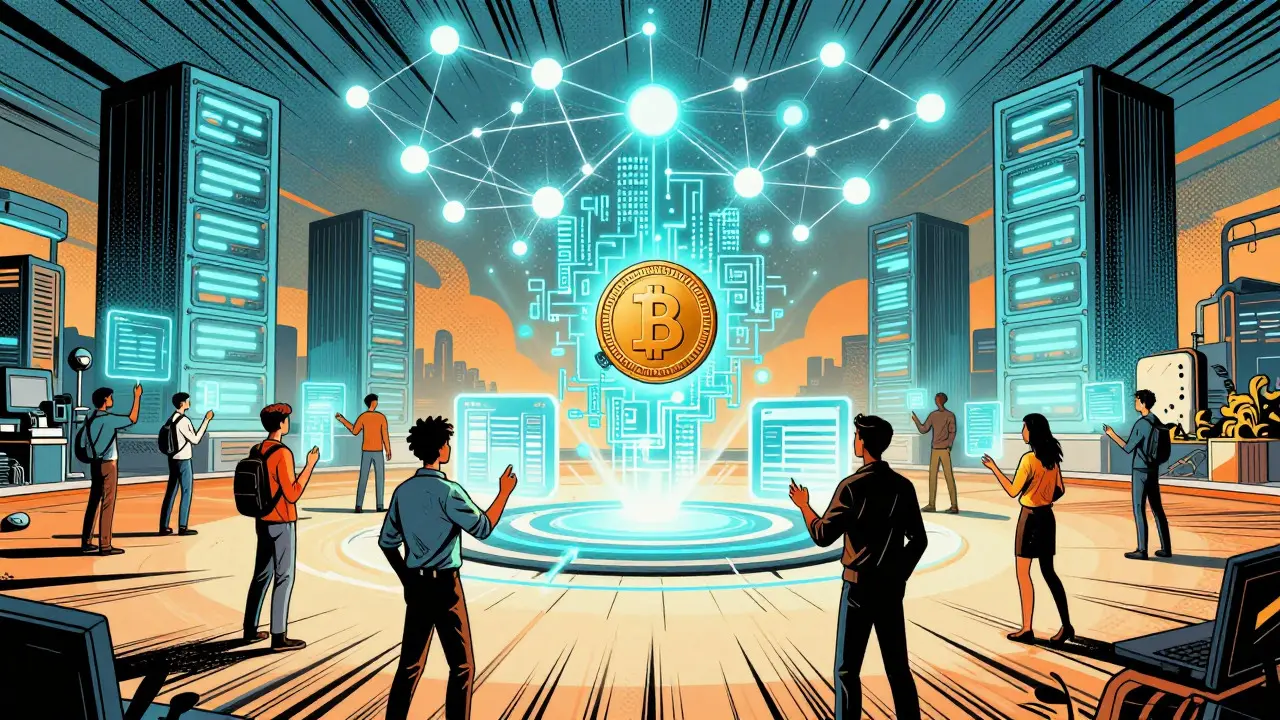
Imagine you want to build a lending app where users borrow money without asking a bank for approval. You don't need a server farm, a legal team, or a central administrator. You just need code that runs automatically on a shared network. That is exactly what platform cryptocurrencies allow developers to do.
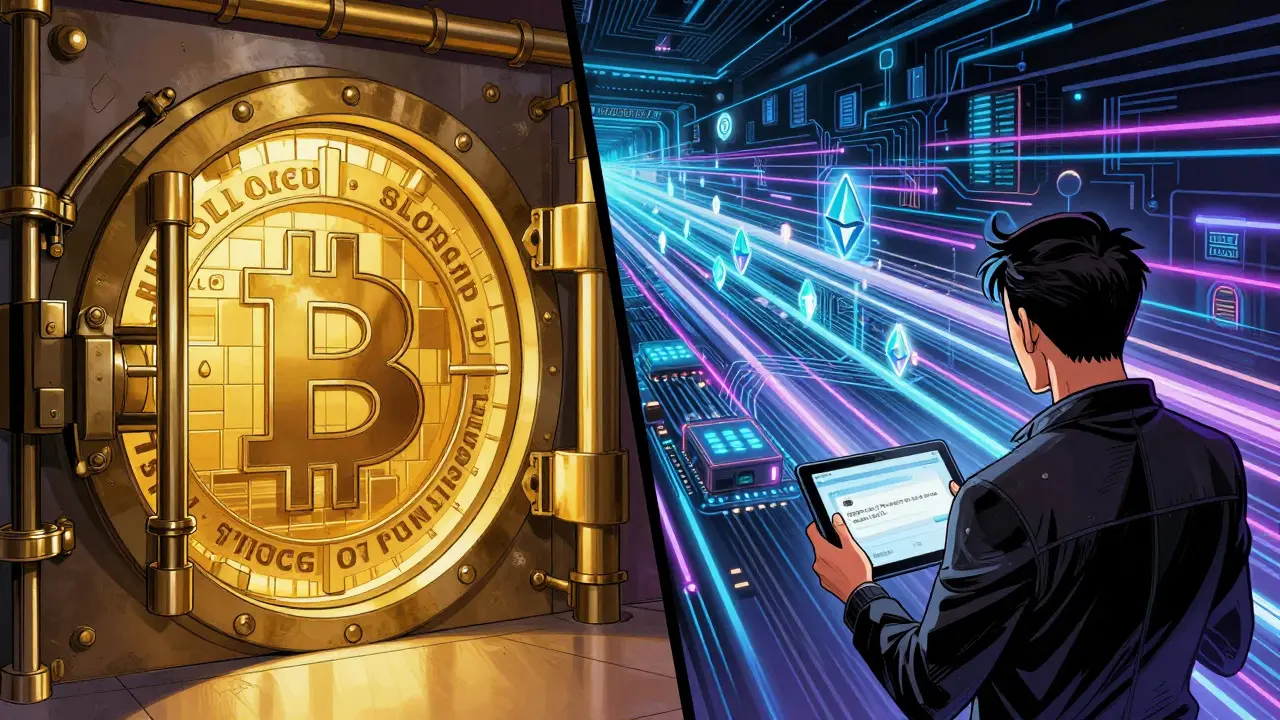
If you have heard of Bitcoin, you know it is primarily a digital cash system. It moves value from person to person securely. But platform coins go further. They are the native fuel for entire ecosystems where software can run without a company in charge. This article breaks down what these networks are, how they work under the hood, and why they matter if you are interested in building or investing in the next generation of web technology.
The Core Difference: Payment vs. Platform
To understand platform assets, you first have to look at what they are not. Traditional payment cryptocurrencies like Bitcoin are designed for one main job: transferring value. Think of them as digital gold or fast wire transfers. The network's primary goal is security and scarcity.
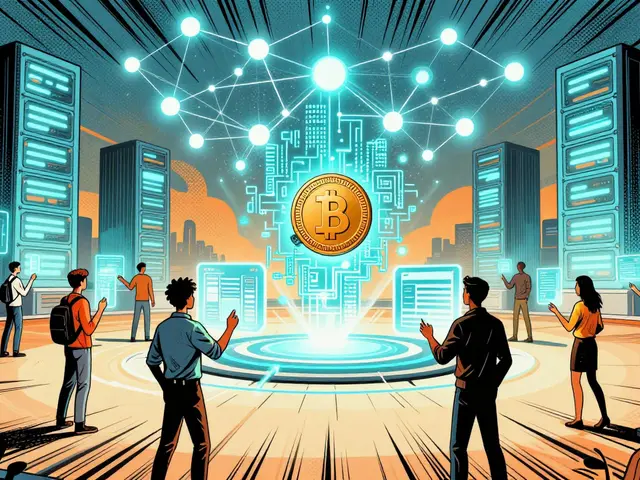
Platform cryptocurrencies are digital assets that serve as the native currency of decentralized networks designed to support complex applications beyond simple payments. These networks host smart contracts, which are self-executing pieces of code that carry out agreements when specific conditions are met. Because the code lives on a public ledger, no single party can cheat the system or change the rules unilaterally.
This distinction creates two different types of value:
- Store of Value: Assets like Bitcoin focus on holding wealth over time.
- Utility & Execution: Platform tokens like Ether (ETH) or Solana (SOL) focus on paying for computation, storage, and security within an application ecosystem.
When you use a platform coin, you aren't just sending money. You are often triggering a function-like swapping tokens, minting a digital collectible, or securing a loan.
How the Architecture Works
At its heart, a platform cryptocurrency runs on blockchain technology, a decentralized ledger that records transactions across a peer-to-peer network without a central clearing authority. However, unlike simpler chains, these platforms are built to handle state changes. In computing terms, "state" means the current condition of the system-who owns what, how much gas is left, and which contracts are active.
Here is the technical flow of a transaction on a platform network:
- Broadcast: A user sends a transaction from their wallet. This includes data about what they want to do (e.g., "swap 1 ETH for 50 USDC").
- Validation: Network nodes pick up the transaction. They check if the user has enough funds and if the code logic is valid.
- Execution: Validators run the smart contract code. If the conditions are met, the state of the blockchain changes (funds move, new tokens are created).
- Consensus: The network agrees on the new state using a consensus mechanism, such as Proof of Stake.
- Finality: The block is added to the chain, and the transaction is permanent.
This process happens in seconds on modern platforms. For example, Solana is a high-performance public blockchain optimized for fast, low-cost transactions. Its native token, SOL, pays for these operations. Meanwhile, Ethereum remains the leading smart contract platform with the largest developer ecosystem. Its token, Ether, powers this massive network of decentralized applications.
Key Features That Define Platform Coins
Not every coin on a blockchain is a platform coin. To qualify, a digital asset usually needs to support three core functions:
| Function | Description | Example Usage |
|---|---|---|
| Transaction Fees | Paying for computational resources to execute code. | Paying "gas" to send a token or deploy a contract. |
| Staking | Locking up tokens to help secure the network. | Validators stake SOL to verify blocks and earn rewards. |
| Governance | Voting on protocol upgrades or parameter changes. | Token holders voting on fee reductions or new features. |
Staking is particularly important. In many platform networks, security isn't bought by expensive mining rigs (as in Bitcoin's Proof of Work). Instead, it is secured by validators who lock up their own capital. If a validator acts dishonestly, they lose part of their stake. This aligns incentives: the more people stake, the more secure the network becomes, and the more valuable the token tends to be due to reduced supply available for trading.
Governance adds another layer. Unlike a centralized company where a CEO makes decisions, platform protocols are often governed by their token holders. If you hold a significant amount of a platform coin, you effectively have a voice in how the network evolves. This democratic approach reduces the risk of corporate mismanagement but requires active participation from the community.
Why Developers Choose These Platforms
So why do builders flock to these networks? The answer lies in Decentralized Applications (dApps). A dApp is software that runs on a blockchain instead of a private server. Because the backend is open and permissionless, anyone can interact with it without asking for approval.
The most popular categories of dApps include:
- DeFi (Decentralized Finance): Protocols that recreate banking services like lending, borrowing, and trading without banks. For instance, a user can deposit stablecoins into a liquidity pool and earn interest based on market demand.
- NFT Marketplaces: Platforms where unique digital assets are bought, sold, and traded. The ownership record is stored immutably on the chain.
- DAOs (Decentralized Autonomous Organizations): Groups that manage funds and make decisions collectively using smart contracts.
For a developer, choosing a platform is similar to choosing a cloud provider, but with higher stakes. You need to consider:
- Cost: How much does it cost to deploy your app? High fees can kill consumer-facing apps.
- Speed: How quickly are transactions confirmed? Slow finality frustrates users.
- Security: How long has the network been running? Has it survived major attacks?
- Developer Tools: Are there good libraries, documentation, and testing environments?
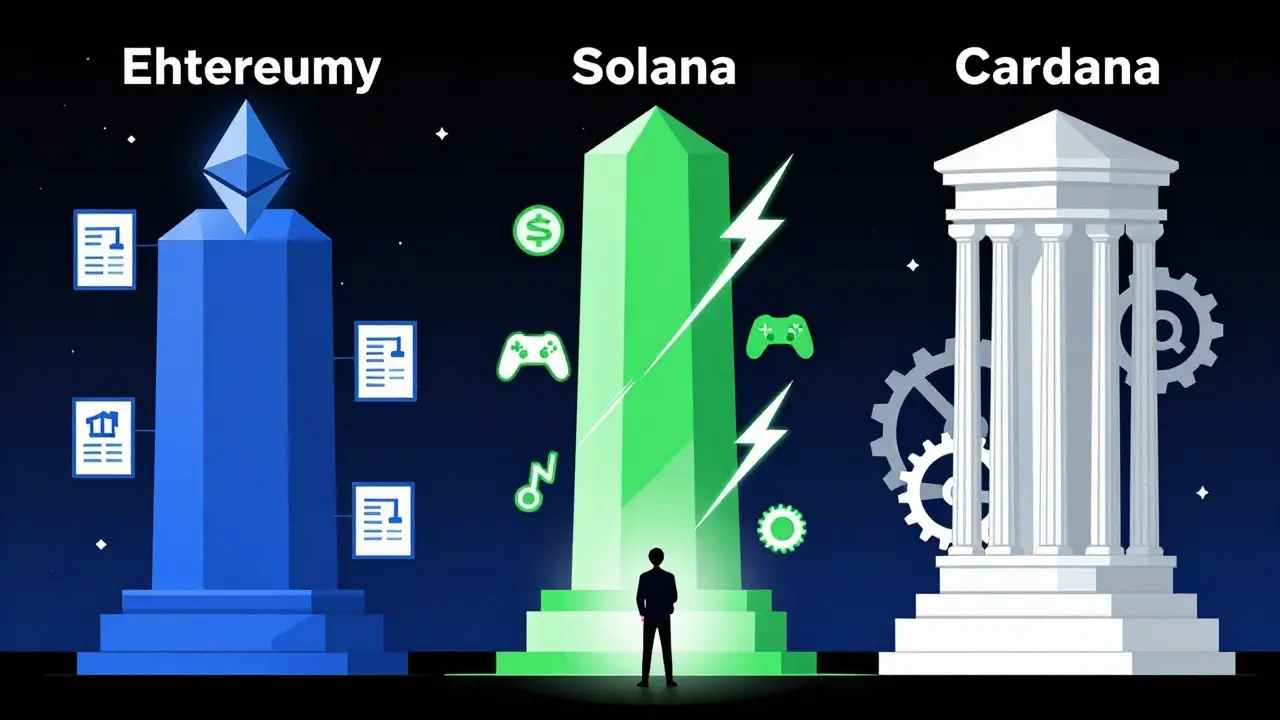
Ethereum wins on security and ecosystem size, making it ideal for institutional-grade finance. Solana wins on speed and low cost, making it attractive for high-frequency trading and gaming applications. Each platform solves the trilemma of decentralization, security, and scalability in a slightly different way.
Security and Trust Mechanisms
A common misconception is that because these systems are "decentralized," they are less secure than banks. In reality, the security model is fundamentally different. Banks rely on institutional trust. You trust the bank to keep your money safe and your data private. Platform cryptocurrencies rely on cryptographic trust.
Transactions are secured by cryptographic techniques that make counterfeiting nearly impossible. Since the ledger is distributed across thousands of nodes worldwide, there is no single point of failure. To alter a past transaction, an attacker would need to control more than 50% of the network's computing power or staked capital-a feat that is economically prohibitive on large networks like Ethereum.
However, this doesn't mean zero risk. Smart contracts are code, and code can have bugs. If a vulnerability is found in a contract, funds can be drained until the bug is patched. This is why audits and formal verification are critical parts of the development lifecycle. Users must also manage their own private keys. Lose your key, and you lose access to your assets forever. There is no customer support line to call.
Choosing the Right Platform for Your Needs
If you are looking to invest or build, understanding the specific strengths of each platform helps you make better decisions. Here is a quick comparison of the major players as of 2026:
| Platform | Native Token | Primary Strength | Ideal For |
|---|---|---|---|
| Ethereum | ETH | Security & Ecosystem Depth | Institutional DeFi, NFTs, DAOs |
| Solana | SOL | Speed & Low Fees | High-frequency trading, Gaming, Payments |
| Cardano | ADA | Research-Driven Development | Enterprise solutions, Academic collaborations |
Your choice should depend on your goals. If you want maximum safety and the deepest liquidity, Ethereum is the default choice. If you care about user experience and low transaction costs for frequent interactions, Solana offers a compelling alternative. Always remember that platform tokens are volatile assets tied to the success of their respective ecosystems. Their value rises when developers build on them and users adopt the applications they create.
Frequently Asked Questions
What is the difference between a coin and a token?
A coin is the native currency of its own blockchain, like Ether on Ethereum or SOL on Solana. A token is a digital asset created on top of an existing blockchain, like USDC on Ethereum. Platform cryptocurrencies are always coins because they power their own independent networks.
Do I need to mine platform cryptocurrencies?
Most modern platform cryptocurrencies use Proof of Stake, so you do not need mining hardware. Instead, you can participate in network security by staking your tokens directly or delegating them to a validator. This allows you to earn rewards simply by holding and locking your assets.
Are platform cryptocurrencies safer than Bitcoin?
Safety depends on the context. Bitcoin is extremely safe for storing value because its protocol is simple and proven. Platform cryptocurrencies add complexity through smart contracts, which introduces smart contract risk. However, the underlying blockchain infrastructure of major platforms like Ethereum is highly secure against double-spending and censorship.
Can I use platform cryptocurrencies for everyday spending?
Technically yes, but practically it varies. On high-speed networks like Solana, transactions are cheap and fast enough for small purchases. On slower networks, fees might make buying coffee impractical. Most people still use stablecoins (tokens pegged to fiat currencies) on these platforms for daily spending to avoid price volatility.
What happens if a platform fails?
If a platform suffers a catastrophic failure or fork, the value of its native token may drop significantly. However, because many applications are built on these platforms, communities often work hard to fix issues. Diversifying across multiple platforms or holding stablecoins can mitigate the risk of a single network failing.