
What Is DOGITA (DOGA)? A Deep Dive Into the High-Risk Meme Token
You’ve probably seen the ticker DOGA pop up on a price tracker and wondered if it’s the next big thing or just another internet joke. The answer is rarely simple in crypto, but for DOGITA, also known as DOGA, the reality is stark: it is a highly speculative, low-liquidity meme token living on the edge of the market.
If you are looking for a stable investment or a project with a clear roadmap, DOGITA is likely not what you want. But if you are curious about how these micro-cap tokens work, why they exist, and the specific dangers they pose to your wallet, this guide breaks it all down. We will look at the numbers, the technology, and the confusing identity crisis surrounding this token.
The Basics: What Exactly Is DOGITA?
DOGITA is a meme cryptocurrency token built on the Binance Smart Chain (BSC). It bills itself as a "feminine and empowered version of Dogecoin." That’s the entire pitch. There is no complex decentralized finance protocol here, no layer-2 scaling solution, and no enterprise blockchain partnership.
Technically, DOGA is a BEP-20 token. This means it exists as a smart contract on the Binance Smart Chain network. If you know anything about BSC, you know it’s popular for meme coins because transaction fees are low and speeds are fast compared to Ethereum. However, being on BSC doesn’t make a token safe; it just makes it cheap to create.
Here is the hard truth about DOGITA’s fundamentals:
- No Public Team: Major aggregators like CoinGecko and Binance do not list any founders, developers, or legal entities behind DOGITA.
- No Whitepaper: There is no technical document explaining the tokenomics or future plans.
- No Audit: There are no links to security audits from firms like CertiK or Trail of Bits.
In the crypto world, anonymity is common for memes, but it is a massive red flag for anyone seeking long-term value. You are buying into a brand image, not a product.
The Numbers Game: Why Liquidity Matters More Than Price
When you look at DOGA’s price, it looks incredibly cheap. We are talking sub-$0.000001 territory. On Bybit, the spot price has been recorded around $0.00000036, while CoinGecko shows figures slightly higher, near $0.00000064. For a novice trader, a price that low screams "buy the dip" or "it can go to the moon."
But price per coin is a trap. What matters is market cap and volume.
| Metric | Value / Status | Risk Implication |
|---|---|---|
| Circulating Supply | ~100 Billion (Bybit) / 0 (Binance) | Data inconsistency suggests poor tracking or manipulation. |
| 24-Hour Volume | $3.88 - $10.69 | Extremely low liquidity. Hard to sell large amounts without crashing price. |
| Market Cap | $0 (Reported by major trackers) | Indicates negligible institutional interest or verified valuation. |
| Price Volatility | High | Small trades cause huge percentage swings. |
Look at that volume. Less than $11 in trading activity over 24 hours on some platforms. What does this mean for you? It means if you buy $50 worth of DOGA, you might own a significant portion of the available liquidity. If you try to sell, there may not be enough buyers to take the other side of your trade at a fair price. This is called a "liquidity crunch," and it’s the most common way retail traders lose money on micro-cap tokens.
The Identity Crisis: DOGITA vs. DOGAMÍ
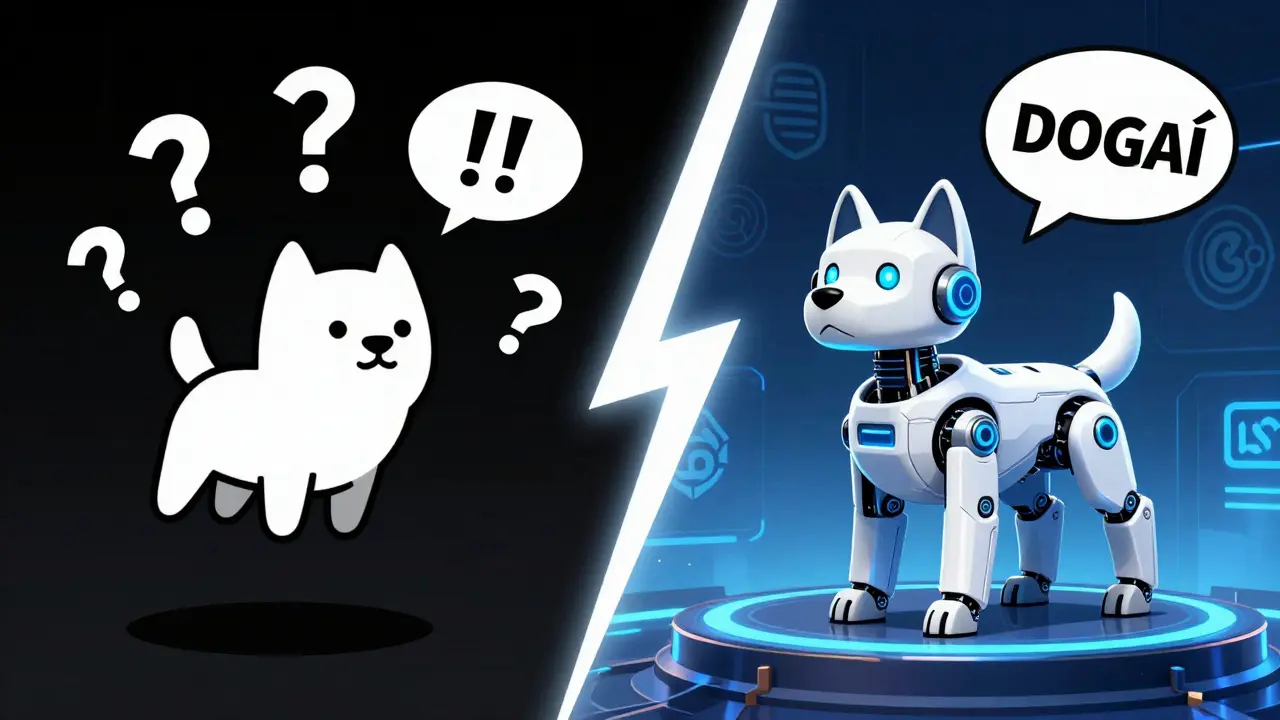
This is where things get dangerous. There is another token with the exact same ticker symbol: DOGA. But it is a completely different asset.
DOGAMÍ is a utility and governance token for a Web3 dog-themed gaming ecosystem. Unlike DOGITA, DOGAMÍ operates on Tezos and Polygon. It has a total supply of roughly 888 million tokens (not billions), a market cap around $1.68 million, and backing from investors like Ubisoft and Animoca Brands. Coinbase lists this version of DOGA, not DOGITA.
If you search for "DOGA" on a major exchange, you are likely seeing DOGAMÍ. If you go to a decentralized exchange on BSC, you might find DOGITA. Confusing the two leads to buying the wrong asset entirely. Always check the contract address before swapping. Never rely solely on the ticker symbol.
How to Buy (And Why You Should Be Careful)
You won’t find DOGITA on the main order books of Binance or Coinbase. They track the price, yes, but they don’t offer it for direct fiat purchase. To get DOGITA, you have to go through the decentralized web.
- Get a Wallet: You need a Web3 wallet like MetaMask or Trust Wallet. Configure it to connect to the Binance Smart Chain (BSC).
- Buy BNB: Purchase BNB (the native currency of BSC) on a centralized exchange and send it to your wallet.
- Use a DEX: Go to a decentralized exchange like PancakeSwap. Paste the exact contract address for DOGITA (found on CoinGecko or Bybit).
- Swap: Swap your BNB for DOGA. Set your slippage tolerance high, as prices move wildly.
Notice the steps? There is no customer support. If you paste the wrong contract address, you could send your BNB to a scam token. If the liquidity pool is drained (a "rug pull"), your tokens become worthless instantly. This is the operational risk of interacting with unaudited contracts.
Is DOGITA a Good Investment?
Let’s be direct: DOGITA is not an investment in the traditional sense. It is a speculative bet on community hype. There are no dividends, no staking rewards, and no utility. Its value comes purely from people believing someone else will pay more for it later.
Compare this to established meme coins like Shiba Inu (SHIB) or Pepe (PEPE). Those tokens have millions in daily volume, listings on top-tier exchanges, and active developer communities. DOGITA has none of that. It sits in the "nano-cap" zone, where projects often disappear within months.
If you decide to play, treat the money as entertainment expenses-like buying a lottery ticket. Never invest funds you need for rent, bills, or savings. The absence of expert reviews, institutional research, or even basic social media metrics on major trackers is a strong signal that this asset lacks the infrastructure to survive long-term.
Red Flags to Watch For
Before you interact with DOGITA or any similar token, run through this checklist:
- Supply Discrepancies: Binance reports 0 circulating supply, while Bybit says 100 billion. When data sources disagree this wildly, assume the worst-case scenario regarding transparency.
- Zero Market Cap Reporting: If a major aggregator lists the market cap as $0, it means the token is too illiquid to calculate a reliable value. This is a sign of extreme fragility.
- No Social Footprint: Check Twitter, Telegram, and Discord. If the official channels have hundreds of followers or are inactive, the community isn’t there to defend the price.
- Ticker Collision: Always verify you aren’t buying DOGAMÍ when you think you’re buying DOGITA, or vice versa.
In the end, DOGITA represents the wild west of crypto. It’s easy to create, hard to verify, and risky to hold. Understanding these mechanics protects you more than any price prediction ever could.
Is DOGITA (DOGA) listed on Binance?
No, DOGITA is not listed for trading on Binance. Binance only tracks its price on their website. You cannot buy or sell DOGA directly on the Binance exchange using fiat or other major cryptocurrencies.
What is the difference between DOGITA and DOGAMÍ?
They are completely different tokens with the same ticker (DOGA). DOGITA is a meme token on Binance Smart Chain with no utility. DOGAMÍ is a gaming utility token on Tezos/Polygon backed by investors like Ubisoft. Do not confuse them.
Who created DOGITA?
The creators of DOGITA are anonymous. No team members, foundation, or legal entity are publicly identified on major crypto aggregators like CoinGecko or Binance.
Why is the market cap of DOGITA reported as $0?
A $0 market cap usually indicates extremely low liquidity and inconsistent data reporting across exchanges. It means the token is so thinly traded that aggregators cannot calculate a reliable total value.
Is DOGITA a safe investment?
No. DOGITA is considered high-risk due to its lack of audit, anonymous team, low liquidity, and status as a pure meme token. It should only be approached with capital you can afford to lose entirely.


hey guys, just wanted to say this is super helpful info! i always get confused with these meme coins. thanks for breaking it down so simply. hope everyone stays safe out there!
look at the liquidity metrics here, folks. the slippage on a $50 trade would be catastrophic. we are talking about micro-cap volatility that destroys portfolios instantly. do not fall for the sub-cent price trap.
yes exactly :D many people in my area buy this thinking it is like dogecoin but it is totally different. no team means no future. please check contract address before you swap tokens on pancake swap.
oh great, another article telling us what we already know. yeah, it's a scam token. shocker. who needs whitepapers anyway? it's crypto, baby. or whatever. lol.
The lack of regulatory oversight and transparent governance structures renders this asset fundamentally unsound. It is imperative that investors recognize the inherent risks associated with unverified blockchain entities operating without legal accountability.
I have been tracking the metadata inconsistencies across various aggregators for some time. The discrepancy between Binance and Bybit data is not an error; it is a deliberate obfuscation technique employed by centralized exchanges to manipulate market perception while maintaining plausible deniability regarding the token's actual utility.
the existential dread of holding a token with no soul is palpable. it is not just money lost, it is identity lost. why do we create digital ghosts that haunt our wallets? the void stares back when you check your portfolio balance at 3am.
i feel for the people who lost money on this. it sucks. but honestly, if you cant afford to lose it, dont buy it. simple as that. stay chill though.
You need to understand the alpha here. Most retail traders are too slow to react to the rug pull signals. If you had proper risk management protocols and monitored the smart contract events in real-time, you could have exited before the liquidity drained. Stop making excuses and start learning the tech.
The fundamental analysis presented herein is accurate. One must consider the implications of zero market capitalization reporting. This indicates a complete absence of verified valuation mechanisms which suggests extreme fragility in the asset structure.
We should all work together to avoid these traps. Let me know if you need help verifying any other contracts. I am happy to assist anyone who wants to learn how to spot these red flags early on.
This is a very interesting perspective on the liquidity crunch phenomenon. I wonder if there are any historical precedents where such low-volume tokens managed to sustain value over a long period without institutional backing.
typical globalist scam :( they want to steal your money because they hate freedom. trust no one but yourself. keep your cash under the mattress. these crypto bros are evil hehe
boring read. i expected more insight into the cultural significance of dog memes. instead we get dry stats. typical mainstream media trying to kill the vibe. yawn.
Listen up. You need to verify the contract address every single time. There is no excuse for buying the wrong token. Check the decimals, check the supply, check the holders. Do not rely on tickers alone.
Oh look, another genius explaining basic economics to people who clearly don't understand it. You think writing a blog post makes you an expert? Please. Go touch grass.