

Why Some Trading Pairs Have Higher Volume: A Guide to Crypto Liquidity
Have you ever stared at a chart and wondered why Bitcoin is moving billions of dollars in an hour while that new meme coin you found barely trades enough to buy a coffee? It’s not just hype. The difference comes down to trading volume, the heartbeat of any financial market. In the world of blockchain and crypto, volume isn’t just a number on a screen; it’s the measure of how easy it is to enter or exit a position without wrecking the price.
If you are trying to navigate these markets, understanding why some pairs attract massive attention while others sit in silence is crucial. It separates profitable traders from those who get stuck holding the bag. Let’s break down exactly what drives this disparity and how you can use it to your advantage.
The Liquidity Engine: Why Money Flows Where It Is Safe
At its core, high trading volume is a byproduct of liquidity. Think of liquidity as the ease with which you can convert an asset into cash. When a trading pair has high volume, it means there are plenty of buyers and sellers ready to transact at any given moment. This creates a deep "order book," where large orders can be filled without causing the price to jump or drop drastically-a phenomenon known as slippage.
Liquidity is the ability of an asset to be bought or sold quickly without affecting its price significantly. In crypto, this is vital because prices can swing wildly in seconds. High-volume pairs like Bitcoin (BTC) or Ethereum (ETH) have such deep pools of capital that even institutional investors moving millions of dollars don’t cause major ripples. Conversely, low-volume pairs are shallow ponds. A single large sell order can crash the price by 10% or more simply because there aren’t enough buy orders to absorb the shock.
This dynamic creates a self-reinforcing cycle. Traders prefer high-volume pairs because they offer safety and predictability. As more traders flock to these pairs, liquidity increases, which attracts even more traders. Meanwhile, smaller projects struggle to gain traction because the lack of volume makes them risky for anyone trading significant amounts of money.
Market Cap and Institutional Interest: The Heavy Hitters
You won’t find a high-volume trading pair with a tiny market cap. There is a direct correlation between a project’s total value and its daily trading activity. Large-cap cryptocurrencies dominate volume charts because they are viewed as safer stores of value or reliable mediums of exchange. Institutions, hedge funds, and corporate treasuries require this stability. They cannot afford to invest in assets that might vanish from the market overnight due to illiquidity.
Consider the data from recent years. During peak bull runs, Ethereum alone has seen daily volumes exceeding $6 billion. This isn’t random noise; it reflects widespread adoption and integration into the global financial system. When banks and payment processors decide to support a specific blockchain, they choose the ones with the highest volume to ensure their customers can move funds smoothly. This institutional endorsement further cements the volume gap between top-tier coins and everything else.
In contrast, micro-cap tokens often rely on retail speculation. While they can experience sudden spikes in volume due to viral trends or influencer endorsements, these surges are usually short-lived. Once the hype fades, volume dries up, leaving latecomers unable to sell their holdings at a fair price.
Exchange Listings and Market Structure
Where a token is listed plays a huge role in its volume. Major centralized exchanges like Binance, Coinbase, and Kraken act as gatekeepers. Getting listed on these platforms instantly exposes a token to millions of active traders. These exchanges also provide advanced trading tools, margin trading options, and futures contracts, all of which generate additional volume.
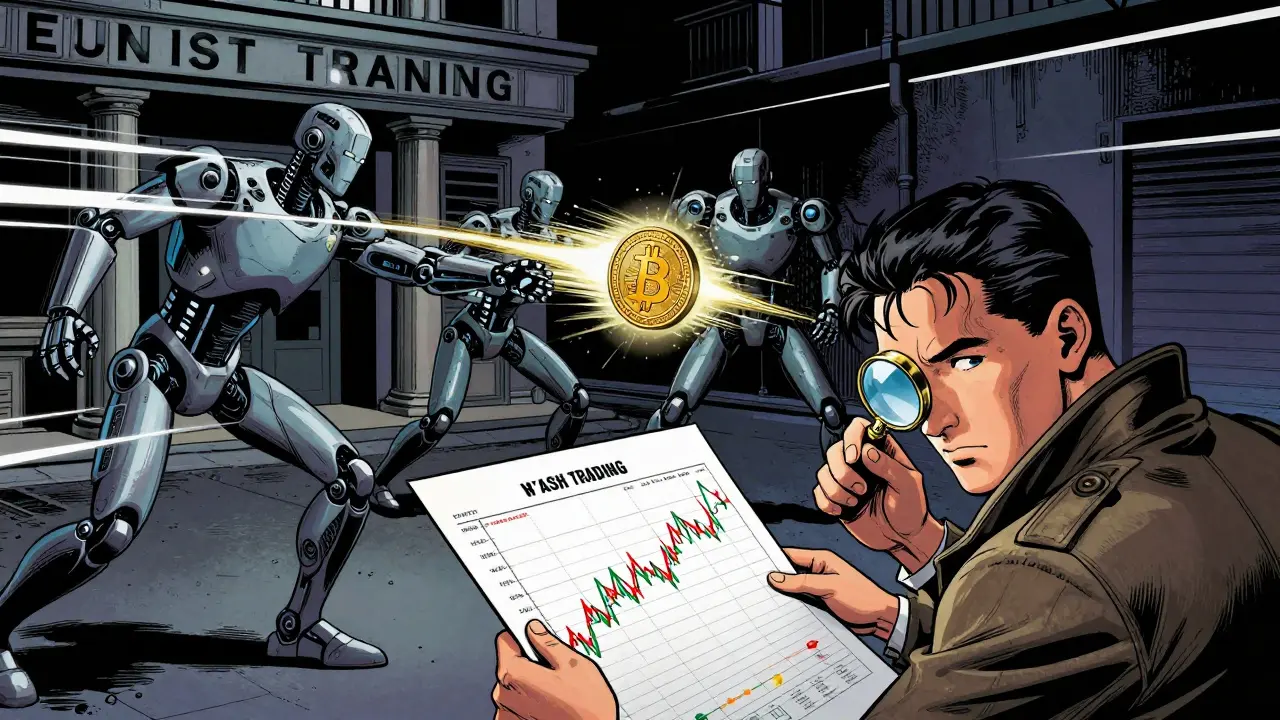
However, not all exchanges are created equal. Some smaller exchanges may show inflated volume numbers due to wash trading-where bots buy and sell the same asset repeatedly to create the illusion of activity. Savvy traders know to look for volume distribution across multiple reputable exchanges rather than trusting a single source. If a coin shows high volume on one obscure platform but zero activity elsewhere, it’s likely a red flag.
Decentralized Finance (DeFi) has changed this landscape slightly. Automated Market Makers (AMMs) allow anyone to create a trading pair on platforms like Uniswap. However, even in DeFi, volume concentrates around established liquidity pools. Projects that incentivize liquidity providers with rewards tend to see higher sustained volume, but these incentives must be sustainable to prevent a collapse once the rewards stop.
Volatility and Speculative Appetite
While stability attracts institutions, volatility attracts speculators. Some trading pairs have higher volume not because they are stable, but because they are volatile. Traders love price swings because they offer opportunities for quick profits. Altcoins with lower market caps often exhibit higher percentage-based volatility than Bitcoin, drawing in day traders and scalpers looking to capitalize on rapid movements.
This speculative volume can be dangerous. High volume combined with falling prices indicates strong selling pressure, often signaling panic or capitulation. For example, during market crashes, we often see massive volume spikes as traders rush to exit positions. On the flip side, high volume with rising prices suggests strong buying conviction and potential trend continuation. Understanding this relationship helps you distinguish between healthy growth and unsustainable bubbles.
It’s important to note that volume should always be analyzed in context. A sudden spike in volume on a quiet day is more significant than consistent high volume during a busy week. Tools that track relative volume (RVOL) help identify these anomalies, alerting traders to potential breakouts or breakdowns before they happen.
| Feature | High-Volume Pairs (e.g., BTC/USDT) | Low-Volume Pairs (e.g., Small Caps) |
|---|---|---|
| Liquidity | Deep; minimal slippage | Shallow; high slippage risk |
| Price Stability | More stable; resistant to manipulation | Highly volatile; prone to pumps/dumps |
| Trader Base | Institutions, funds, retail | Primarily retail speculators |
| Execution Speed | Near-instantaneous | Delayed; may fail to fill |
| Risk Profile | Lower operational risk | Higher risk of delisting or rug pulls |

News, Events, and Sentiment Drivers
Trading volume doesn’t exist in a vacuum. It reacts sharply to news and events. Regulatory announcements, technological upgrades, or partnership reveals can trigger immediate volume spikes. For instance, when a major country announces plans to adopt a specific blockchain for government services, trading pairs involving that coin will see unprecedented activity as traders anticipate future demand.
Sentiment analysis also plays a key role. Social media buzz, particularly on platforms like X (formerly Twitter) and Reddit, can drive retail interest toward specific pairs. While this can lead to temporary volume increases, it rarely sustains long-term growth unless backed by fundamental improvements. Smart traders monitor sentiment indicators alongside volume data to gauge whether a move is driven by genuine interest or fleeting hype.
Moreover, macroeconomic factors influence crypto volume. During times of economic uncertainty, Bitcoin often sees increased volume as investors seek alternative stores of value. Conversely, when traditional markets are booming, crypto volume may dip as capital flows back into stocks and bonds. Keeping an eye on broader financial trends helps explain shifts in crypto trading patterns.
How to Use Volume Analysis in Your Strategy
Knowing why some pairs have higher volume is useless if you don’t apply it. Here’s how you can integrate volume analysis into your trading routine:
- Confirm Trends: Never trust a price breakout without volume confirmation. If a coin breaks above resistance on low volume, it’s likely a fakeout. Wait for volume to surge along with the price move.
- Identify Reversals: Look for divergences. If prices are making new highs but volume is declining, the trend is losing momentum. This often precedes a reversal.
- Avoid Illiquid Traps: Before entering a trade, check the average daily volume. Ensure it’s sufficient to handle your intended position size. A good rule of thumb is to keep your trade size under 1% of the daily volume to minimize impact.
- Spot Manipulation: Be wary of isolated volume spikes on minor exchanges. Cross-reference with major platforms to verify authenticity.
Mastering volume analysis takes time, but it provides a significant edge. It transforms raw data into actionable insights, helping you avoid common pitfalls and capitalize on real opportunities. Remember, volume tells the story behind the price action. Listen closely, and it will guide you through the noise.
What is considered high trading volume in crypto?
There is no fixed number, as it depends on the asset's market cap. For Bitcoin, high volume might mean over $20 billion in 24 hours. For a small altcoin, $1 million could be considered high. Generally, compare current volume to the asset's historical average. If it's significantly above the norm, it's a high-volume event for that specific pair.
Can trading volume be faked?
Yes, through practices like wash trading, where entities buy and sell assets to themselves to inflate volume metrics. This is more common on smaller, less regulated exchanges. To avoid being misled, check volume across multiple reputable platforms and look for consistency in price movement alongside volume.
Why do some coins have high volume but low price changes?
This often indicates a period of consolidation or equilibrium where buyers and sellers are equally matched. High volume with little price movement suggests strong support and resistance levels are being tested. It can precede a significant breakout in either direction once one side gains dominance.
Is high volume always a good sign?
Not necessarily. High volume accompanied by a sharp price drop indicates heavy selling pressure and panic. Context matters. You need to analyze volume in conjunction with price direction and broader market trends to determine if the activity is bullish or bearish.
How does liquidity affect trading costs?
Higher liquidity reduces trading costs by minimizing slippage. In low-liquidity pairs, your buy or sell order may push the price against you, resulting in a worse execution price. High-volume pairs ensure you get closer to the market price, saving money on each transaction.